There is exactly one place in the United States where you can legally slip into the water alongside wild manatees: Crystal River, Florida. Anchored by the spring-fed Kings Bay and the protected waters of Crystal River National Wildlife Refuge, this small Citrus County city draws visitors from around the world for an encounter that feels less like a tourist attraction and more like a genuine act of communion with nature. Here's everything you need to plan it right.
Why Crystal River?
The answer comes down to geology and temperature. More than 30 freshwater springs feed Kings Bay, keeping the water at a steady 72–74°F year-round. That constant warmth is a lifeline for the Florida manatee — a subspecies of the West Indian manatee — which needs warm water to survive. Each winter, between 500 and 1,000 manatees migrate from the cooler Gulf of Mexico into these springs, making Kings Bay the most important natural warm-water refuge for manatees along Florida's Gulf Coast. Even in the warmest summer months, a resident population of manatees stays in the bay year-round.
The refuge managing all of this is Crystal River National Wildlife Refuge, established in 1983 as the only refuge in the country created specifically to protect the Florida manatee. Every permitted tour operator on Kings Bay holds a Special Use Permit issued by the U.S. Fish and Wildlife Service — a meaningful layer of accountability that keeps the experience ecologically grounded.
When to Go: Seasons and Timing
Officially, manatee season runs from November 15 through March 31. This is when seven designated warm-water sanctuaries around the springs are closed to all human activity, and when manatee numbers peak dramatically. During December, January, and February — the coldest stretch — hundreds of manatees aggregate tightly around the springs, making encounters virtually guaranteed. By contrast, summer tours still happen and can be quieter and less crowded, though you may encounter smaller groups of manatees spread across the full 600-acre bay.
If you're chasing sheer numbers, book a winter tour. If you prefer calm water, shorter lines, and a more reflective pace, the shoulder months of April–May or October can be surprisingly rewarding with the resident population. Whatever season you choose, mornings are consistently the best time to go: water clarity is highest, boat traffic is low, and manatees are generally more active before midday.
The Rules: Passive Observation Only
Swimming with manatees is a privilege backed by serious federal and state law. Manatees are protected under the Marine Mammal Protection Act of 1972, the Endangered Species Act of 1973, and the Florida Manatee Sanctuary Act of 1978. These laws make it illegal to touch, chase, harass, or otherwise disturb manatees — and the guidelines apply to swimmers just as they apply to boaters.
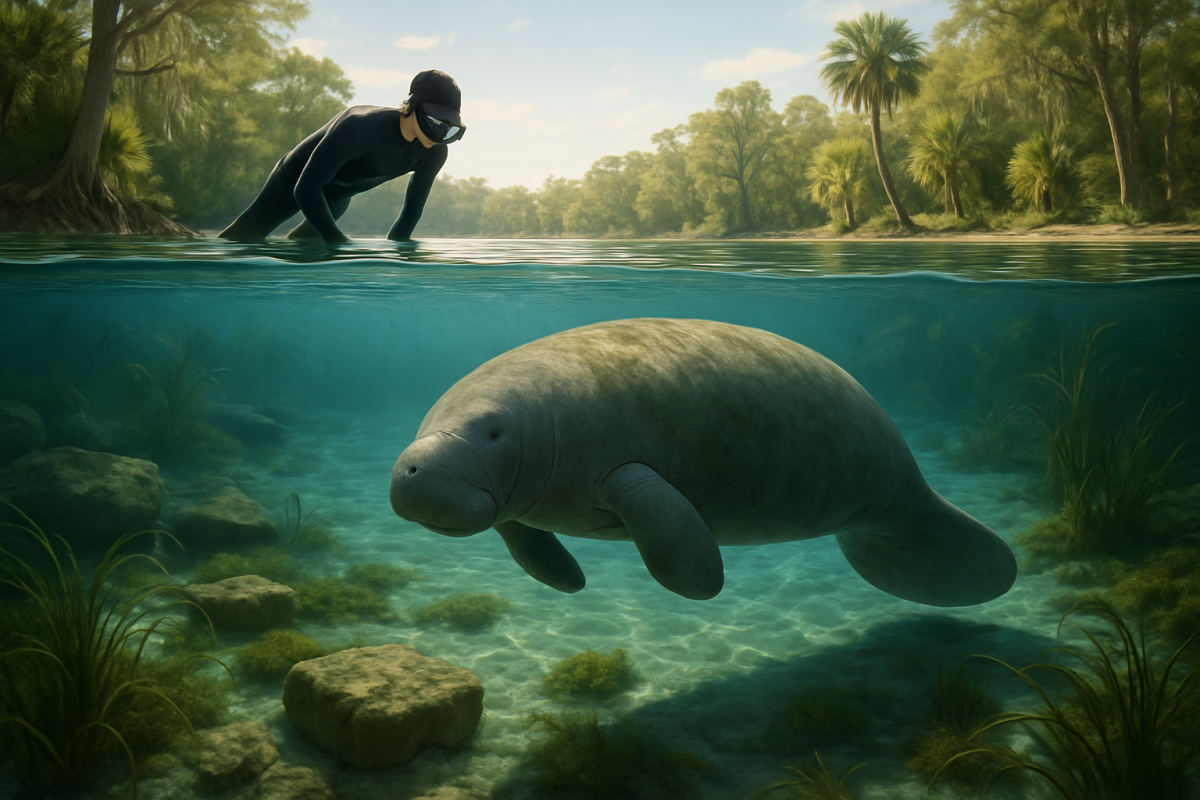
In practice, the golden rule of every permitted tour is passive observation: you float at the surface, stay still, and let the manatees come to you. You may not pursue an animal that swims away, position yourself beneath one, or attempt to touch or ride it. Fins are generally not permitted on tour boats — operators note that U.S. Fish and Wildlife Service guidelines discourage their use around the animals, and since you're floating rather than actively swimming, you don't need them anyway. Between November 15 and March 31, sanctuary areas near spring vents are also marked and closed to swimmers, kayakers, and all watercraft. Conditions at Three Sisters Springs specifically can shift quickly — when manatee density reaches a critical threshold, in-water access may be further restricted — so always confirm current access status before you go.
Tour Types: What's Available
More than 20 businesses in Crystal River offer manatee-related tours, and the options break down into a few clear categories:
- Shared snorkel tours are the most popular entry point. Groups are typically capped in the range of 6–12 guests and run approximately three hours. Prices at most operators currently land in the $60–$85 per-person range, though rates tick up slightly during peak winter season. Gear — wetsuit, mask, and snorkel — is included. Most tours depart in the early morning. Children are generally welcome on shared tours from age 3 and up; children under 3 typically require a private booking.
- Private tours give your group exclusive use of a boat, which means more flexibility in where the captain takes you and more unhurried time in the water. Prices typically start around $450 for parties of up to six guests. Private tours are a smart choice for families with young children, travelers who want extra in-water guidance, or anyone who prefers a slower pace.
- Dry eco-cruises are ideal for non-swimmers, young toddlers, or anyone who wants a comfortable seat-and-observe experience. These typically run 60–90 minutes on a pontoon boat and often include sightings of dolphins, river otters, turtles, ospreys, and bald eagles alongside the manatees.
- Kayak and paddleboard tours offer a quieter, self-powered alternative for reaching areas of Kings Bay. Note that during manatee season, paddle craft are not permitted inside Three Sisters Springs itself, though the surrounding bay and spring approaches can still be paddled.
Every reputable tour begins with a mandatory pre-water briefing — operators call it "Manatee Manners" — that walks guests through proper etiquette, legal requirements, and how to move in the water without startling the animals. Most also provide an in-water guide who enters the water alongside guests to document the encounter and ensure the rules are followed. Prices and specific inclusions vary by operator, so confirm what's covered (photos, hot drinks, parking fees) when you book, and always verify current pricing directly with your chosen company.
Three Sisters Springs: The Iconic Backdrop
The springs most people picture when they imagine Crystal River manatees are Three Sisters Springs — a cluster of freshwater vents inside the Crystal River National Wildlife Refuge that has never been developed as a commercial park. The refuge preserves it as the last unspoiled spring habitat in Kings Bay. Reaching the springs by water requires a boat, kayak, or guided tour — there is no water access from the land side of the refuge. From the land, a boardwalk provides elevated viewing of the spring pools and the manatees that gather below during winter; access requires a paid admission ticket (roughly $15 per adult during manatee season, though fees are subject to change — verify current pricing before visiting). A shuttle runs continuously from the Three Sisters Springs Center in downtown Crystal River to the boardwalk, with the last admission ticket sold at 3:30 p.m. The boardwalk is fully accessible and a legitimate alternative for travelers who prefer to stay dry but still want an extraordinary close-up view.
What to Bring and Wear
The springs hold at 72°F year-round — refreshing on a hot summer day but chilly after 30 minutes in the water during a January cold snap. All reputable tour operators provide wetsuits, and wearing one is typically required. Bring a towel, a change of dry clothes, and a reusable water bottle. A waterproof phone case or a dedicated underwater camera is worth the effort — waterproof phone pouch — since some of the most memorable photos happen when a manatee glides up to investigate you from arm's length. For those staying dry on a cruise or boardwalk visit, a pair of polarized sunglasses makes a remarkable difference in how much you can see into the spring water.
A Note on Conservation
It's worth acknowledging that swimming with manatees in their habitat is not without debate. Some conservationists argue that even passive human presence in the springs disrupts animals that are there primarily to rest and conserve energy during a vulnerable season. Tour guides are trained to watch for injured or distressed animals and report sightings to wildlife authorities immediately — even mid-tour. As a visitor, the most important thing you can do is choose an operator holding a valid Special Use Permit from the U.S. Fish and Wildlife Service, follow every guide instruction without exception, and resist the instinct to reach out if a manatee brushes past you. The encounter is most magical when the manatee decides it's curious about you — not the other way around.
Practical tip: Crystal River is roughly 90 minutes north of Tampa and two hours west of Orlando — close enough for a day trip from either city, but an overnight stay lets you book an early-morning tour (when conditions are best) without a pre-dawn drive. Weekday tours consistently mean fewer boats on the water and more time with the manatees, so if your schedule allows, skip the Saturday rush.