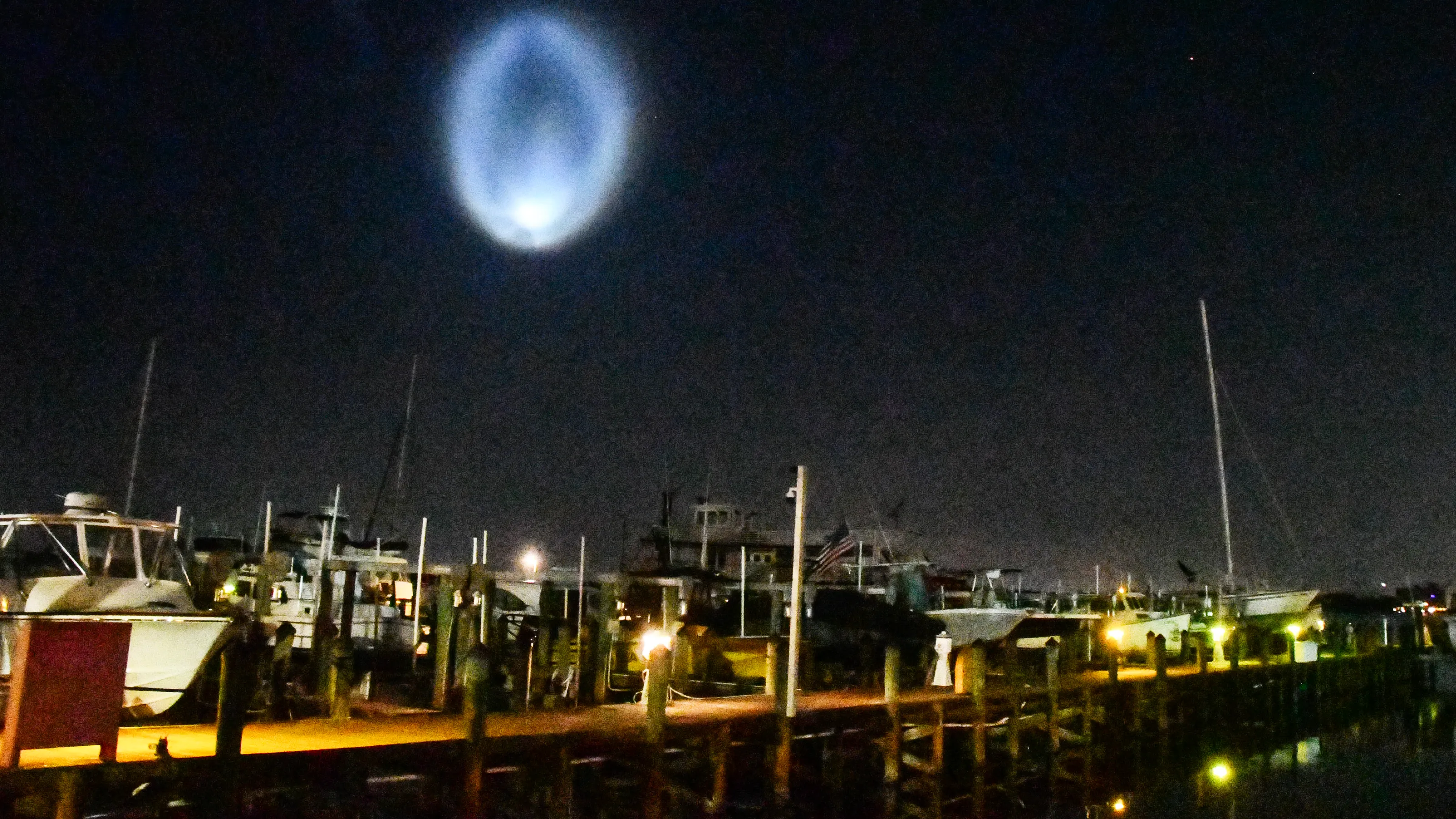
If you've ever spotted a luminous, pulsing blob drifting across the Florida sky after a rocket launch and immediately reached for your phone, you're in good company. The phenomenon nicknamed "space jellyfish" has become something of a regional treasure for Floridians — the kind of fleeting natural spectacle that stops traffic and fills social media feeds overnight.
The effect is created by rocket exhaust contrails that expand and twist in the upper atmosphere after launch. Sunlight — often just below the horizon from a viewer's perspective on the ground — catches those ice crystals and gases at just the right angle, producing an eerie, glowing shape that ripples and morphs as upper-level winds push it around. The result can look startlingly like a jellyfish drifting through a dark ocean.
Launches from Cape Canaveral are a common trigger for the display, meaning Florida residents along the Space Coast and beyond have a front-row seat to the show more often than most Americans. Much like the Northern Lights inspire aurora chasers to travel great distances, space jellyfish sightings have developed their own enthusiastic following among locals and visitors who track launch schedules hoping to catch the afterglow.
The best viewing conditions tend to occur during launches timed around dawn or dusk, when the contrast between the dark sky and the sunlit contrail is most dramatic. Clear skies and a good sightline to the east improve your odds considerably.
This explainer originally appeared in the Marco News.