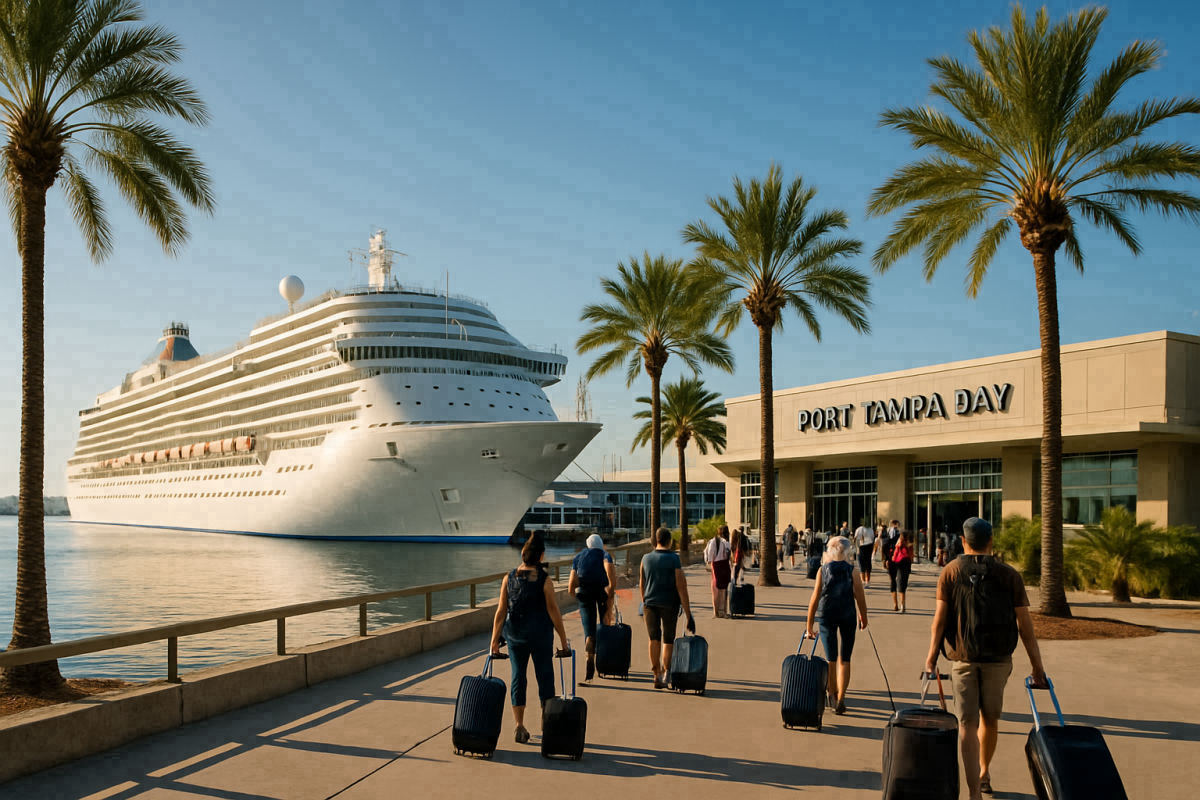
Port Tampa Bay doesn't generate the same headlines as Miami or Port Canaveral, but Florida's Gulf Coast homeport has quietly grown into a major player. The port welcomed a record 1.66 million cruise passengers in 2025, and projections put that number closer to 1.8 million in 2026 — enough demand that port authorities are already planning a fourth terminal. If you're driving in from anywhere along the I-75 corridor, or flying into one of the most passenger-friendly airports in the country, Tampa deserves a long, serious look.
The Three Terminals — and Who Uses Which
All three cruise terminals sit in Tampa's Channelside district, within easy walking distance of each other, the Florida Aquarium, and Sparkman Wharf. Their addresses matter when you're punching a destination into your GPS, so note them before you leave home:
- Terminal 2 — 651 Channelside Drive: Home base for Carnival Cruise Line, Tampa's dominant carrier. Expect mostly 4- to 8-night Western Caribbean itineraries calling at ports like Cozumel, Costa Maya, Belize City, and Mahogany Bay.
- Terminal 3 — 815 Channelside Drive: The port's flagship terminal, shared by Royal Caribbean International and Celebrity Cruises.
- Terminal 6 — 1331 McKay Street: Handles Norwegian Cruise Line and Margaritaville at Sea sailings. Parking here is in an open-air lot directly adjacent to the terminal rather than in the Channelside garage.
Terminal assignments occasionally shift — cruise lines do reassign berths by season or ship. Always confirm your terminal on your cruise line's app or boarding documents before you drive down Channelside.
The Sunshine Skyway Reality: Why Tampa Sails Mid-Size Ships
This is the single most important piece of geography you need to understand about sailing from Tampa, and almost nobody talks about it upfront. Port Tampa Bay sits well inside Tampa Bay, and every ship departing here must pass under the Sunshine Skyway Bridge to reach the open Gulf of Mexico. That bridge has a fixed vertical clearance of 180 feet above the waterline — and modern mega-ships like Royal Caribbean's Oasis or Icon classes stand 236 feet tall or more, which means they simply cannot fit. Even an average newer cruise ship at 200 feet clears the bridge by zero margin.
The practical result is that Tampa is a mid-size ship port. Royal Caribbean's Radiance-class vessels fit; Carnival's smaller Spirit- and Fantasy-class ships fit. The splashiest, most-advertised new builds you see in commercials do not sail from here — and that's not going to change unless a proposed alternative port outside the Skyway is eventually built. For most travelers, though, this is a feature rather than a flaw: mid-size ships mean shorter lines, a less frenzied atmosphere, and an embarkation experience that's genuinely calm. Just choose your sailing based on what Tampa actually offers rather than chasing a ship class you've seen elsewhere.
One bonus: about two hours after leaving the dock, your ship passes directly under the Skyway. Grab a spot on an open deck — it's one of the more memorable departure moments in Florida cruising.
Getting to the Port
Tampa International Airport (TPA) is roughly 15 minutes from the Channelside terminals by car — an unusually short connection compared to most major homeports. From I-275, follow signs toward Ybor City, then head south on Channelside Drive. Most navigation apps handle port routing without trouble.
From TPA, rideshare is the most practical option for fly-cruise travelers. Uber and Lyft both serve all three terminals, with fares running roughly $20–$35 depending on surge pricing and time of day. Taxis run a flat rate of around $35. Several cruise lines — including Norwegian — also offer purchasable shuttle transfers from the airport; check with your cruise line for current pricing and booking windows, as these typically open about four weeks before sailing. Public bus service exists between the airport and downtown, but transfers and travel time of 45–60 minutes make it a poor choice on embarkation morning.
Parking at Port Tampa Bay
The official port parking garage at 810 Channelside Drive serves Terminals 2 and 3; Terminal 6 has its own adjacent lot. The current self-parking rate at the official garage is approximately $15–$18 per day, which works out to roughly $126 or more for a standard 7-night sailing. Valet parking carries an additional one-time upgrade fee of around $20. Oversized vehicles — RVs, large minivans — pay roughly double the standard rate. Florida disabled veterans displaying the appropriate state license plate park free, provided the veteran is present in the vehicle.
You can prepay for parking online through the Port Tampa Bay website, and doing so is worth the few minutes it takes — especially during peak winter season when lots fill quickly. Drive-up payment is accepted if you prefer to pay on arrival. Several independent off-site lots along Channelside Drive and nearby streets offer rates starting well below the port garage, many with complimentary shuttle service to the terminals. If budget matters more than absolute proximity, compare those options and book in advance — they sell out too. Packing cubes can also help you maximize trunk space and speed up the transition from car to porter curbside.
One logistical note from the port itself: there is no baggage storage at any terminal on embarkation day due to security restrictions. If you arrive early and want to explore before boarding, the Florida Aquarium — right next to Terminal 2 at 701 Channelside Drive — will store luggage at no charge with the purchase of a discounted admission ticket.
Embarkation Day: How It Flows
Modern cruise lines assign boarding windows rather than letting everyone show up at once, so check your cruise line's app for your specific time slot well before sailing day. Terminals typically open around 10:00–10:30 a.m. and boarding begins shortly after the ship has been cleared and cleaned from its previous voyage. If you're driving, it's worth dropping your passengers and bags at the terminal curb before pulling into the garage — porters meet you at the entrance to take checked bags, and tipping a few dollars per bag is standard practice.
Security screening mirrors the airport experience: ID and boarding documents out, bags through the scanner, then on to the check-in desks. Lines move considerably faster if you've completed your online check-in and set up your onboard account through your cruise line's app beforehand. Most major lines now support mobile check-in, and some use facial recognition at the gangway — both of which shorten your time in the terminal substantially.
Aim to arrive at least 90 minutes before your assigned boarding window. If you're flying in same-day rather than the night before, give yourself extra buffer — the 15-minute airport-to-port drive can stretch considerably during morning traffic. The safer, lower-stress play is always to arrive in Tampa the evening before your sailing. A compact portable charger is worth tossing in your carry-on for the terminal wait and first hours on board before you've found your cabin power outlets.
Local tip: If you have time before boarding opens, Sparkman Wharf and the Riverwalk are a short walk from the terminals and offer a relaxed spot to grab coffee and soak up the Tampa waterfront — a far better way to spend a pre-cruise hour than sitting in a terminal waiting area.