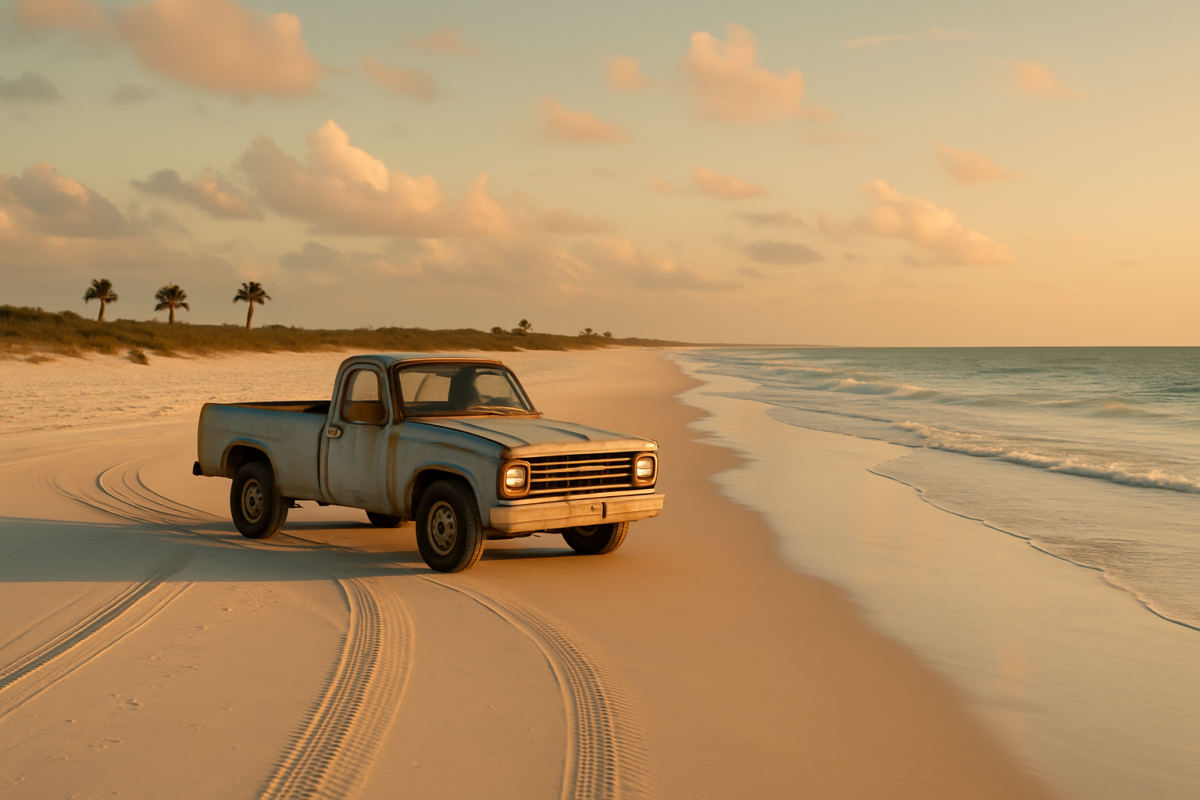
Pulling up to the water's edge, cracking the windows, and watching the surf from your front seat — it's one of those only-in-Florida experiences that still surprises first-timers. But beach driving here is a patchwork of county-by-county rules, seasonal restrictions, and permit requirements that catch plenty of well-meaning visitors off guard. Here's what you need to know before you point your wheels toward the sand.
Where Beach Driving Is Actually Allowed
Let's clear up the most common misconception first: you cannot drive on most Florida beaches. The Gulf Coast from Pensacola to Naples is almost entirely off-limits to vehicles — Gulf sand is too soft for standard cars, and local ordinances ban it outright. Okaloosa County, for instance, prohibits motor vehicles on all public beaches by county ordinance. On the Panhandle, Walton County allows limited beach driving at Grayton Beach and Inlet Beach, but exclusively for county residents and property owners through a highly competitive lottery permit system — more on that below.
The real beach-driving action is along Florida's northeast Atlantic Coast, where hard-packed sand and a long cultural tradition of car-meets-surf have kept the practice alive. The two primary counties are Volusia (home to Daytona Beach) and St. Johns (home to St. Augustine). Canaveral National Seashore also permits vehicle access in designated areas, making it a solid option for nature lovers heading to Brevard County.
Volusia County (Daytona Beach, New Smyrna Beach, Ormond Beach)
Volusia County is the heart of Florida beach driving, with access ramps spread across Daytona Beach, Ormond Beach, New Smyrna Beach, and Ponce Inlet. Volusia County residents now enjoy complimentary beach driving after the County Council eliminated the fee for local residents in 2024 — though residents must first register vehicles through the county's ParkVolusia program to avoid being charged at the gate. Non-residents pay $30 per vehicle for a day pass, or $150 for an annual pass. If you plan to also park in county-owned off-beach lots, non-residents need to purchase that separately for $20 per day or $100 annually.
Seasonal hours matter here. From May 1 through October 31, vehicles are permitted on the beach between 8 a.m. and 7 p.m. (or sundown, whichever comes first). From November 1 through April 30, access runs from sunrise to sunset, tides permitting. Speed is capped at 10 mph, headlights must stay on, and windows must be down — no exceptions. Front-elevated vehicles with front fender height alterations exceeding four inches compared to the rear are not authorized on the beach. Parking is only allowed seaward of the wooden conservation zone posts, and you should never park or drive west of those markers, where sea turtle nests are most concentrated. Check the Volusia Beaches app or ParkVolusia website before heading out, as ramp availability changes daily with tides and conditions.
St. Johns County (St. Augustine Beaches)
St. Augustine's beaches have their own well-established drive-on tradition, with vehicle access ramps at Vilano Beach, Porpoise Point, A Street, Ocean Trace, Crescent Beach, and several others along the coast. Passes are only required from March 1 through September 30 — outside that window, access is free. Annual resident passes run $50 and non-resident passes are $100; daily passes are $10 for both residents and non-residents (with an ADA-accessible rate of $5 per day). Disabled veterans can obtain a free annual pass with qualifying documentation. The 10 mph speed limit is strictly enforced, and gates close at 7:30 p.m. during sea turtle nesting season (May 1–October 31), reopening at 8 a.m. Beach conditions can limit or close ramps on short notice — follow @sjcbeaches on social media or use the county's Reach the Beach app for daily updates.
Walton County (30A / Grayton Beach)
Walton County offers the most restricted beach driving program in the state. Vehicles are permitted only at two access points — Grayton Beach and Inlet Beach — and only for full-time county residents, registered Walton County voters, or county property owners. Permits are distributed by lottery each year, with a cap of 150 permits. The annual permit costs $135 and requires a four-wheel-drive vehicle. No day passes are available to the general public, and no vehicles at all are allowed on the broader 30A corridor or in neighboring Okaloosa County. If you're a visitor vacationing in 30A, plan on leaving your car in the lot and walking the boardwalk — this program is firmly reserved for locals. Always verify current lottery dates and application windows directly with Walton County Code Compliance, as these change year to year.
Canaveral National Seashore
This undeveloped stretch of Brevard County coastline — the longest undeveloped Atlantic barrier island beach in the country — allows vehicles in designated areas, and standard national park entrance fees apply. The seashore is managed by the National Park Service, so rules and any additional access fees or permit requirements can change; always check the official NPS Canaveral National Seashore website before your visit for the most current information.
Statewide Rules That Apply Everywhere
Regardless of which county you're visiting, a few principles hold across the board. Sea turtle nesting season runs roughly from May through October, and the Florida Fish and Wildlife Conservation Commission advises that drivers should enter the beach only at designated ramps, proceed directly to the hard-packed sand near the waterline, and never drive over dunes or beach vegetation. Ruts made by vehicles can trap and disorient turtle hatchlings, so lowering your tire pressure slightly on soft sand is both good practice and a wildlife protection measure — just reinflate immediately when you return to pavement. Avoid driving at night during nesting season, and if a sea turtle emerges from the surf, stop and turn off all lights until she finishes and returns to the water. Violating sea turtle protections carries serious federal and state penalties.
Pedestrians always have the right of way. Keep a sun shade in your vehicle if you plan to park for a few hours — even a sea breeze doesn't stop the inside of a car from turning into an oven in a Florida summer. A good waterproof phone pouch is worth having handy too, since spray and humidity can sneak in when windows are down near the surf.
Bottom line: Check the specific county's website or app the morning you plan to drive — ramp closures happen fast when tides or weather shift, and permit rules in Walton County especially are updated regularly. A five-minute check before you leave the house will save you a frustrating trip down to a locked gate.