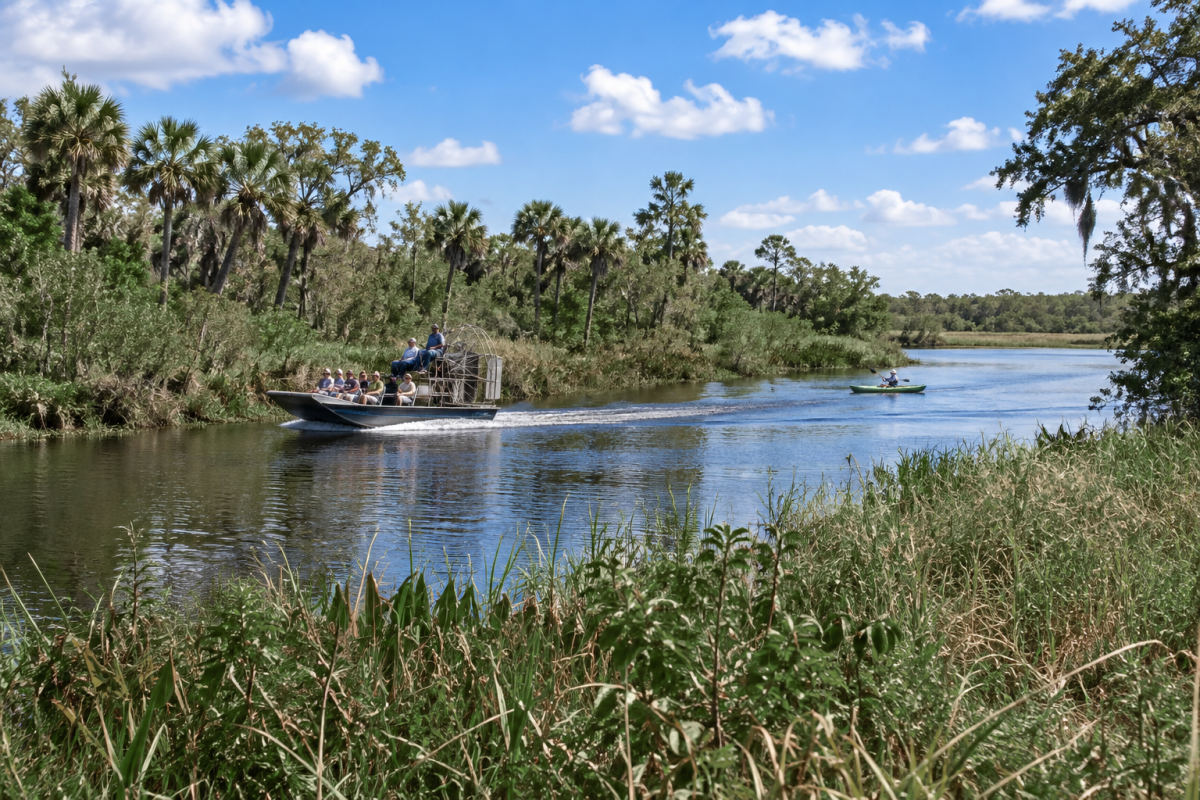
First, an important planning correction: Myakka River State Park’s old airboat ride is still widely mentioned online, but its current official park pages prominently detail paddling and rentals rather than publishing a live airboat-tour schedule or fare. Recent reporting indicates the former airboat operation was retired and later boat-tour availability has varied with conditions. In short: do not build a Myakka day around an “airboat tour” without confirming directly with the park at Myakka River State Park before leaving home. Kayaking, meanwhile, is a clearly listed, bookable-on-arrival option when water and weather cooperate.
Which gives you the better wildlife experience?
For a relaxed, guided outing—especially with a multigenerational group, young children, or anyone who would rather not paddle—a currently operating guided boat tour would be the easier choice. The trade-off is that you are tied to its timetable, seating and water conditions. If a tour is not running, do not treat an old schedule or price found in a search result as current.
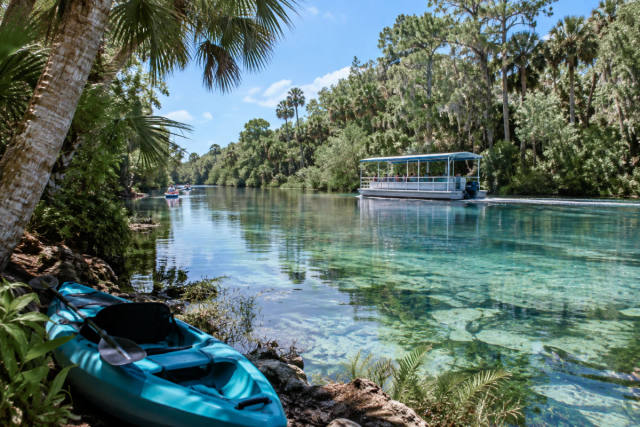
For a quieter, more self-directed encounter, choose a kayak. The river and its shallow lakes support alligators, turtles, anhingas, limpkins, osprey and other wading birds; the park notes more than 100 bird species alongside mammals such as otters and bobcats. A paddle moves slowly enough to watch shorelines and listen for birds, but wildlife is never guaranteed—and a kayak is not a shortcut to getting close. Keep your distance, never feed wildlife, and keep hands, feet and pets away from the water’s edge. Those are core Florida Fish and Wildlife Conservation Commission alligator-safety guidelines.
For sheer viewing odds, lower-water periods can be rewarding because animals concentrate near remaining water. The park says its best wildlife viewing is typically January through March. That said, low water can also make paddling less convenient, so “best for wildlife” does not automatically mean “best for a long kayak trip.”
Water levels decide more than the calendar
Myakka is rain-fed and changes dramatically through the year. In the dry season, the park cautions that paddlers may need to portage around shallow spots. In the wet season, the current can become strong and the river can spread into adjacent hammocks, making navigation harder. At the bridge launch, the river runs north to south, and current is specifically noted as strong during high water. Check the forecast, wind and the latest conditions with the ranger station before committing to a route.
That variability is why kayaking here suits confident beginners on a calm, short outing—or experienced paddlers prepared to turn around—more than anyone expecting a fixed, leisurely loop. There is no park shuttle, so a one-way paddle requires your own vehicle plan. A small dry bag for phone, keys and snacks is genuinely useful, along with drinking water, sun protection and insect repellent. The park currently advises visitors to bring drinking water because its water supply notice remains in effect.
Launches, permits and rental fees
Bring your own kayak or rent within the park. The official fee page lists a single-person kayak at $20 for up to one hour, plus $5 for each additional hour; the same page lists canoes at $20 for the first hour plus $5 per additional hour. Regular park admission is separate: $6 per vehicle for two to eight people, $4 for a single-occupant vehicle, and $2 for pedestrians and bicyclists. Fees can change, so check current details before you go.
The river launch is at the bridge about one mile inside the State Road 72 entrance, while the Upper Myakka Lake launch is near the concession area. Paddling south of State Road 72 is limited-access territory and requires a wilderness preserve permit from the ranger station; the park says these permits are issued daily. The permit rule is easy to miss, so confirm your intended route before launching rather than assuming every visible stretch is open.
The simple way to choose
- Choose the guided boat option if it is confirmed to be operating and you want narration, minimal physical effort and a simpler outing.
- Choose a kayak if you want quiet, flexible wildlife watching and are comfortable with changing water, wind and the possibility of turning back.
- Choose neither on the water that day if levels, weather or your group’s comfort level are wrong. Myakka still offers excellent land-based viewing from its drives and trails.
Practical takeaway: arrive early, stop at the ranger station or Outpost for same-day conditions, and make kayaking Plan A only when the water and weather make it a comfortable, conservative paddle—not a test of endurance.