Ellie Schiller Homosassa Springs Wildlife State Park is one of Central Florida’s most dependable places to see native wildlife at close range, with a first-magnitude spring, an underwater observatory and a shaded network of paved paths and boardwalks. It is a good choice for families, multigenerational groups and anyone who wants a wildlife-focused day without a strenuous hike. The important planning detail right now: the Pepper Creek shuttle boat is not operating, so build your visit around walking rather than a boat ride.
Admission, hours and when to arrive
The park is open daily from 9 a.m. to 5:30 p.m.; ticket counters close at 4:45 p.m., and the Wildlife Walk closes at 5 p.m. Current admission is $13 for visitors 13 and older, $5 for ages 6–12, and free for children 5 and under. Those prices are per person, so it is worth checking the official page before departure in case of a change.
For the most relaxed pacing, arrive close to opening or at least before midafternoon. That leaves enough time to follow the wildlife route, pause at the spring and Underwater Observatory, and attend a manatee program without rushing for the 5 p.m. walk closure. The main entrance and visitor center are at 4150 S. Suncoast Blvd. in Homosassa.
Boat service: currently unavailable
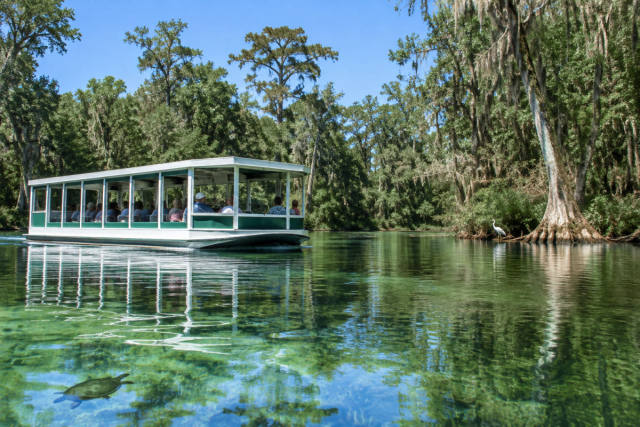
Ordinarily, the park’s shuttle boat carries guests on Pepper Creek between the visitor center and the west entrance. However, Florida State Parks currently reports that shuttle boat service is unavailable because of low water levels. Do not plan your transportation or return route around the boat at the moment.
When the service resumes, the posted boat fare is separate from admission: $5 plus tax for ages 13 and up, $4 plus tax for ages 6–12, and free for children 5 and under. The normal operating days and times listed online can also change with weather and conditions. Since the closure notice supersedes that regular schedule, check the park’s main page on the morning of your visit or call 352-423-5600 if a boat ride is central to your plans.
What the Wildlife Walk is like
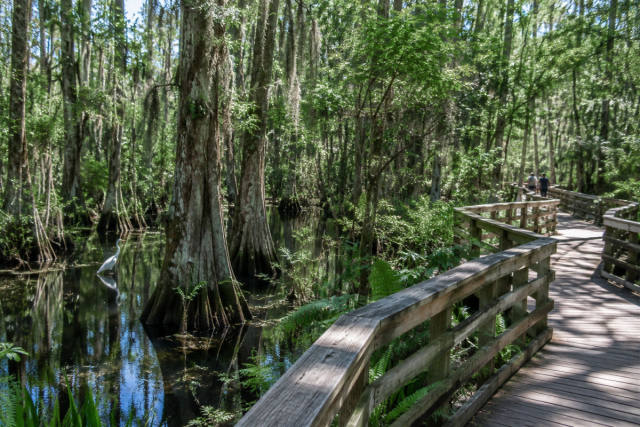
The park’s principal wildlife route is about 1.1 miles of paved walkways and elevated boardwalks circling the spring area. The named Wildlife Walk segment itself is 0.5 mile, while the additional Springs Loop helps make a fuller circuit. The route is designed for close, educational viewing of animal ambassadors that cannot survive on their own in the wild, rather than an unpredictable backcountry wildlife hike.
Expect to see native Florida species including manatees, alligators, black bears, bobcats, Florida panthers, red wolves, deer and many birds. The boardwalk sections have rain shelters, and the park says the Wildlife Walk and all trails are accessible for wheelchairs and strollers; accessible parking and manual wheelchairs are also available. See the park’s accessibility and trail details before going if your group has specific mobility needs.
If you would like a quieter add-on, the paved Pepper Creek Trail runs about 0.75 mile from the visitor-center area toward the west entrance and offers birding and nature study. With boat service paused, think of it as an optional out-and-back walk, not a route with a water return.
Best ways to see manatees
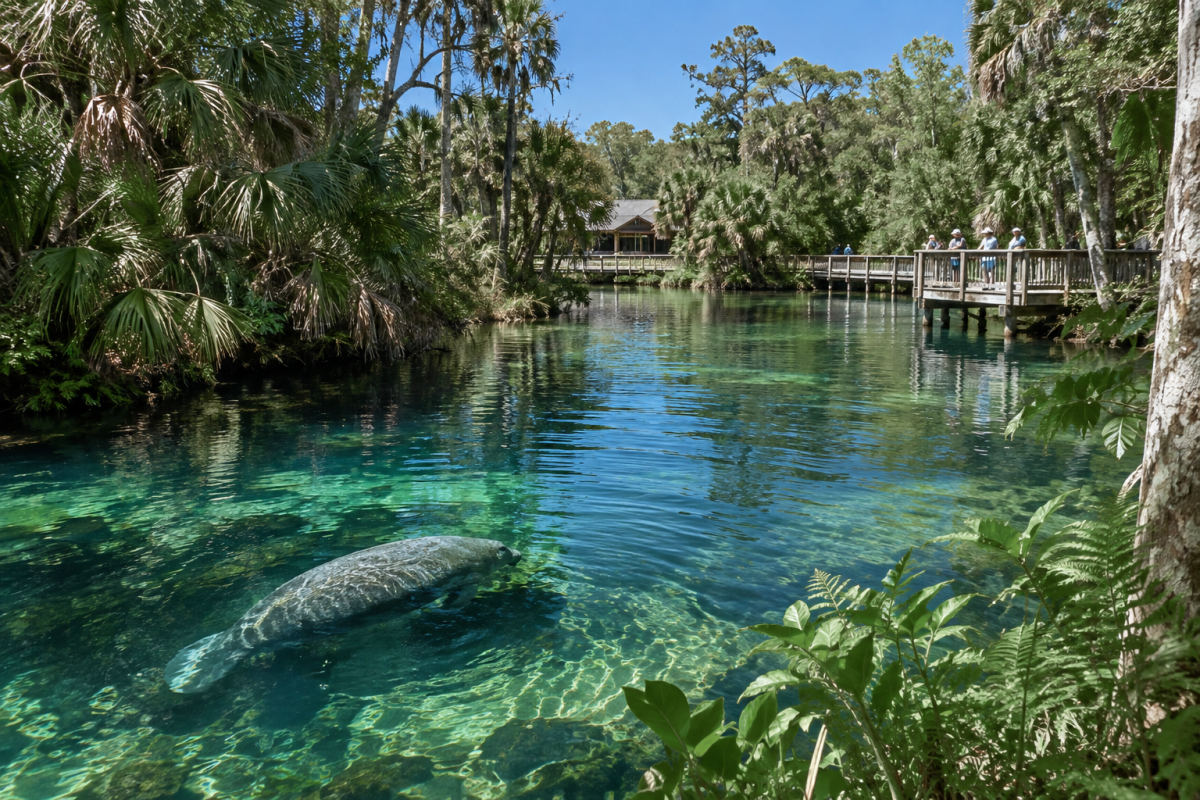
The headline stop is the Fish Bowl Underwater Observatory, a floating structure at the main spring where visitors can view fish and manatees below the waterline. There is also a live-feed screen on the sundeck. This is a viewing experience, not a swimming spring: recreational swimming, snorkeling and diving in the spring are not open to visitors.
For a more informative stop, the park currently offers free manatee programs with admission at 11 a.m. and 1 p.m. The 15- to 20-minute presentation includes a feeding of the resident manatees, and no registration is required. Arrive a little early for seating and confirm the day’s exact program location with staff, especially during busy holiday periods.
These are non-releasable resident manatees and rehabilitation animals, which is why Homosassa can offer dependable viewing beyond the cold-weather manatee season. You may also see manatees moving through the spring, along with schools of freshwater and saltwater fish. For a pre-trip preview—or a quick check on visibility—the park hosts a manatee webcam with above- and below-water views.
Practical takeaway: Arrive early, wear comfortable closed-toe walking shoes, and treat the shuttle boat as unavailable unless the official park page says otherwise; the observatory, Wildlife Walk and daily manatee programs can still make for a full and rewarding visit.
Sources used for this guide
- Ellie Schiller Homosassa Springs Wildlife State Park
- Hours and Fees | Ellie Schiller Homosassa Springs Wildlife State Park
- Experiences & Amenities | Ellie Schiller Homosassa Springs Wildlife State Park
- Manatee Educational Program | Florida State Parks
- Webcam: Watch the Manatees Swim | Florida State Parks