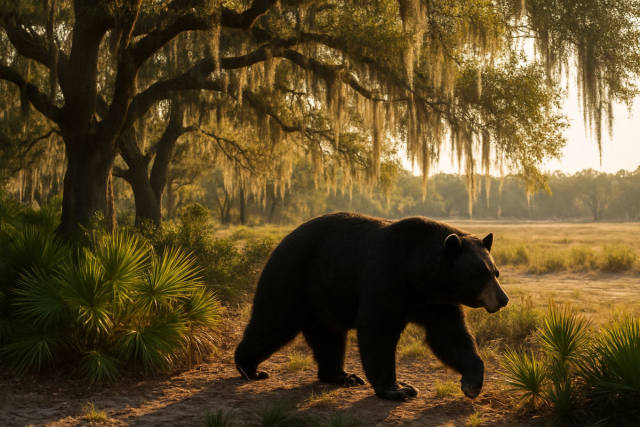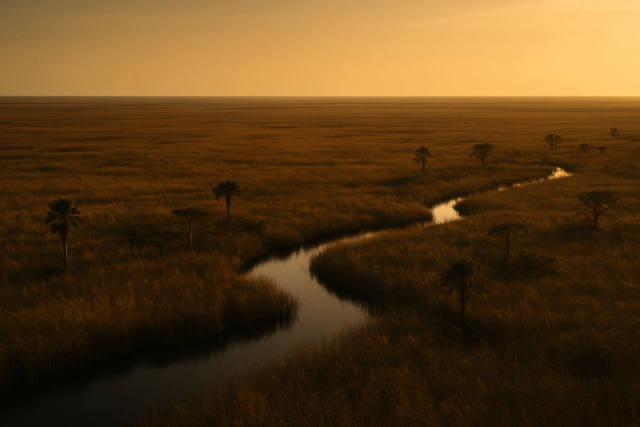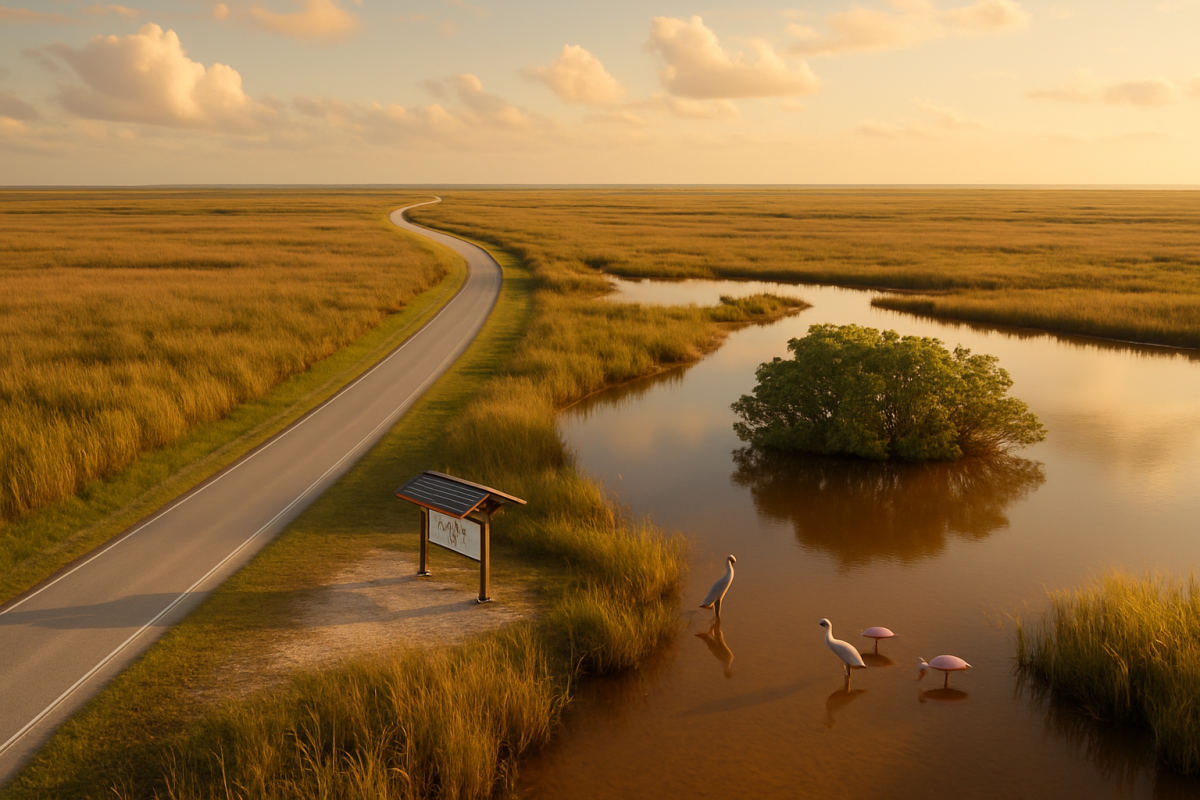
Tucked inside Florida's Space Coast, Merritt Island National Wildlife Refuge is one of those places that sneaks up on you. One moment you're on a highway flanked by strip malls; ten minutes later you're idling beside a roseate spoonbill in a marsh that stretches to the horizon, with a rocket launch pad visible in the distance. That juxtaposition — raw Florida wilderness sharing a fence line with NASA's Kennedy Space Center — is what makes this 140,000-acre refuge unlike anywhere else in the state.
Black Point Wildlife Drive: What to Expect
The centerpiece of any visit is Black Point Wildlife Drive, a seven-mile, one-way loop road that winds along dike roads between shallow saltwater impoundments, marsh flats, and pine flatwoods. The speed limit is 15 mph — which is about as fast as you'll want to go anyway, since the birding begins the moment you roll through the gate. There are numbered pullouts along the route, two spots where you can step out and walk short trails to observation platforms, and restrooms at around the midpoint of the drive. Cyclists are welcome on the road, though the sun-baked limestone surface and lack of shade make early-morning starts essential. Buses and vehicles over 29 feet or 2.5 tons are not allowed, so leave the RV in Titusville.
Plan on 60 to 90 minutes for a relaxed pass through the loop — longer if you're a serious birder or photographer. Multiple pullouts give you room to set up a spotting scope or camera without blocking traffic behind you. Bring a good pair of binoculars and keep them within easy reach from the driver's seat.
Hours and One Important Caveat
Refuge roads, trails, and boat ramps are open every day from sunrise to sunset. The Visitor Information Center is open Tuesday through Saturday, 8:30 a.m. to 4:00 p.m., and is closed Sunday, Monday, and major federal holidays including Thanksgiving, Christmas, and New Year's Day. Hours can shift slightly by season, so confirm current times at the refuge's official FWS website before you go.
One thing most visitors don't think about until it's too late: because the refuge shares land with Kennedy Space Center, NASA can restrict access to roads, the visitor center, and boat ramps on launch days. If a big rocket is going up during your Florida trip, check the FWS refuge page in advance for any closure notices — it would be a shame to drive an hour only to find the gate locked.
Fees and Pass Options
Merritt Island is a federal fee area, and a Refuge Pass is required to enter Black Point Wildlife Drive and Bio Lab Road, and to launch a boat at the Bairs Cove, Beacon 42, and Bio Lab ramps. Here's a quick breakdown of current options (verify the latest prices at fws.gov/refuge/merritt-island before your visit, as fees can change):
- Daily Vehicle Pass — $10 per vehicle, covers all occupants. Valid for one day at all fee-based facilities within the refuge.
- Daily Foot/Bicycle Pass — $10 per individual arriving on foot or by bike.
- Merritt Island Annual Pass — $25 per vehicle, valid only at Merritt Island NWR for one year from purchase. A smart deal if you plan even three visits.
- Federal Duck Stamp — $25, valid July 1 through June 30 at all National Wildlife Refuges nationwide. Birders and hunters who buy one anyway get refuge entry as a bonus.
- America the Beautiful Interagency Pass — the $80 annual pass (or the Senior, Military, and Access versions) is accepted in lieu of any refuge pass. If you're visiting other national parks or federal lands on the same Florida trip, this is almost certainly the better deal.
Passes can be bought in person at the Visitor Center (Tuesday–Saturday, 8:30 a.m.–3:30 p.m.) or in advance at Recreation.gov. If you arrive when the center is closed, self-pay stations at the Black Point entrance accept exact cash only — no change is given and no cards are accepted at the kiosks. Downloading or printing your pass before you arrive is the safest move, since cell service inside the refuge can be spotty.
When to Go: Seasonal Wildlife Guide
Birding and wildlife viewing are good year-round, but the sweet spot is October through March — peak migration season, comfortable temperatures, and dramatically lower mosquito pressure than Florida's brutal summer months. Winter brings enormous flocks of waterfowl to the impoundments: look for Northern Pintail, Blue-winged Teal, Northern Shoveler, American Wigeon, and American Avocet, plus Sora, Reddish Egret, and the occasional rare straggler like Eurasian Wigeon or Cinnamon Teal. The Space Coast Birding and Wildlife Festival, held each January, offers guided field trips to the refuge's best spots — a worthwhile addition to any winter Florida itinerary.
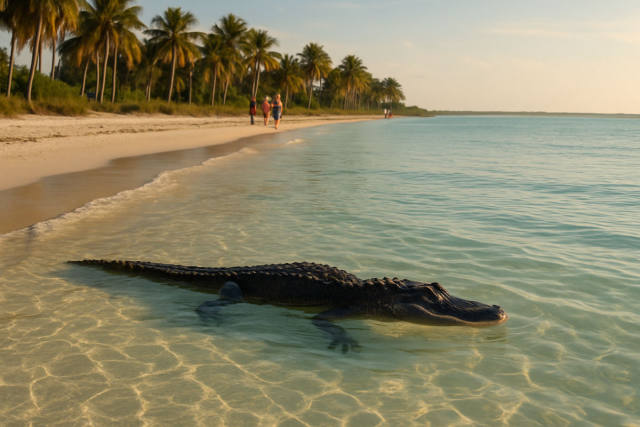
Spring is the time to catch manatees. The Manatee Observation Deck at Haulover Canal is an accessible platform where dozens of these gentle giants have been spotted at once, and wading birds and shorebirds are active all along Bio Lab Road as migration ramps up. Alligators are reliable sightings throughout the warmer months, hauled out on sunny banks to warm themselves — keep pets leashed and maintain a respectful distance.
Summer visitors will find nesting activity and juvenile wildlife, but be ready for intense heat, daily afternoon thunderstorms, and serious mosquitoes near the marshes. A quality insect repellent is non-negotiable from May through September. The Visitor Center feeders attract wintering Painted Buntings — one of Florida's most dazzling birds — from late fall through early spring, making a stop there worth the detour even before you hit the drive.
Practical Tips Before You Go
- Arrive within the first hour or two after sunrise for the fewest other vehicles on the drive and the most active wildlife.
- Bring exact cash if you're not buying online — the self-pay kiosks give no change.
- Cell service is limited inside the refuge; download your digital pass before leaving town.
- The refuge has no overnight accommodations; Titusville, just minutes away on U.S. 1, has the nearest hotels and restaurants.
- Check the FWS website for any NASA-related closures before your visit, especially on known launch days.
Bottom line: If you're already planning a Space Coast visit to watch a rocket launch, blocking out a morning for Black Point Wildlife Drive turns a single-attraction trip into one of the best wildlife days Florida has to offer — and at $10 a car, it's one of the great bargains in American nature tourism.