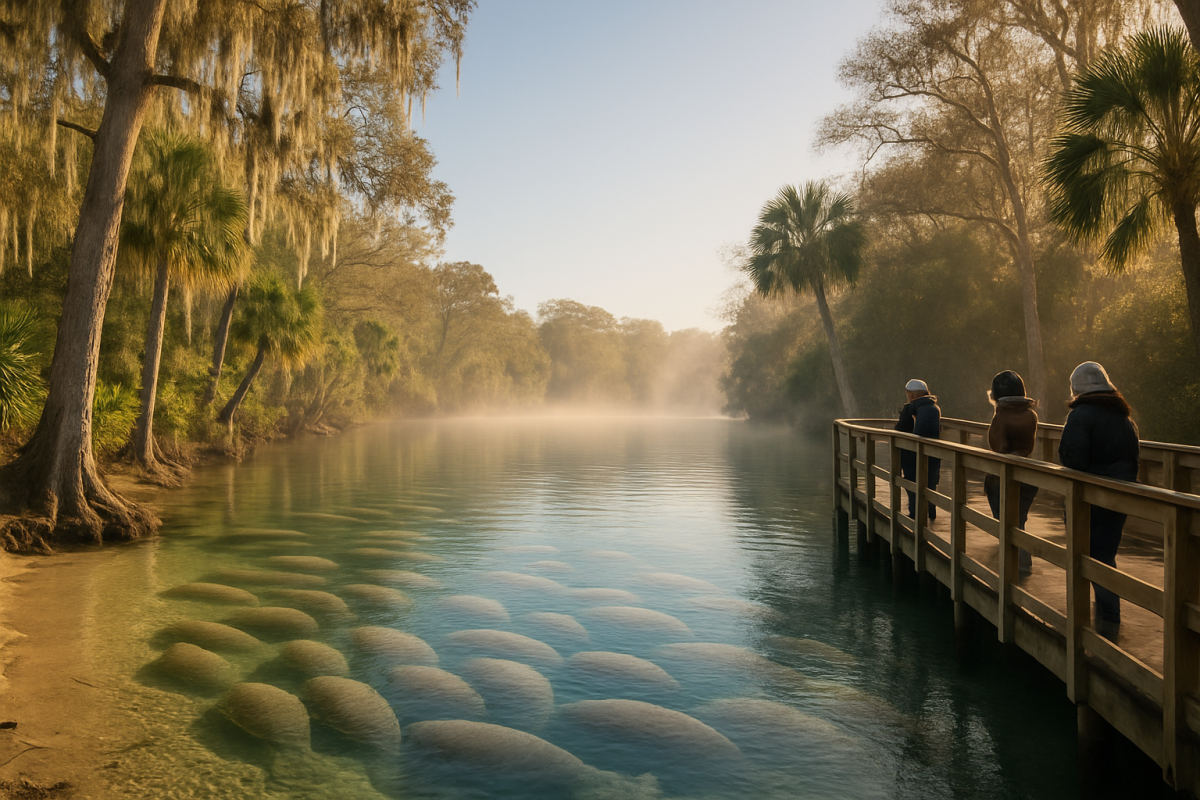
Blue Spring State Park in Orange City is one of Central Florida’s most memorable places to see manatees from dry land. Each winter, hundreds of manatees gather in the spring’s steady 72-degree water when colder conditions make the St. Johns River uncomfortable for them. The key to a smooth visit now is planning ahead: Blue Spring has moved to a required day-use reservation system, and winter is strictly for viewing rather than getting in the water.
How the new day-use reservation system works
As of July 15, 2026, everyone entering Blue Spring State Park for day use needs an advance reservation—including annual passholders, pedestrians and cyclists. Reservations are made through the Florida State Parks reservation site and can be booked up to 60 days ahead; same-day reservations may be available, but only until the park’s daily limit is reached.
Set up your Florida State Parks reservation account before the date you hope to visit, especially if you are targeting a winter weekend or holiday period. Choose Blue Spring, select your date, and pay the applicable entry fee online. There is no separate charge just for making the day-use reservation. Current admission is $6 for a vehicle carrying two to eight people, $4 for a single-occupant vehicle, and $2 for pedestrians, cyclists and extra passengers.
Save the reservation receipt and barcode on your phone, or bring a printed copy. Annual passholders still need a reservation and must show both the barcode and their valid pass at the entrance. Campers use their overnight reservation for entry, while visitors with a qualifying concession reservation should have that confirmation ready. A day-use booking provides one guaranteed entry during park hours, but leaving and returning later is dependent on available space—so plan to stay once you arrive.
Reservations are tied to a single date, not a specific arrival time. The park is open daily from 8 a.m. until sundown. That means you no longer need to line up at dawn simply to beat an old-fashioned capacity closure, but an early arrival is still smart for a calmer boardwalk stroll, easier parking and better chances to linger at the viewing spots.
When the water closes for manatee season
Blue Spring’s annual swimming season generally runs from April 1 through November 14. Plan for the spring and spring run to close to swimming, snorkeling, tubing, diving and boating beginning November 15, as the manatee winter season gets underway. The closure is designed to give manatees a protected warm-water refuge, and it typically continues through March; reopening can be delayed if a meaningful number of manatees still need the spring because of lingering cold weather.
For visitors, that winter closure is actually the point. You cannot swim with manatees at Blue Spring, but the accessible boardwalk provides the proper, low-impact way to watch them. The roughly one-third-mile Spring Run Boardwalk follows the clear run through a shady hammock, connecting the St. Johns River side of the park with the spring head. The shoreline and any closed sections are off-limits, so stay on the path and use the overlooks rather than trying to improve your angle.
How to plan the best boardwalk visit
- Pick winter, then watch the weather. Manatees use the spring most heavily during the colder part of the year, generally November through March. A cold snap can make for particularly impressive viewing, though wildlife sightings are never guaranteed.
- Give yourself time. The boardwalk is short enough for an easy outing, but it rewards a slow pace. Stop, scan the water for rounded backs and snouts, and look for fish, turtles and wading birds along the run.
- Bring layers. A chilly morning may be ideal for manatee activity, while the shaded hammock can feel cooler than expected. Comfortable walking shoes and a light jacket are sensible.
- Pack patience for popular dates. Reservations solve the uncertainty of getting through the gate, not the possibility of a busy viewing platform. Weekday mornings are usually a more relaxed choice than weekends and school breaks.
- Use the facilities before starting. Accessible restrooms, picnic areas, a concession area and the historic Thursby House are all part of the larger day-use experience. The boardwalk itself is accessible, but keep in mind that the best overlooks can draw a crowd.
The park has completed shoreline stabilization work and added a new boardwalk segment near the spring head, but natural-area access can change for maintenance, weather or wildlife protection. Check current park alerts and your reservation details before driving over.
Practical takeaway: Reserve first, arrive early enough to enjoy the boardwalk at an unhurried pace, and treat November 15 through March as viewing season—not water-recreation season.