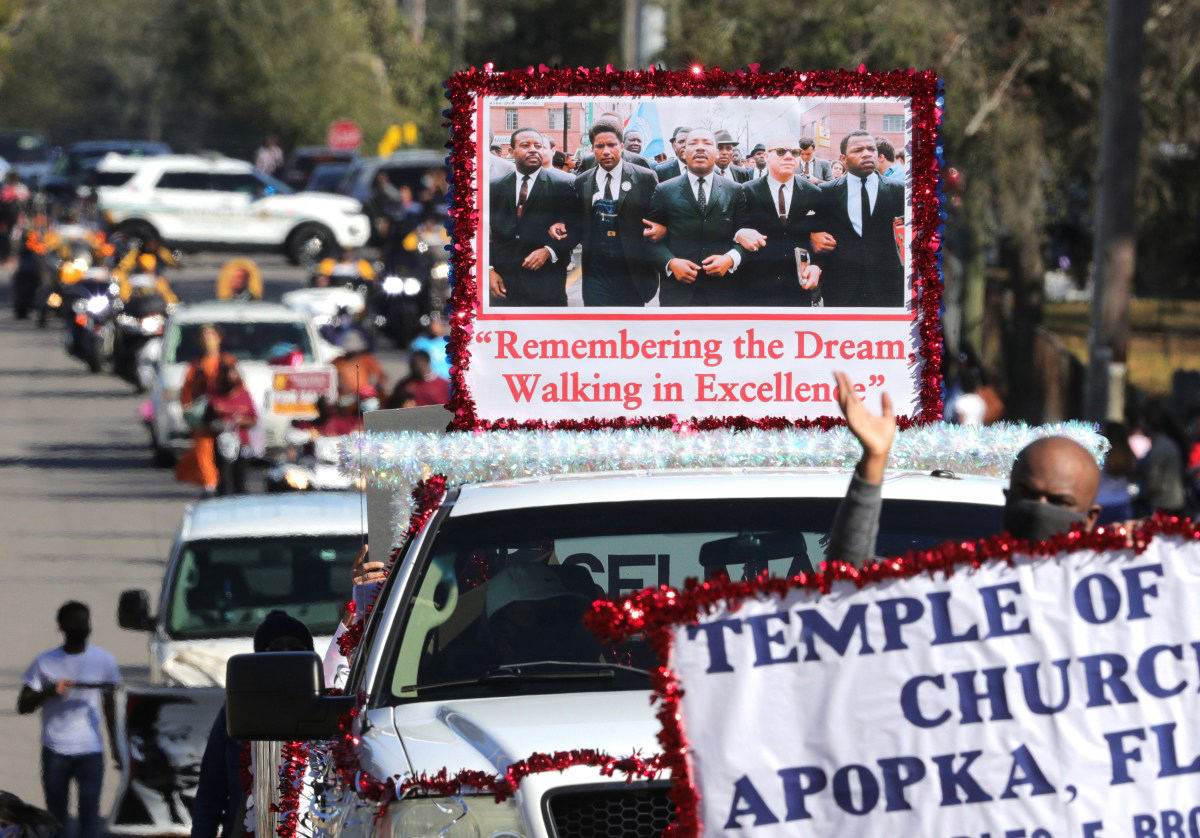
Apopka city commissioners spent several hours Tuesday working through what Mayor Nick Nesta described as a "bare bones" budget proposal — and they didn't like everything they found. Among the cuts drawing the most concern: funding for a long list of community celebrations that residents have come to count on year after year, including the Christmas parade, Halloween in the Park, Breakfast with the Bunny, and the Martin Luther King Jr. parade.
Nesta, now five months into his tenure as mayor, said he stripped out spending on events across the board — affecting more than a dozen occasions, from the 4th of July and Juneteenth to Emancipation Day and Veterans Day — in response to public and commissioner feedback calling for leaner government spending. He framed the deep cuts as a starting point, not a final answer, leaving it to commissioners to restore whichever events they collectively prioritize, with the understanding that doing so would draw from city reserves.
Vice Mayor Diane Velazquez made clear that some cuts were a harder sell than others. She singled out the Christmas and Halloween events as community staples worth preserving, and took time during the session to work through the full event list with fellow commissioners to build consensus around which ones should see funding restored.
The budget debate didn't stop at celebrations. Commissioner Nadia Anderson objected to a $100,000 cut to a city grant program supporting local nonprofits — a program she championed when it launched last year — and proposed covering most of it by delaying $75,000 in planned City Hall renovations. Nesta pushed back, arguing the second-floor improvements have been needed for years and further delays will only drive up costs.
Commissioners are set to meet again Thursday evening at the Apopka Community Center to adopt a tentative millage rate and budget for the fiscal year beginning October 1, with final adoption scheduled for September 16. The proposed millage rate of 4.6761 mills would represent roughly a 10% increase over the rollback rate, translating to about $25 more per year for every $100,000 of assessed property value. This story was originally reported by the Orlando Sentinel.