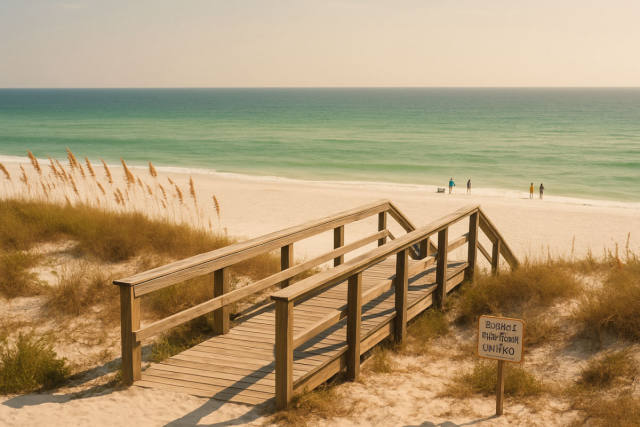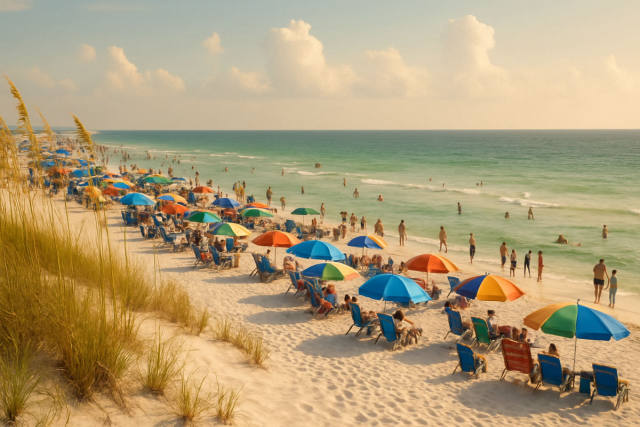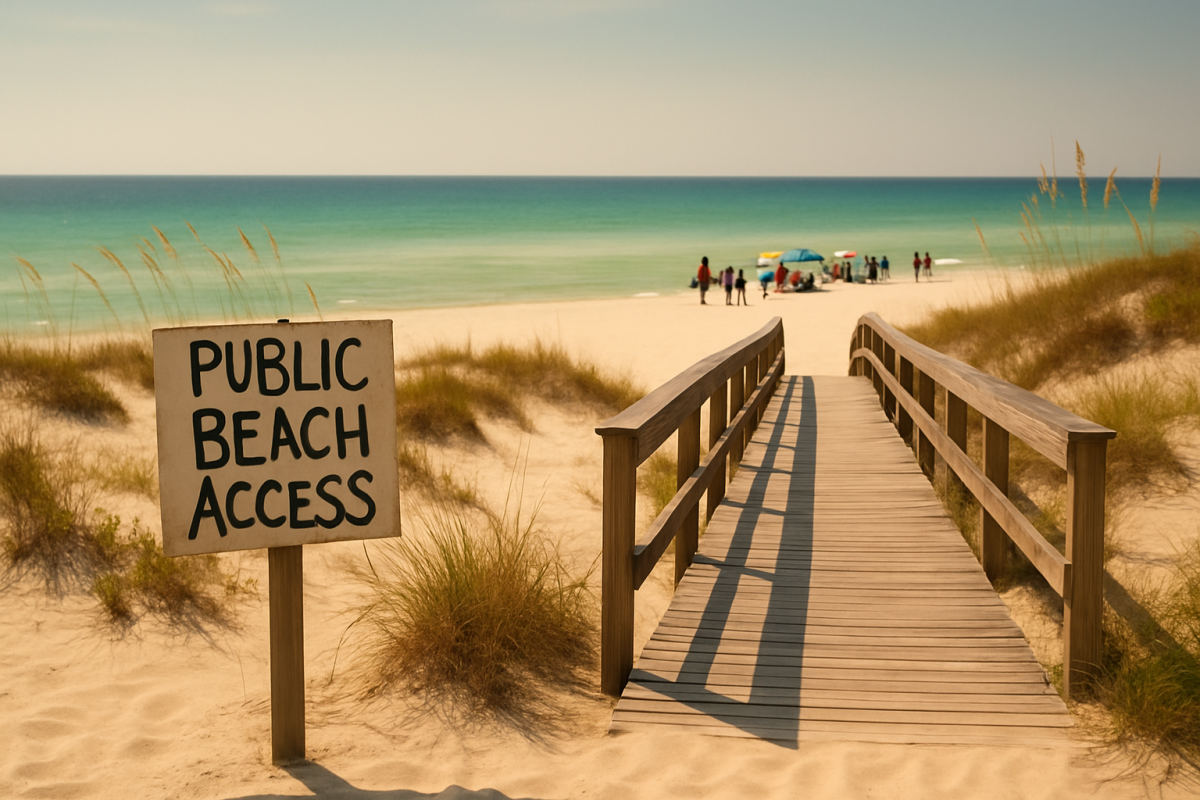
If you've ever spread a towel on the sparkling Gulf shores near Seaside or Alys Beach, you may not have realized you were standing in the middle of one of Florida's fiercest legal and political battles. Walton County — home to 26 miles of emerald-water coastline along Scenic Highway 30A — has become the flashpoint in a decade-long standoff between private beachfront property owners and the public's right to use the sand.
The conflict traces back to a Walton County Commission ordinance that invoked the legal doctrine of "customary use," declaring that beaches long used by the public for recreation should remain open to all. Politically connected homeowners, including former Arkansas Governor Mike Huckabee, pushed back, prompting the Florida Legislature to pass a 2018 law requiring the county to individually sue landowners to prove that public custom. The county eventually settled with roughly 80 property owners, and the Legislature later repealed its 2018 law under public pressure — but the damage to clear access rules was already done. Now some landowners are pursuing quiet-title claims to the sand directly behind their homes, leaving beachgoers to navigate a confusing, sign-filled patchwork of public and private stretches.
On the ground, that ambiguity plays out in tense encounters. Private security guards posted under red umbrellas patrol borders between public access points and adjacent private beaches, while Walton County Sheriff Michael Adkinson Jr. says his deputies field more beach-dispute calls than ever — yet in a decade haven't made a single trespassing arrest on the beach, because the legal property boundaries are simply too unclear to enforce. The sheriff himself is now being sued by Backstreet Boys member Brian Littrell, whose beachfront property has become its own flash point in the broader fight.
Advocates like Dave Rauschkolb, co-founder of the nonprofit Florida Beaches for All, are pushing for a Florida constitutional amendment that would settle the question of public beach access permanently — and they're warning that what's happening in Walton County could spread to coastal communities across the state. Property-rights attorneys counter that forcing public use of privately owned sand without compensation runs afoul of the Fifth Amendment. With explosive population growth straining the limited public beach space that does exist, neither side shows signs of backing down.
This story was originally reported by Debbie Elliott for NPR.