Researchers in Tampa are tagging cobia and tripletail in a Gulf-wide study intended to provide more information for future fishery management.
The project brings together the University of South Florida, the Florida Fish and Wildlife Conservation Commission’s Fish and Wildlife Research Institute and the U.S. Geological Survey. Scientists are working from Texas to Florida to study how the two popular sport fish move, survive and respond to factors that could affect their populations.
An $800,000 grant from the Gulf States Marine Fisheries Commission is funding the work as part of a larger $5 million Gulf-wide research effort led by the University of South Alabama, with USF, USGS and FWC among the collaborators.
For cobia, the research includes efforts to understand population declines in northwest Florida. Bob Ellis of FWC’s Fish and Wildlife Research Institute said tracking is especially important because cobia can make long, multistate migrations, ranging from South Florida toward Louisiana or north along the East Coast to Virginia.
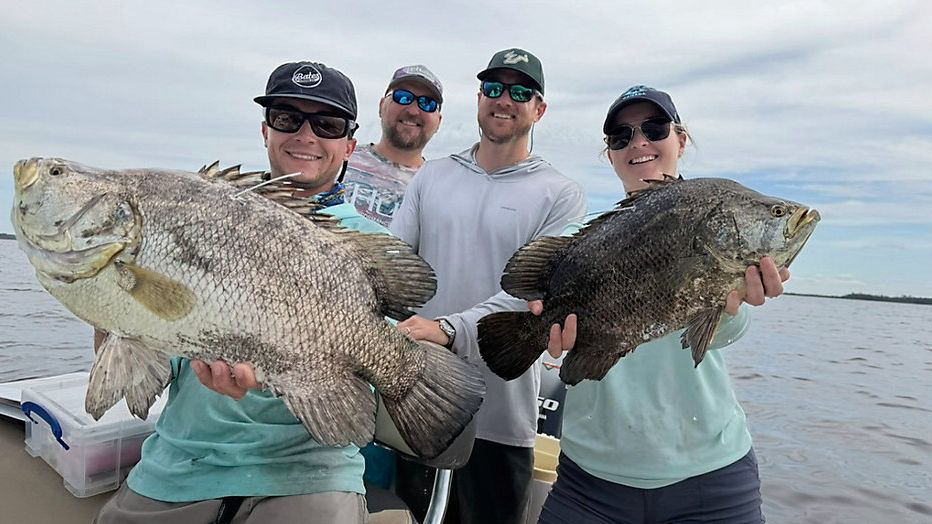
Tripletail present a different data gap. The species is becoming more popular with anglers, but scientists have limited information about its movement and behavior. Researchers are also examining growth rates and stomach contents to better understand what tripletail eat and whether their diets vary by season or across the Gulf.
The team is using acoustic tags that emit pings detected by underwater listening stations, along with dart tags placed on fish around legal size. Anglers who catch a dart-tagged cobia or tripletail can report its number for a $250 reward, helping researchers identify where tagged fish are caught.
In the project’s first summer, researchers tagged about 60 tripletail and eight cobia, according to USF assistant professor Luke Griffin. One tagged tripletail was caught several times near the same Tampa Bay channel marker, an early observation suggesting it remained in a relatively small area over a short period.
Tagging is expected to continue for two more years. Researchers said the findings will be shared with fisheries managers, charter guides and recreational anglers.