Florida leads the nation in toll-road mileage, and the Sunshine State's highways are rapidly going all-electronic — meaning cash lanes are disappearing fast. Whether you're a new resident commuting daily, a snowbird making an annual drive, or a first-time visitor picking up a rental car at the airport, understanding your three main payment options — SunPass, E-PASS, and Toll-by-Plate — can save you a surprising amount of money before you even reach your destination.
Toll-by-Plate: The Default That Costs You the Most
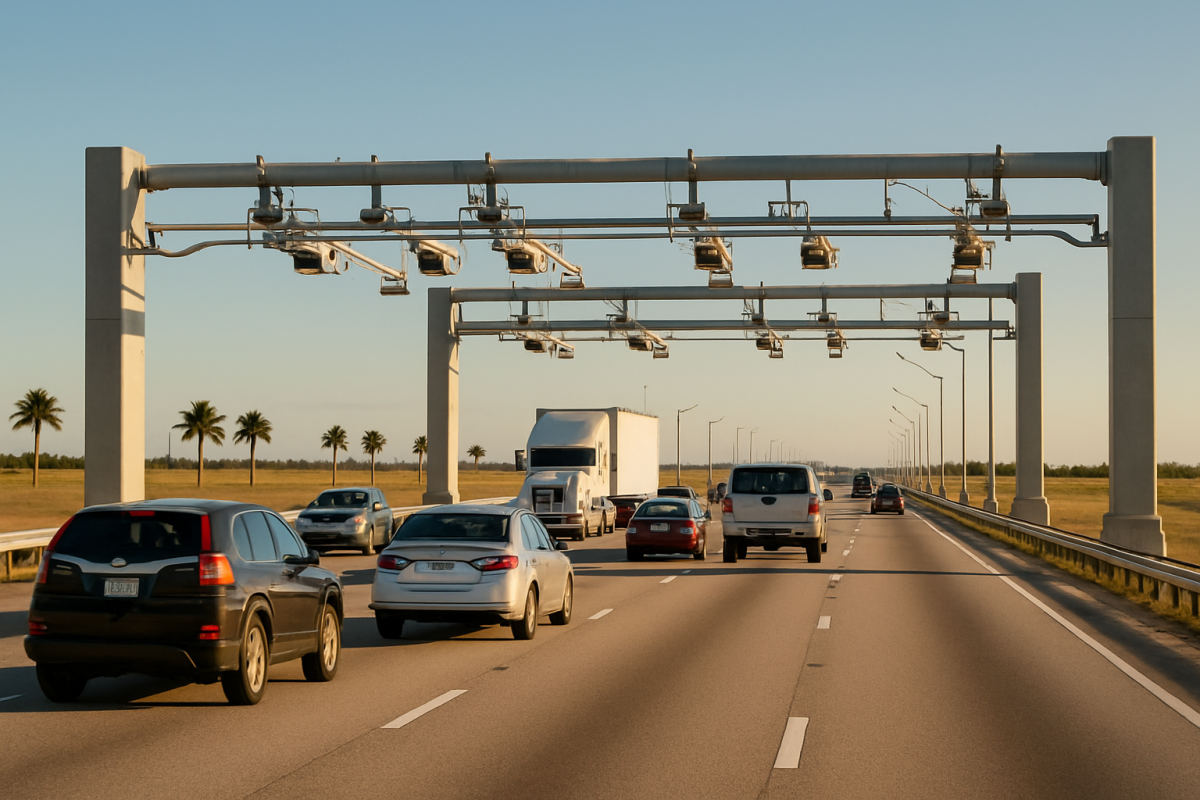
If you drive through a Florida toll gantry without any transponder active, the camera overhead photographs your license plate and the system automatically converts your trip to a Toll-by-Plate transaction. A paper invoice is then mailed to the registered owner of the vehicle covering tolls accumulated over a 30-day period, plus a $2.50 administrative charge per invoice. On the Florida Turnpike, Toll-by-Plate users pay roughly 8.7 cents per mile compared to about 6.7 cents per mile for SunPass users — and if you miss the payment deadline, a second notice follows, and eventually the balance can be referred to a collections agency or result in a registration hold on your vehicle. Toll-by-Plate also cannot be used on Florida's managed express lanes at all; those require a transponder. In short, Toll-by-Plate is a convenience trap: it feels passive but ends up costing meaningfully more every single time you use it.
SunPass: The Statewide Standard
Operated by the Florida Turnpike Enterprise under the Florida Department of Transportation, SunPass is the most broadly accepted electronic toll option in the state. It works on every toll road, bridge, and managed lane in Florida, and SunPass customers always pay the lowest available toll rate at each facility — averaging about 25% less than Toll-by-Plate. There are two main transponder types to know:
- SunPass Mini (sticker): A permanently adhered windshield sticker priced around $4.99 at retail. It works in Florida plus a handful of partner states including Georgia, North Carolina, Kansas, Oklahoma, and Texas. Because it's permanent, it stays in one vehicle — not ideal for rental cars or anyone who regularly switches cars.
- SunPass PRO (portable): Priced around $14.95–$19.99, this suction-cup device moves easily between vehicles and adds full E-ZPass network compatibility across roughly 19 northeastern and midwestern states — a real advantage for snowbirds who drive north each summer.
Both versions have no monthly account management fees and no expiration on prepaid credits. You can pick up SunPass at thousands of Florida retail locations including Publix, CVS, and Walgreens, or order directly at SunPass.com. Always set up auto-replenishment so a low balance doesn't accidentally trigger a Toll-by-Plate invoice. Prices and transponder models can change, so verify current costs at SunPass.com before you buy.
E-PASS: The Better Deal for Central Florida Regulars
E-PASS is managed by the Central Florida Expressway Authority (CFX) and covers the agency's 125-mile network of expressways around Orlando — roads like SR-408, SR-417, SR-429, and SR-528. Because SunPass and E-PASS are fully interoperable, either transponder reads at every Florida toll plaza with no extra charges or fuss. Where E-PASS stands apart is on CFX roads specifically: E-PASS customers can save up to 50% compared to Toll-by-Plate rates, and frequent drivers unlock additional volume discounts — roughly 20% back for 40–79 monthly transactions, and 25% back for 80 or more. For an Orlando-area commuter racking up dozens of trips each week, that difference adds up to hundreds of dollars annually. The E-PASS sticker transponder is free to order, and the portable Uni version runs about $14.95 and works across Florida and the full E-ZPass network. Check current rates and discount tiers at cfxway.com, as toll rates adjust annually.
The Secret Option for Rental Car Visitors: Visitor Toll Pass
If you're flying into Orlando International Airport (MCO) and picking up a rental car, there is a fourth option that most tourists never hear about. The Visitor Toll Pass is a free temporary toll hangtag run by the Central Florida Expressway Authority, available from vending machines in all three MCO terminals near the car rental counters. Download the app, scan a QR code at the machine, hang the tag on your rearview mirror, and you pay the lowest electronic toll rate on every Florida toll road for the duration of your trip — with zero daily administrative fees from the rental company. Rental car companies routinely charge $5 or more per day just for the privilege of using their own toll program, on top of the actual toll cost. The Visitor Toll Pass sidesteps all of that. Just be sure to decline the rental company's toll coverage option at the counter, keep the tag for the duration of your trip, and return it to a drop box at MCO when you bring the car back — a $10 fee applies if you forget. Note that this program currently works only for roundtrip rentals through MCO; it is not available at Miami, Tampa, Fort Lauderdale, or Orlando Sanford airports, so verify availability and program details at visitortollpass.com before your trip.
Which Option Is Right for You?
- Florida resident, one vehicle: SunPass Mini is the lowest-friction choice for statewide coverage, but if you're primarily in the Orlando metro, an E-PASS sticker gets you deeper discounts on CFX roads at no upfront cost.
- Snowbird or multi-state driver: SunPass PRO is the clear winner — full Florida coverage plus E-ZPass compatibility across nearly two dozen states.
- Visitor renting a car at MCO: Grab the Visitor Toll Pass at the airport vending machine before you reach the rental counter.
- Visitor renting elsewhere in Florida: Pick up a SunPass Mini at a local Publix or Walgreens, or order an E-PASS Uni in advance before your trip.
One practical tip before you go: Florida's toll rates are indexed and can adjust each July 1st, and program details do change. Before any road trip, use the free Toll Calculator at floridasturnpike.com to estimate your actual costs by route — then decide whether a transponder pays for itself. Spoiler: for almost any trip longer than a few days on Florida's toll roads, it absolutely does. Keep a phone mount handy too, so your navigation app can guide you through toll plazas without surprises.