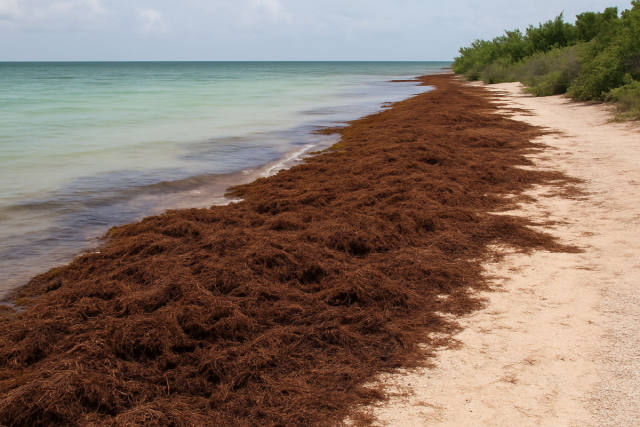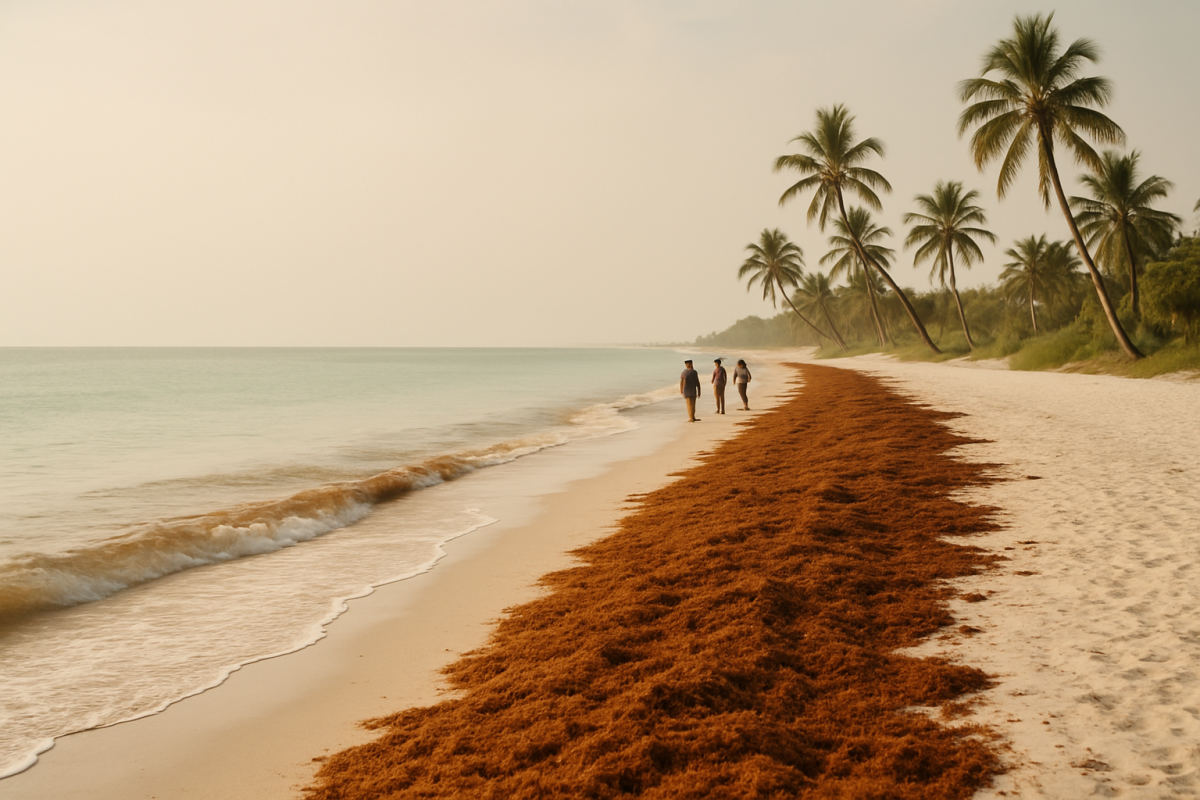
If you've noticed thick mats of brown seaweed washing ashore at your favorite Florida beach lately, you're not imagining things — sargassum season is officially underway, and it's shaping up to be a significant one for coastal communities across the state.
Sargassum is a free-floating seaweed that blooms in the Atlantic and Caribbean each year, often drifting toward Florida's shores in large quantities during warmer months. While the seaweed plays an important ecological role out at sea, heavy accumulations on beaches can affect water quality, wildlife, and the overall beach experience for visitors and residents alike.
Researchers at Florida International University are making themselves available to help explain what's driving this year's sargassum activity and what it means for Florida's coastline. Their expertise spans the environmental, ecological, and community impacts of the annual phenomenon.
For beachgoers planning a trip, it's worth checking local beach conditions before heading out, as sargassum accumulation can vary significantly from one stretch of shoreline to another — and even change day to day depending on winds and currents.
This information was made available by Florida International University.