A Florida 4-point inspection is a focused insurance inspection of a home’s roof, electrical, plumbing and HVAC systems. It is not the same as a full buyer’s home inspection, and it is not a statewide requirement automatically triggered at one particular home age. Instead, an insurance company sets its own underwriting rules and may ask for one when you apply for coverage, switch carriers or renew a policy—especially for an older home.
The report helps an insurer decide whether the property’s major systems are in acceptable condition to insure. Think of it as an eligibility snapshot, not a repair estimate or a whole-house wellness check.
Who usually needs a 4-point inspection?
Start with the carrier or agent: they should tell you whether a report is required, which form they accept and how recent it must be. Requirements vary. For example, Citizens Property Insurance requires a 4-point inspection on personal residential applications for homes more than 20 years old, and it says the inspection must be completed within the prior year. Other companies may use a different age threshold, request one for any older system, or require it after their own field review.
Buyers should ask the insurance question early in the contract period, not a day before closing. A home can look perfectly livable yet need insurance-related repairs or more documentation before a policy can be bound. For a condo, the association insures much of the building, while the unit owner’s HO-6 carrier may have separate requirements; do not assume a 4-point is needed—or unnecessary—without checking the policy quote.
What the inspector checks
- Roof: material, approximate age, visible wear, damage, deterioration, leaks and remaining useful life.
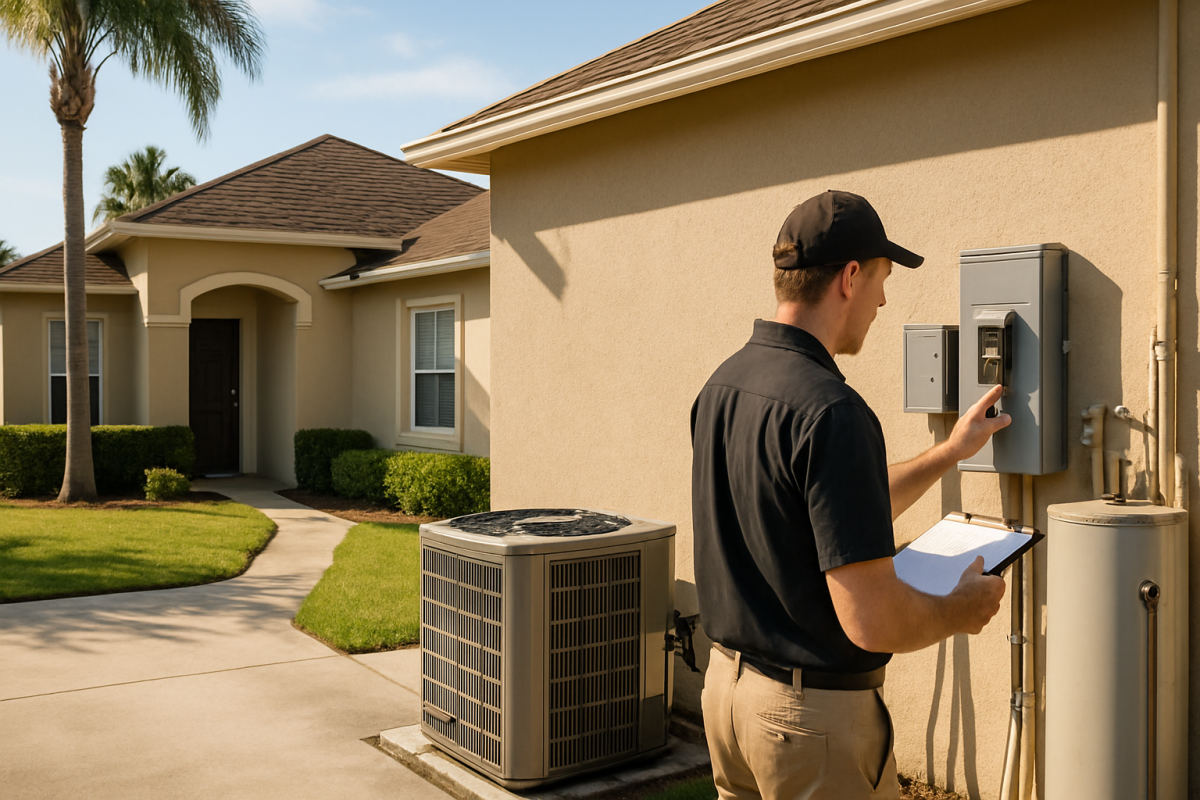
- Electrical: service amperage, panel condition, wiring type and visible hazards such as exposed or loose wiring, missing knockouts, improper double taps or inadequate fusing.
- Plumbing: visible supply and drain piping, signs of leaks, pipe materials, repiping history where known, exposed valves and the water heater’s age and condition.
- HVAC: the age, visible condition and operating status of the air-conditioning and heating equipment, plus visible damage or installation concerns.
Expect photographs of the house exterior, roof slopes, electrical panel, water heater, accessible plumbing and HVAC equipment, along with photos of any deficiency. A thorough appointment generally takes around an hour. Clear access to the panel, water heater, under-sink plumbing, attic entry and air-handler or condenser before the inspector arrives. Keep power, water and AC on, and pull together permits, paid invoices and receipts for a reroof, repipe, panel replacement or HVAC installation.
Common insurance deal-breakers—or at least delay-makers
A 4-point report itself does not technically “pass” or “fail” a house; the insurance company makes the underwriting decision. Still, certain findings routinely lead to a repair request, extra documentation, a different coverage option or a declined application.
- Roof problems: active or visible leaks, deterioration, storm damage, or too little remaining useful life. As one current example of carrier rules, Citizens requires at least five years of remaining life for older roofs it reviews.
- Electrical hazards: knob-and-tube wiring, unremediated aluminum branch-circuit wiring, insufficient amperage, or unsafe panel and wiring conditions. Some older panel brands and wiring types may prompt an insurer to request an electrician’s report or an update.
- Plumbing concerns: active leaks, corrosion, aging water heaters and high-risk or deteriorated piping. A carrier may want proof that repairs or a repipe were completed by a qualified professional.
- Nonworking HVAC or unsafe heat sources: an inoperable system, obvious damage, or a wood-burning stove or central gas fireplace without evidence of professional installation can require follow-up.
Do not hide a known problem or rush a cosmetic fix immediately before the appointment. Address safety issues properly, retain the paperwork, then ask your agent what evidence the carrier needs. If the report flags a condition you believe is wrong, request clarification from the inspector and submit legitimate repair documentation rather than assuming a fresh report alone will solve it.
What does a Florida 4-point inspection cost?
Standalone pricing commonly depends on the home’s size, location, age and accessibility. Florida’s Insurance Consumer Advocate says a typical standalone 4-point inspection can range from about $100 to $300, while a bundled price may be available when it is scheduled with a full home inspection or wind mitigation inspection. Get the total price, turnaround time and included report/photos in writing before booking. Verify that the person signing the report holds an active Florida license appropriate for the inspection.
4-point vs. wind mitigation: the crucial difference
A 4-point inspection asks, “Are the home’s core systems in insurable condition?” A wind mitigation inspection asks, “Which documented construction features can reduce wind damage and potentially earn a premium credit?”
Wind mitigation looks at features such as roof covering compliance, roof-deck attachment, roof-to-wall connections, roof shape, secondary water resistance and protection for windows, doors, skylights and garage doors. It uses Florida’s Uniform Mitigation Verification Inspection Form. The current revised form, OIR-B1-1802 (Rev. 04/26), has been required for new inspections since April 1, 2026. A valid wind mitigation form can generally be used for up to five years if no material change affects the home and no inaccuracy is found.
A wind inspection may help lower the wind portion of a premium, but it does not replace a 4-point inspection when the insurer wants proof that the roof, plumbing, electrical and HVAC are sound. When you are shopping coverage, ask whether booking both reports together makes sense—and confirm the carrier’s current rules before you go.
Practical takeaway: Order the inspection early, make systems accessible, save every permit and paid invoice, and let your insurer’s written requirements—not a neighbor’s experience—set your checklist.