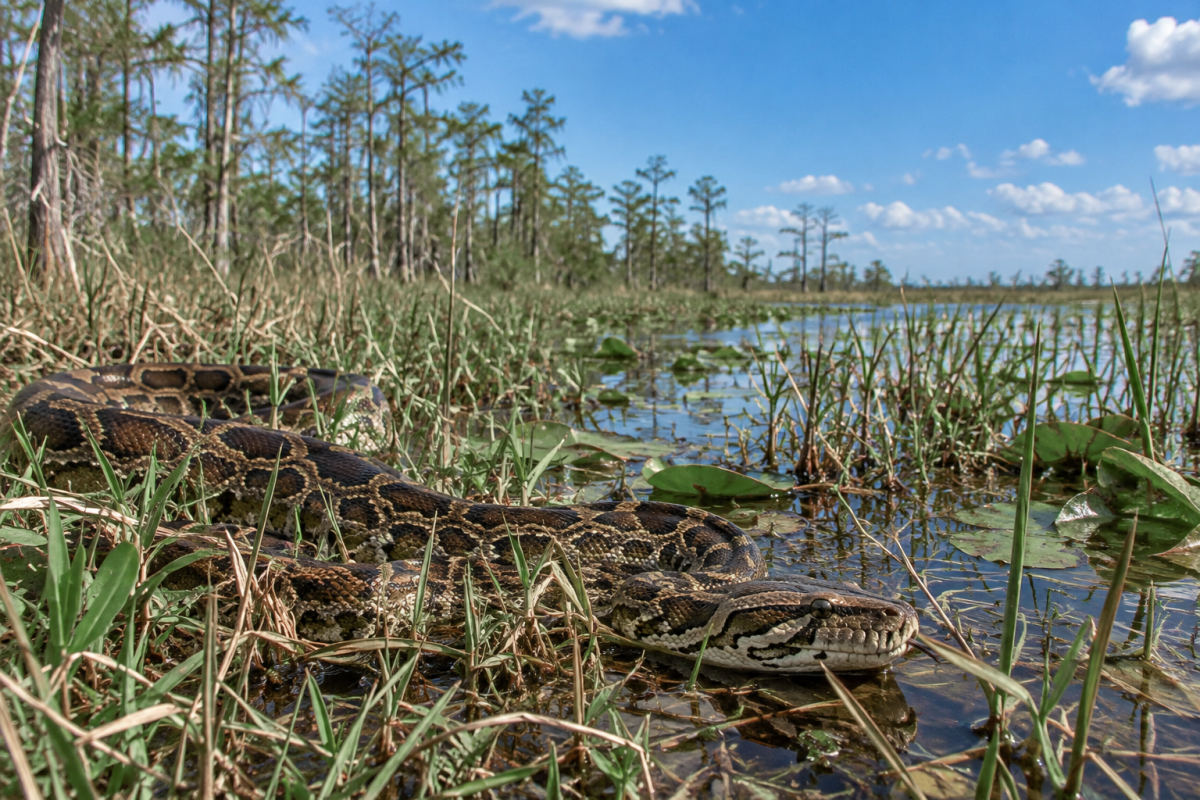
Invasive Burmese pythons may be influencing the Greater Everglades in a way that goes beyond their well-known predation on native wildlife: by moving plant seeds.
A study published in the Journal of Zoology examined digestive-tract samples from Burmese pythons in South Florida and identified 25 types of seeds. The research was conducted by scientists affiliated with the University of Florida, the U.S. Geological Survey and the Conservancy of Southwest Florida.
The snakes can carry seeds indirectly after eating fruit-eating birds and mammals. Researchers describe the process as secondary seed dispersal: rather than consuming fruit themselves, the pythons consume animals that have already eaten it, potentially depositing seeds somewhere else.
Seeds from native plants including cabbage palm and creeping cucumber were among those identified. In germination tests, nearly 40% of cabbage palm seeds that passed through python digestion survived and sprouted, according to the study.
The finding does not change the pythons' status as a major invasive threat in South Florida. Native to Southeast Asia, Burmese pythons are established across South Florida, particularly in the Greater Everglades, where they prey on mammals and birds including raccoons, rabbits and opossums. Those native animals also play roles in moving seeds through the ecosystem.
The same research examined Argentine black and white tegus, another invasive South Florida reptile. Unlike pythons, tegus directly eat fruit and seeds; researchers found 73 seed types in tegu samples, compared with 25 in python samples. Across both reptiles, the seeds represented 38 plant families, including native, endangered and invasive plants.
The study, first published online in November 2025 and appearing in the journal's February 2026 issue, suggests invasive reptiles may affect plant distribution through several pathways. Which plants may be moved—and where viable seeds could establish—depends on the seeds carried and where they are deposited.