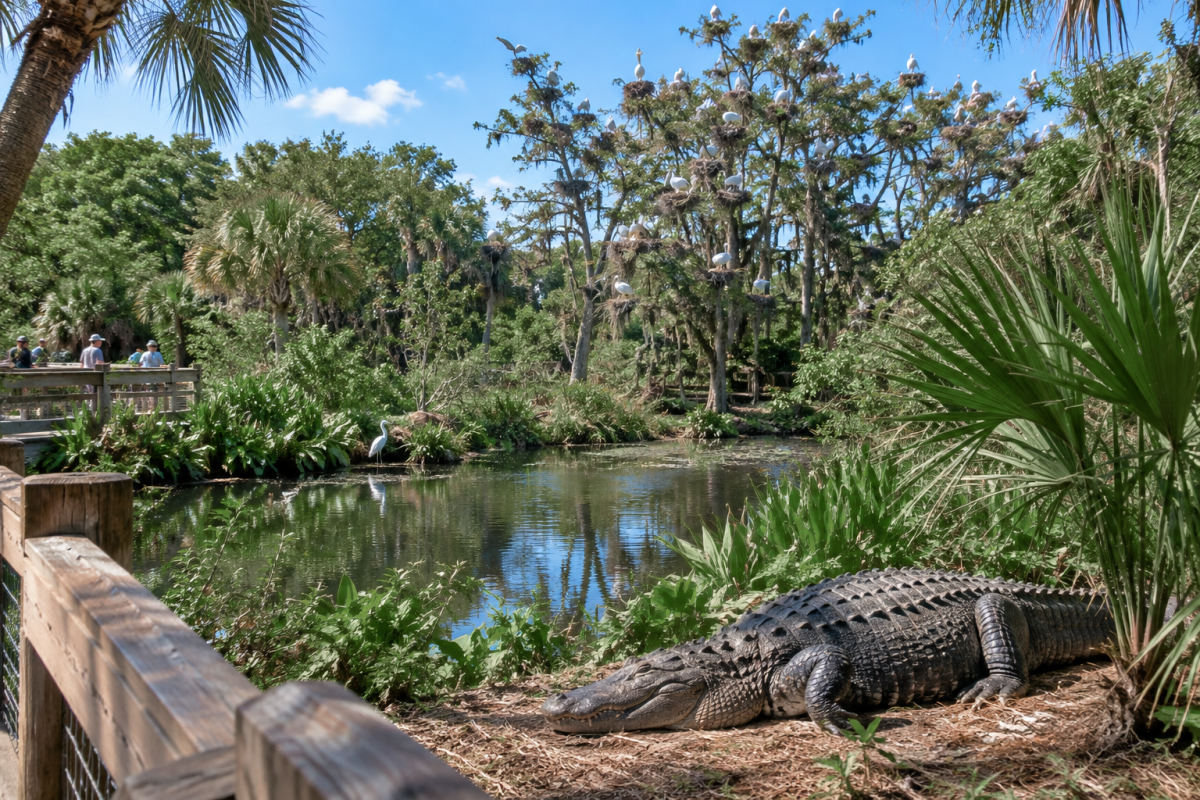
The St. Augustine Alligator Farm’s natural rookery is one of northeast Florida’s most distinctive wildlife-photo stops: wading birds nest above a habitat filled with alligators, creating unusually close boardwalk-level views of courtship, nest-building, chicks and fledglings. The key planning detail is that standard daytime admission and photographer access are different things. If the soft early light or late-day activity is the goal, read the current photo-pass rules closely before you make the drive.
When is rookery photography season?
The most recently posted extended-hours schedule covers February 28 through June 28, 2026. That window is designed around the wading-bird breeding season, but nesting is wildlife-driven, not guaranteed on a particular date. As a practical guide, late winter and early spring are useful for adult birds in breeding condition, courtship and nest construction; spring brings eggs and chicks; and late spring into June is often strongest for energetic feeding, larger chicks and fledglings. The farm’s rookery archive notes arrivals and nesting activity over time, including wood storks and roseate spoonbills, so it is worth checking for fresh updates close to your trip.
Because the published dates and access procedures are seasonal, do not assume the 2026 calendar will roll over unchanged. Confirm the coming season’s dates, prices and any weather-related closures directly with the Alligator Farm before booking lodging or planning a dawn session.
Photo pass choices: annual or two-day
For the 2026 season, the Annual Photo Pass was $169.95 plus tax. It included full-season early entry and late exit for the rookery, subject to sunset and keeper discretion, plus entry fees for up to five images in the annual photo contest. The 2-Day Photo Pass was $84.95 plus tax, for any two days, with the same early/late rookery access and up to three contest entries.
The simple value calculation: choose the two-day option for a focused weekend or a first visit, especially if you can build in a weather backup day. The annual pass makes more sense for repeat visits across changing nesting stages or for photographers who want both a sunrise session and a later return during the season. The farm’s current online membership store also lists a Photo Membership at $169.95, with year-round regular-hours admission for one person and early entry on select dates. An ordinary individual membership is specifically not a photo membership and does not provide early entry.
How early entry and late exit actually work
During the posted 2026 extended-hours window, passholders entered at 8 a.m. sharp through the red gate, carrying both a valid photo pass and photo ID. If you have not purchased a pass in advance, the farm’s instructions say an employee may allow early entry after holding a credit card and driver’s license; the pass and card can then be collected in the gift shop after 9 a.m. Missing that 8 a.m. entry does not mean an automatic second gate opens: staff may or may not be able to admit late arrivals before the regular 9 a.m. opening.
Extended access applies to the rookery only. The rest of the park remains closed before 9 a.m. and after normal closing. For an evening session, enter through the ticket lobby before its closing time—5 p.m., or 6 p.m. during summer hours—then show your physical or digital membership card plus photo ID. Departure is managed by keeper staff in announced increments. Late access can run until sunset, but it is weather-dependent and at keeper discretion.
Rules that matter in the field
- Pack before you enter. Once the rest of the park is closed, you cannot return to your vehicle. Bring water, spare batteries, a card wallet and rain protection from the start.
- Expect an active workplace. Give staff room to work and follow their directions promptly; the rookery is a living animal area, not a private photo set.
- Keep your plan flexible. Weather can shorten late access, and bird behavior changes by the day. A second morning is often more valuable than trying to force one long session.
- Work from the public viewing areas. Avoid crowding nests, blocking boardwalk traffic or trying to provoke behavior. Patience is the better technique here.
A medium-to-long telephoto lens gives you options for nest portraits and birds in flight, while a camera rain cover is a sensible addition for Florida’s changeable spring weather. Practical takeaway: schedule two mornings if possible, arrive fully packed before 8 a.m., and recheck the Alligator Farm’s current seasonal photo-pass sheet just before you go.