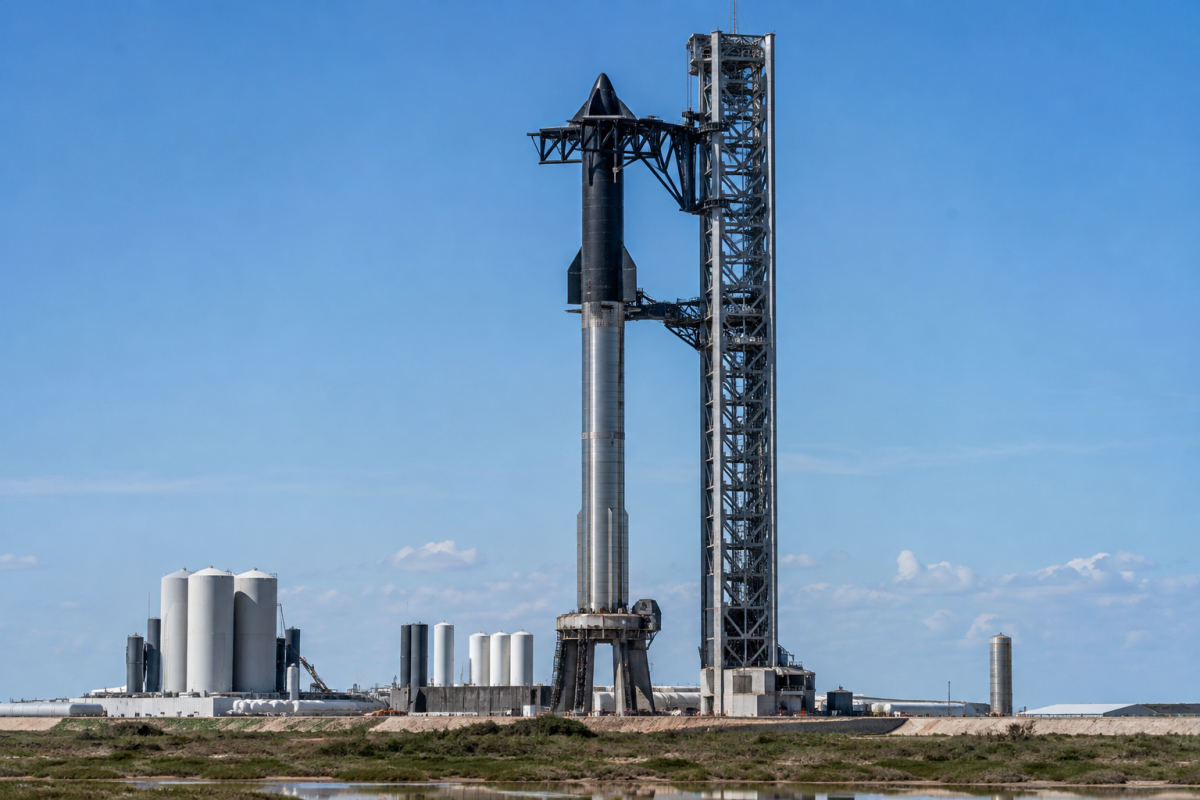
SpaceX is targeting 5:45 p.m. EST Friday, Nov. 13, for its 15th Starship test flight from Starbase in Boca Chica, Texas. The 75-minute launch window is scheduled to run until 7 p.m. EST.
The company plans to attempt something it has not done before: catch both the descending Super Heavy booster and the Starship upper stage at its Mechazilla launch tower. SpaceX Vice President of Launch Kiko Dontchev described the objective during a Nov. 5 presentation at NASA's Kennedy Space Center as the “holy grail of rocketry.”
SpaceX says recovering both elements would be the first full recovery of an orbital launch system, a step it considers important to making Starship a reliable, rapidly reusable rocket. The company has previously completed three Super Heavy booster catches, though those involved first-generation Starship vehicles.
If the Flight 15 plan proceeds as described, the upper stage would spend more than 22 hours in flight, orbit Earth about 14 times at roughly 170 miles in altitude and deploy 26 third-generation Starlink satellites into low-Earth orbit.
The test is based in Texas, but it has direct relevance for Florida's Space Coast. SpaceX is developing Starship launch facilities at Kennedy Space Center's Pad 39A and Cape Canaveral Space Force Station's Launch Complex 37, and company officials hope for the first Starship launch from Kennedy Space Center by the end of the year.
Dontchev also pointed to the value of recovering flown hardware. During the event, he displayed a heat-shield tile from Starship's 13th test flight in July. That upper stage remained afloat after splashing down in the Indian Ocean, allowing marine crews to retrieve the vehicle for analysis. According to Dontchev, the tile was made in a Florida bakery, sent to Texas, flown in space and later returned to Florida.