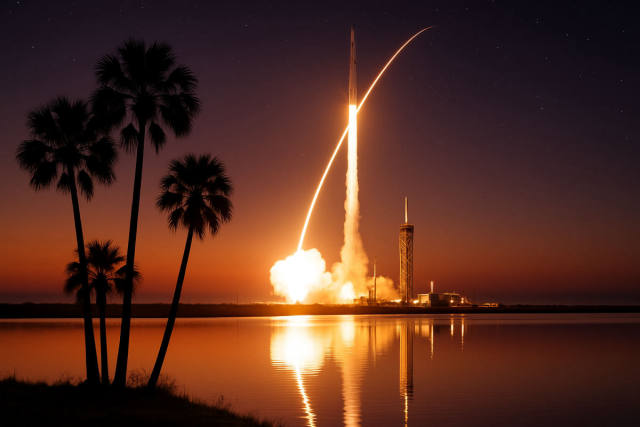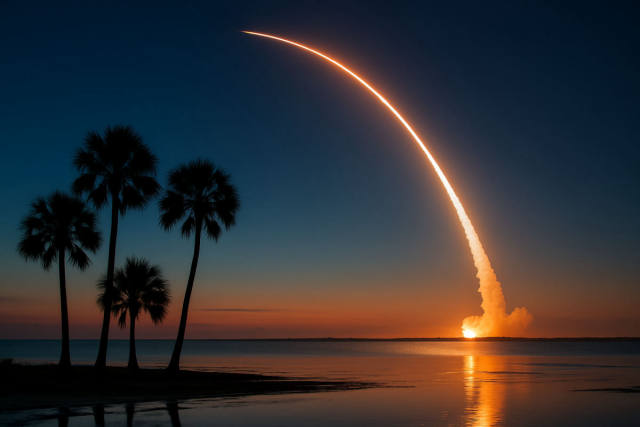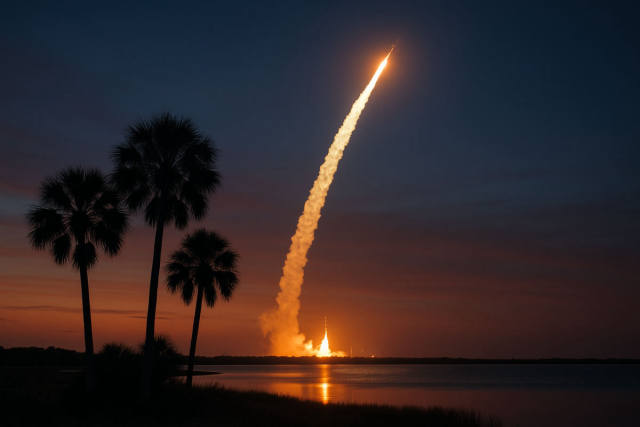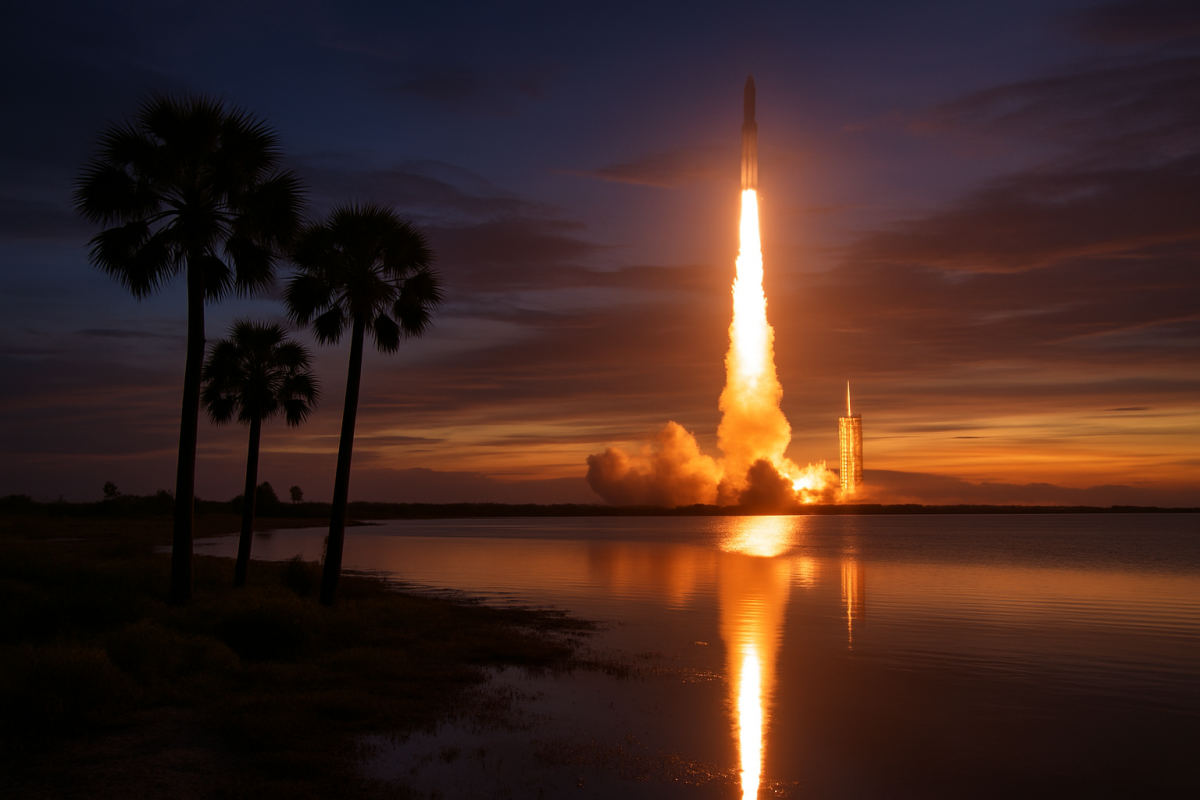
SpaceX successfully launched three SES O3b mPOWER satellites from Launch Complex 40 at Cape Canaveral Space Force Station on Sunday, September 13, with liftoff occurring exactly as scheduled at 2:49 p.m. ET. The mission marked the final chapter in building out SES's O3b mPOWER constellation, which now counts 13 satellites in medium-Earth orbit for the Luxembourg-based global satellite operator.
Weather had been the day's biggest wild card. The Space Force's 45th Weather Squadron opened the window with just 60% odds of favorable conditions — dropping to 40% by the end — as sea-breeze-driven thunderstorms, cumulus clouds, and anvil clouds threatened to force a scrub. A line of storms packing lightning and wind gusts up to 40 mph was marching eastward from Florida's Gulf Coast toward Orlando during the final hour of the countdown. Conditions improved, however, and by about nine minutes before liftoff the weather odds had climbed to 75%, with the 45th Weather Squadron ultimately reporting a clean "go for launch."
The Falcon 9's first-stage booster had quite a résumé heading into Sunday's flight — this was its 29th mission, with previous flights including Ax-2, Euclid, Ax-3, CRS-30, SES ASTRA 1P, NG-21, and multiple Starlink runs. After separation, the booster flew due east and landed aboard SpaceX's drone ship A Shortfall of Gravitas in the Atlantic Ocean. Because the trajectory headed out to sea rather than back toward the Florida coast, Central Florida residents were spared any sonic booms.
Sunday's launch was the 56th orbital rocket liftoff of 2026 from Cape Canaveral Space Force Station and NASA's Kennedy Space Center combined. The previous launch from the area had been August 30, when a Falcon Heavy carried NASA's Nancy Grace Roman Space Telescope from pad 39A at KSC. Spectators who made it to Kennedy Space Center Visitor Complex had three viewing areas to choose from, including spots at the Atlantis North Lawn roughly seven miles out, the Gantry at LC-39 just 3.4 miles away, and the Apollo/Saturn V Center at 6.2 miles.
This recap is based on live coverage by Rick Neale and the FLORIDA TODAY Space Team.