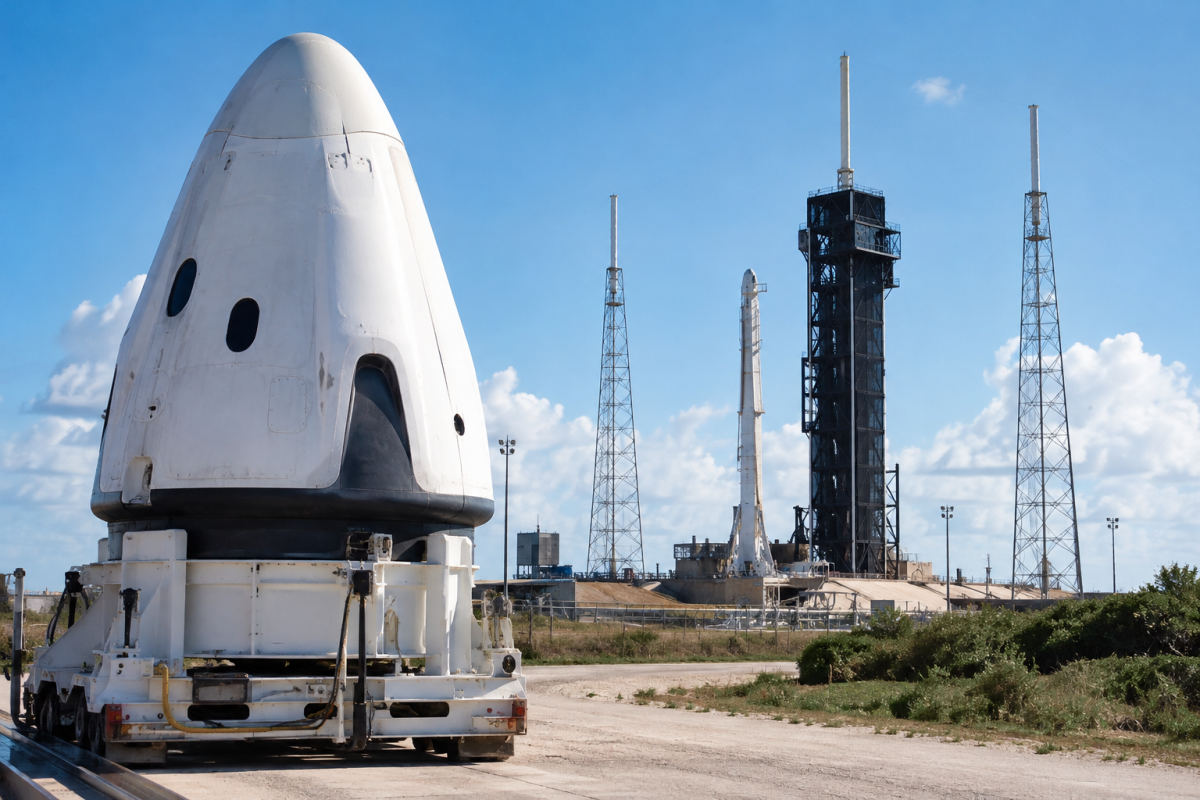
The U.S. Air Force Research Laboratory recently tested a SpaceX Starfall orbital cargo delivery pod in a Pacific Ocean deployment, part of an effort to assess whether rockets could move supplies to remote locations within hours.
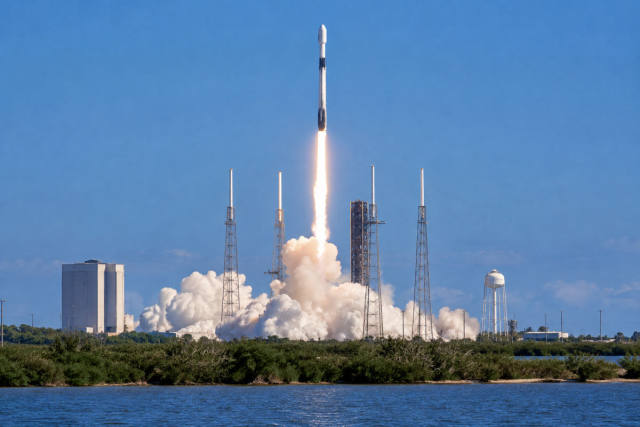
The Oct. 20 test launched from Cape Canaveral Space Force Station. The cargo included emergency survival gear, medical equipment, batteries and a satellite-communications-enabled tracker. Researchers also monitored how temperature, shock, vibration and radiation affected the payload, with particular attention to satellite navigation and communication electronics.
According to AFRL, the Starfall capsule carried several lab-developed agile cargo pods, each with its own equipment selection and environmental sensors intended to track payload condition through launch and re-entry.
The Rocket Cargo concept is primarily aimed at military logistics, including deliveries to areas without runways or roads. AFRL says the system could potentially handle tens of tons per launch and move cargo around the world. Researchers have also discussed testing other payloads, including a UNI-PAC III life raft, though its usability after delivery would require specialized testing.
AFRL has identified potential emergency-response applications as well, including natural-disaster response and responses to chemical or biological hazards. The laboratory is working with commercial partners on future tests and possible deployment, including SpaceX, Blue Origin, Rocket Lab, Sierra Space, Anduril, Inversion Space and Outpost Space.