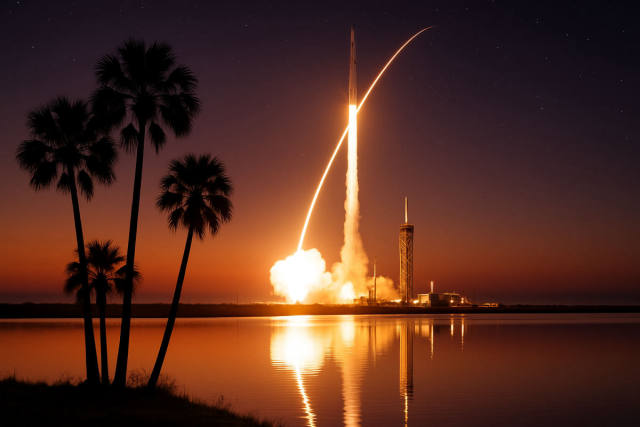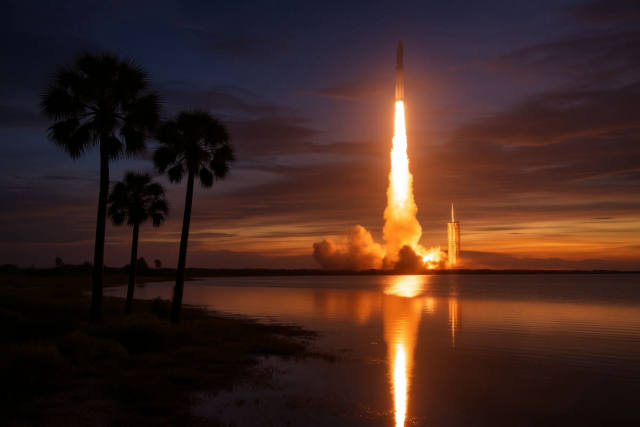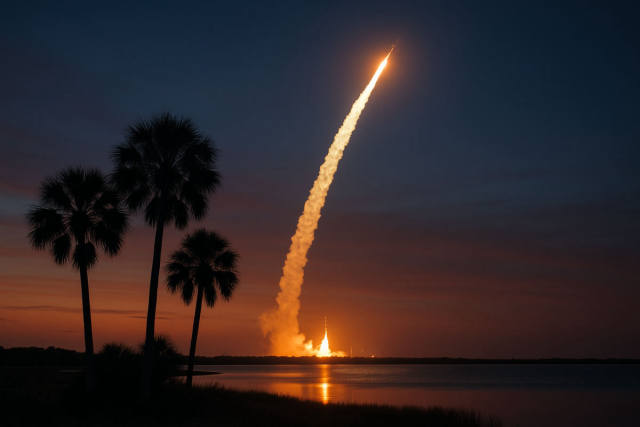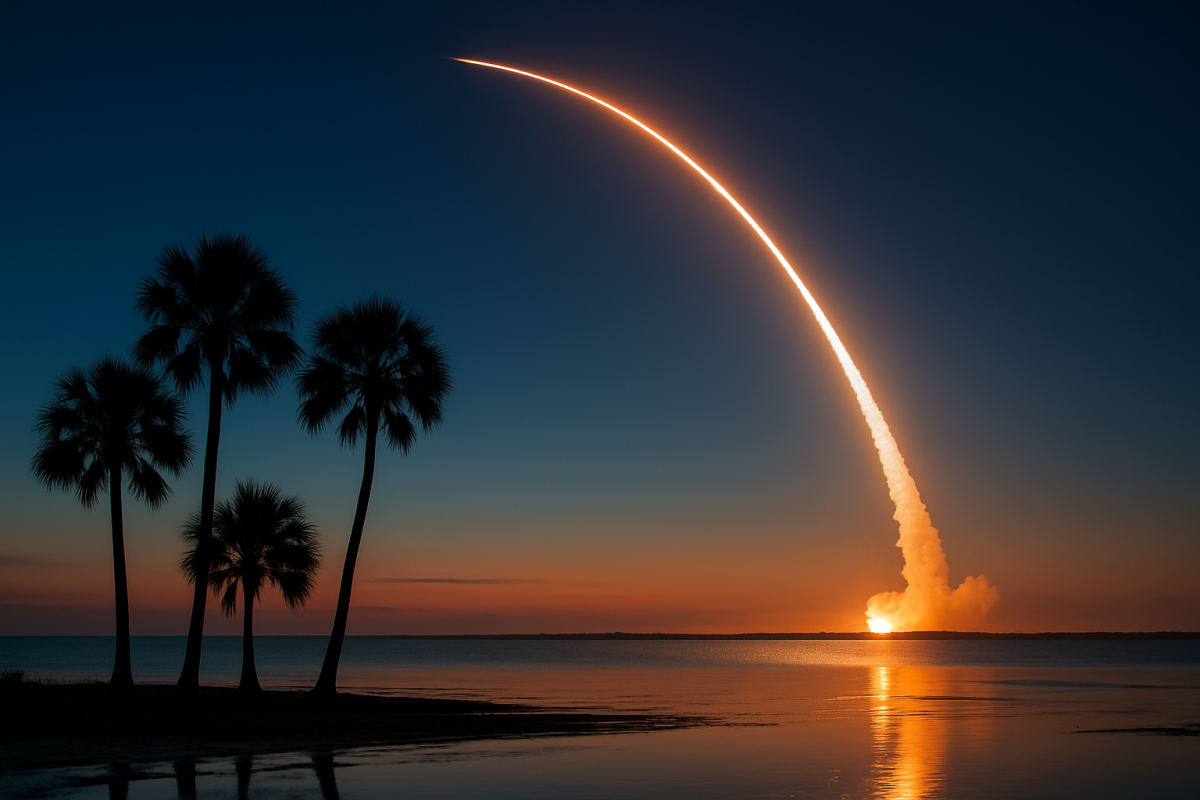
Florida's skies had been quiet for more than two weeks when a SpaceX Falcon 9 broke the silence Sunday afternoon, lifting off from Cape Canaveral Space Force Station's Space Launch Complex 40 at 2:49 p.m. The mission, designated mPOWER-F, carried three communications satellites for Luxembourg-based operator SES to medium-Earth orbit at roughly 5,000 miles altitude.
The three satellites are the final installment of a 13-satellite constellation called O3b mPOWER, built by Boeing Space for SES. The Falcon 9's first-stage booster — completing its 29th flight — touched down successfully on the droneship A Shortfall of Gravitas in the Atlantic, keeping SpaceX's reuse streak intact.
The previous launch from Florida dated back to August 30, when a Falcon Heavy sent NASA's Nancy Grace Roman Telescope into space. SpaceX has been deliberately scaling back its Falcon 9 activity at both Cape Canaveral and Kennedy Space Center as the company works to get its Starship and Super Heavy launch infrastructure operational at KSC's Launch Complex 39-A. With Starlink missions currently on pause, SpaceX is focusing its Florida Falcon 9 flights on commercial customers and Dragon spacecraft missions, while Falcon Heavy handles the heavier lifts at KSC.
Sunday's flight marked the 56th orbital rocket launch from Florida so far this year, with 49 of those belonging to SpaceX. United Launch Alliance accounts for five flights, Blue Origin one, and NASA one. SpaceX has no additional Florida missions currently listed on its public manifest. Meanwhile, the Crew-13 mission to the International Space Station — which includes Central Florida astronaut Luke Delaney — has been delayed to no earlier than the end of September while SpaceX and NASA address an issue with that mission's Crew Dragon spacecraft.
This story originally appeared in the Orlando Sentinel, written by Richard Tribou.