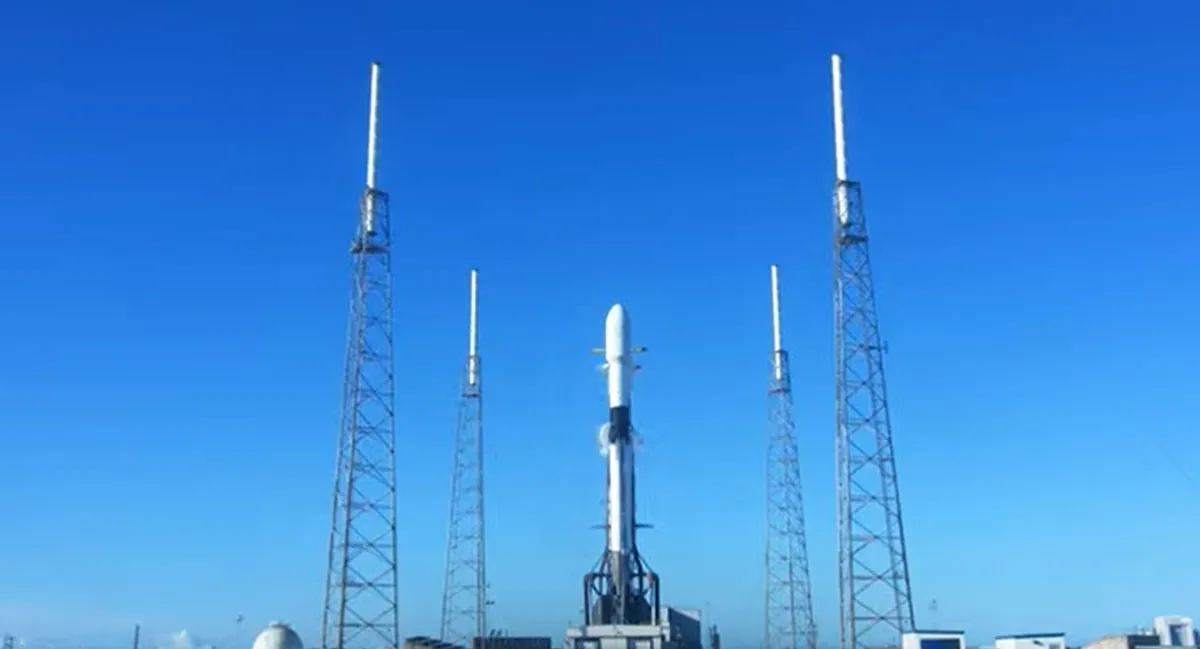
A planned Monday morning liftoff from Cape Canaveral Space Force Station got pushed to Tuesday after SpaceX quietly scrubbed the Starlink 10-19 mission before 10:30 a.m. without citing a specific reason. The Falcon 9 — carrying 29 Starlink satellites and flying on a booster making its 18th trip to space — will try again Tuesday during a window from 10:26 a.m. to 2:26 p.m. Weather looks favorable, with a 90% chance of good conditions at the window's opening, though odds dip to 75% by the end. Recovery is planned on the droneship A Shortfall of Gravitas in the Atlantic.
Also newly back on the calendar is the long-delayed Globalstar 2-R Launch 1 mission, originally slated for May 18. SpaceX is now targeting Saturday evening from Cape Canaveral, with a 15-minute window opening at 9:12 p.m. and a backup opportunity on Aug. 16. Because the booster — on its 33rd flight — will attempt a return landing at Landing Zone 40, residents across multiple Central Florida counties can expect a sonic boom advisory. The booster originally assigned to the flight has been swapped out, though no official explanation for the months-long delay was given.
The headliner for the month arrives at the very end: a Falcon Heavy launch from Kennedy Space Center's Pad 39-A as early as Aug. 30 at 7:26 a.m. The triple-booster rocket — flying for only the second time this year and 13th time since its 2018 debut — will carry NASA's Nancy Grace Roman Space Telescope toward a perch about 1 million miles from Earth. SpaceX also has an International Space Station resupply mission on the August docket, with the Crew-13 human spaceflight mission — including Central Florida's Luke Delaney among its four crew members — targeting no earlier than Sept. 12.
Elsewhere in the Florida launch picture, United Launch Alliance is waiting on fixes to its Vulcan rocket's BE-4 engines, supplied by Blue Origin, before its next attempt. Blue Origin itself must complete repairs at Launch Complex 36 following the explosion that destroyed a New Glenn rocket on the pad earlier this year, though CEO Dave Limp has said New Glenn is still on track to fly again before year's end. NASA's Space Launch System won't return to the pad until the Artemis III mission, currently targeting mid-2027.
This report is based on coverage from the Orlando Sentinel.