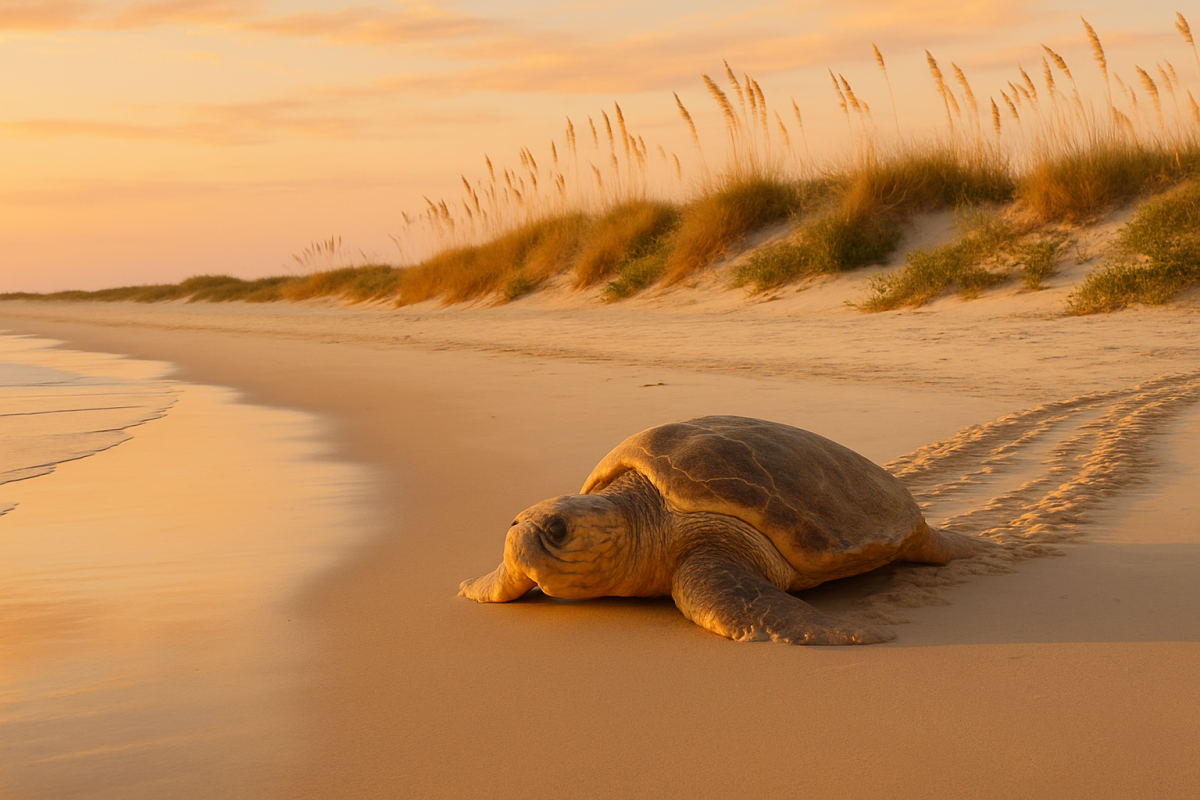
If you've been spotting tiny flippers on Florida's Space Coast beaches lately, you're not imagining things — sea turtle nesting season is off to a genuinely impressive start in 2026. All three of the region's most prominent species, loggerheads, greens and leatherbacks, are showing encouraging numbers early in the season.
Loggerheads are the standout story. Brevard County's beach renourishment coordinator Mike McGarry says the species may not break an all-time record, but could land in the top three nesting years ever recorded locally. Green turtles, which naturally cycle through alternating high and low years, are in a predicted low year — yet are still nesting at a level considered strong for that part of the cycle. In 2025, Brevard counted 22,716 loggerhead nests, 30,431 green sea turtle nests and 129 leatherback nests, according to the Florida Fish and Wildlife Conservation Commission.
A major factor behind the rebound is decades of federally funded beach renourishment along the Space Coast. Sand pumped onto these shores has rebuilt the wide, sloping beaches that turtles need to dig nesting sites safely above the waterline. Ordinances restricting beachside lighting have also helped hatchlings navigate toward the ocean rather than toward artificial light sources.
Still, serious challenges remain. Rising sand temperatures — a result of hotter summers — are skewing hatchling gender heavily female, since incubation temperature determines sex in sea turtles. Research in South Florida has found nearly all recent hatchlings there have been female. Thicker seasonal seaweed, beach furniture, fishing nets and floating plastic and tar also take a toll on hatchlings making their way to the water. Conservationists estimate only one in 1,000 to one in 10,000 sea turtles hatched will survive to adulthood.
This report originally appeared in Florida Today.