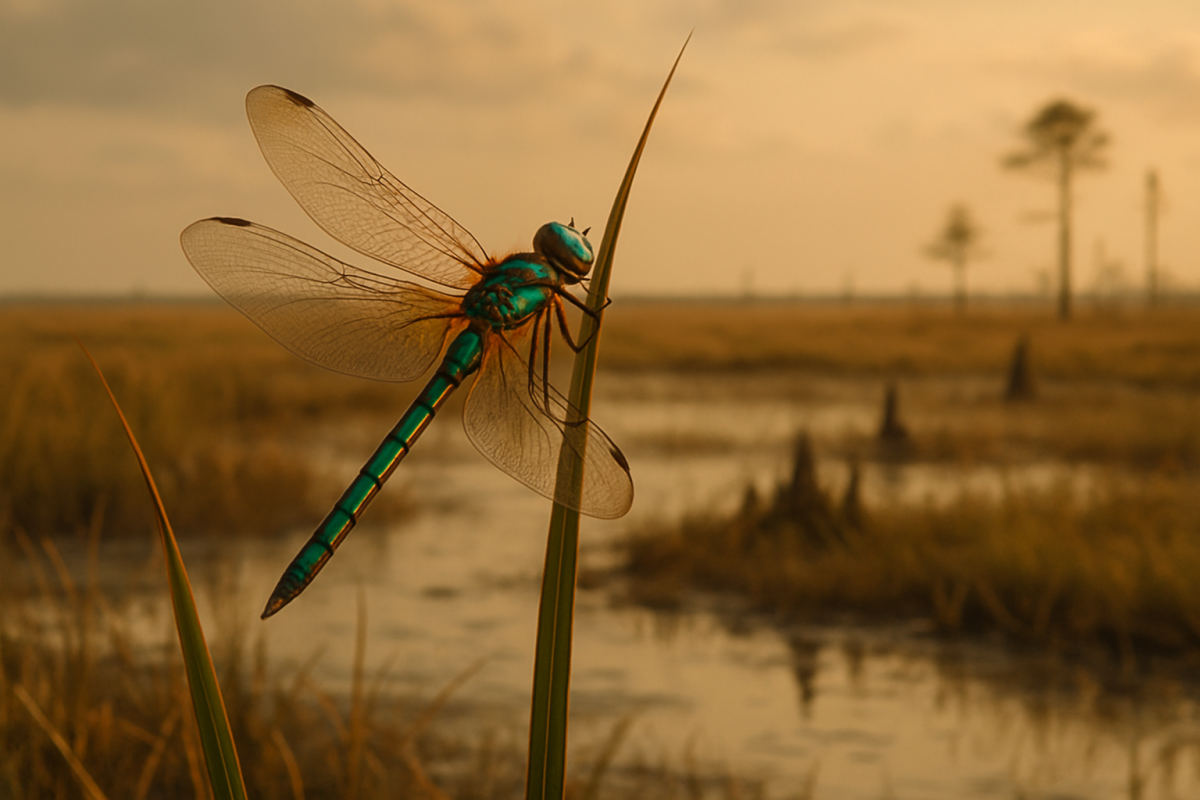
A rare dragonfly found only in northern Florida and southern Georgia is facing a troubled future as development pressures chip away at the specialized habitat it needs to survive. According to a study published in Ecology and Evolution, roughly 35% of all suitable habitat for Say's spiketail (Zoraena sayi) is projected to be lost to development by 2070.
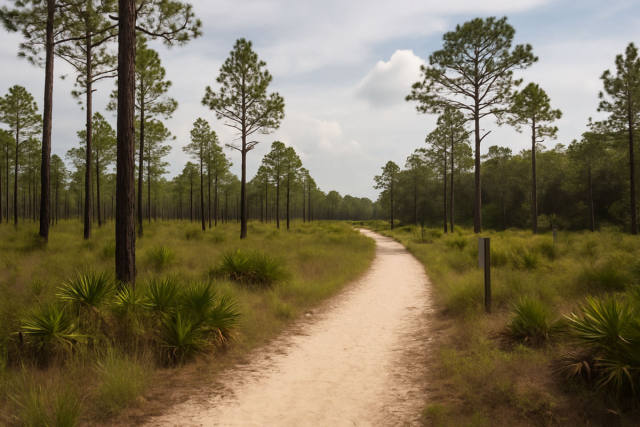
The species depends on seepage streams — small, spring-fed creeks that trickle through longleaf pine forests — to complete its life cycle. Like all dragonflies, Say's spiketails spend their early nymph stage in water, making these ephemeral streams critical to their survival. Longleaf pine ecosystems, already considered threatened across the Southeast, provide the backbone of that habitat.
Researchers at the Florida Fish and Wildlife Conservation Commission's Fish and Wildlife Research Institute used decades of field survey data, going back to the 1990s, to build habitat suitability models and then layered in projected development patterns and maps of protected lands through 2070. The results pointed to the Florida Panhandle as home to the highest concentrations of suitable habitat — but also as a region where development is expected to intensify in coming decades.
The study found that about 30% of the dragonfly's suitable habitat currently falls within protected lands, while more than two-thirds sits on private property — much of it vulnerable to conversion. Matt Flenniken, an assistant research scientist with the Commission, noted that the species serves as a useful flagship for the broader longleaf pine ecosystem, which is also vital for imperiled frogs, salamanders, and plants. He hopes the findings will inform decisions about which private lands to prioritize for conservation easements.
This research was reported by The Wildlife Society.