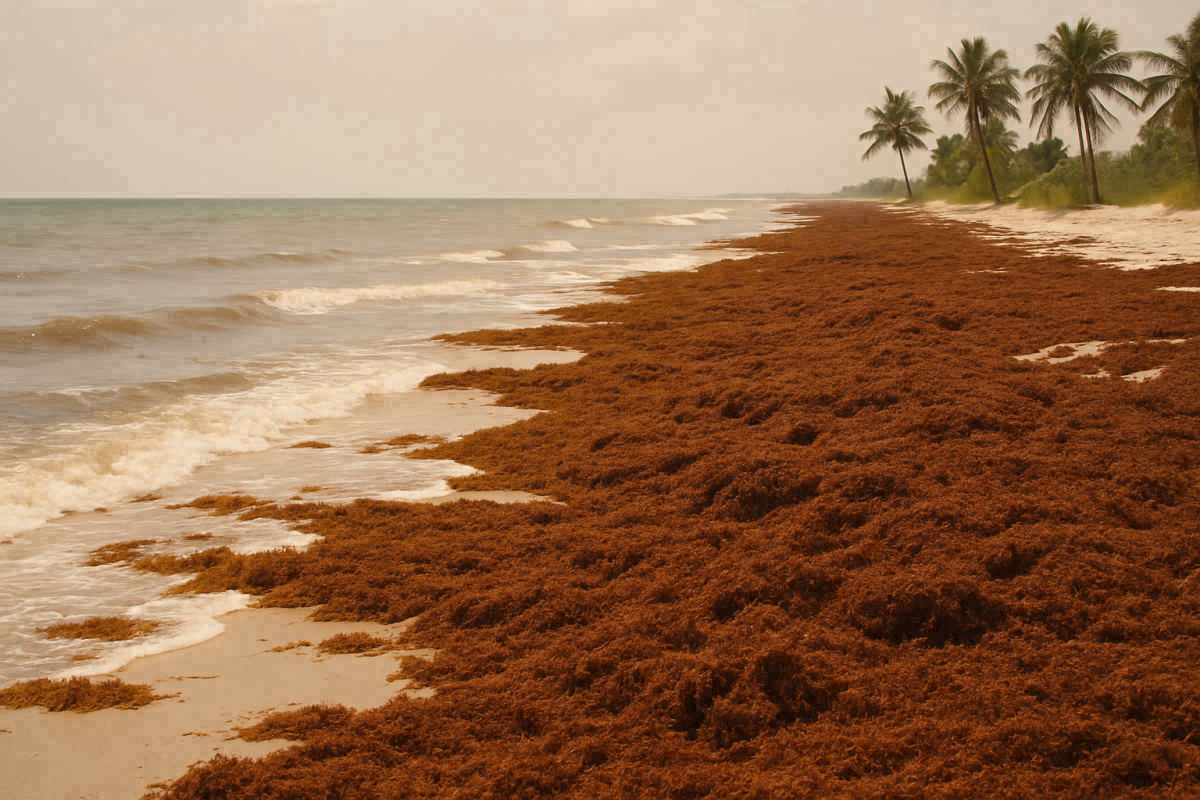
If your South Florida beach day has been interrupted lately by a wall of brown, smelly seaweed, you're not imagining things. Sargassum — a free-floating seaweed that originates in the open Atlantic — has been washing ashore in noticeable quantities this summer, and experts say the peak of the season runs from May through July.
The seaweed itself isn't new to Florida's coastline, but its expanded range is relatively recent. Sargassum originally concentrated in the Sargasso Sea in the northwest Atlantic. Around 2011, a shift in wind patterns is believed to have pushed some of it into the tropical Atlantic between West Africa and the Caribbean, where it found ideal conditions to multiply. That change eventually put South Florida directly in its path, and conditions that brought it here are not expected to reverse.
Once sargassum reaches the shore and begins to decompose, the problems compound quickly. The rotting seaweed releases gases considered toxic, and it carries heavy metals that can become more concerning as it breaks down in large quantities. For marine ecosystems, the pileups are equally troubling — thick mats of seaweed block the sunlight that coral reefs and seagrasses depend on, while the decaying material depletes oxygen levels in the water, stressing the broader ecosystem.
Out in the open ocean, though, the story is different. Floating sargassum mats serve as a rich habitat for fish, larvae, and baby sea turtles, making the seaweed a genuinely valuable part of the marine environment — the challenge arises specifically when it accumulates along the shore in large amounts.
This report was originally published by WPBF 25 News.