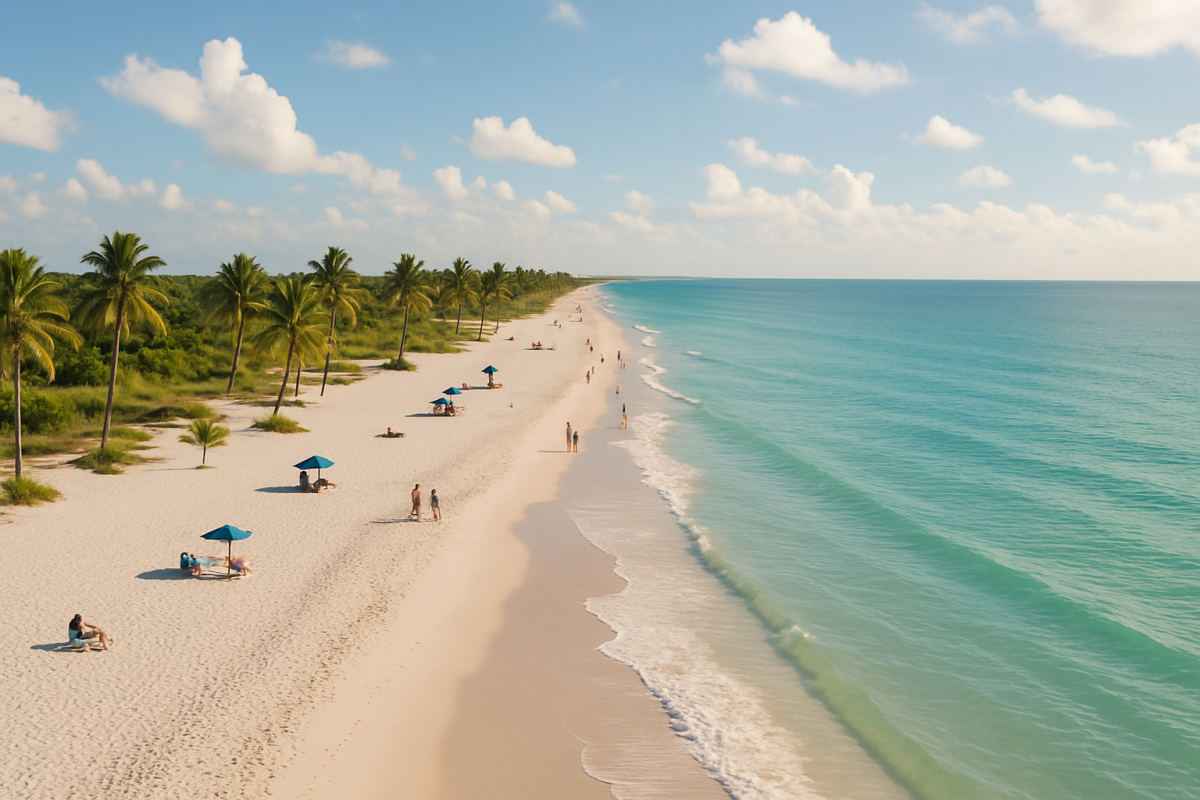
Florida beach lovers can breathe a cautious sigh of relief: the University of South Florida's Sargassum Watch System now believes this year's sargassum peak has come and gone, and 2026 will not match last year's record-setting inundation. Lead scientist Brian Barnes says 2026 is expected to rank second all-time in daily tonnage of the thick, brown seaweed washing ashore — significant, but a step down from 2025's historic high.
Barnes noted that sargassum amounts began declining across most regions in July, which he called "a good sign." Even so, the Gulf of Mexico hit a record high for July, and most other regions came in second only to 2025. That means coastal beaching events continued through last month along southeast Florida, the Caribbean, and the Lesser Antilles. In recent summers, more than 70,000 tons of sargassum per day have reached coastlines across the tropical North Atlantic, according to a 2025 peer-reviewed study in the journal Scientific Reports.
For Southwest Florida, the news is relatively good. The Loop Current tends to carry sargassum from north to south well offshore, making Texas beaches far more vulnerable than those along the Gulf's Florida coast. The greater Miami area and the Florida Keys have seen the most impact on Florida's shoreline.
There's a longer-term wrinkle worth watching, though. Marine scientists have discovered that remnants of the massive 2025 bloom survived in the Caribbean Sea and Gulf long enough to act as seed stock, growing and breaking into new living pieces in 2026. That means exceptionally bad years could start feeding the next season's bloom from within the region, rather than waiting for a fresh crop to drift over from the distant Sargasso Sea — potentially shortening warning times and extending the season's reach in future years.
This report is based on coverage by WGCU, the PBS and NPR station for Southwest Florida, written by Tom Bayles.