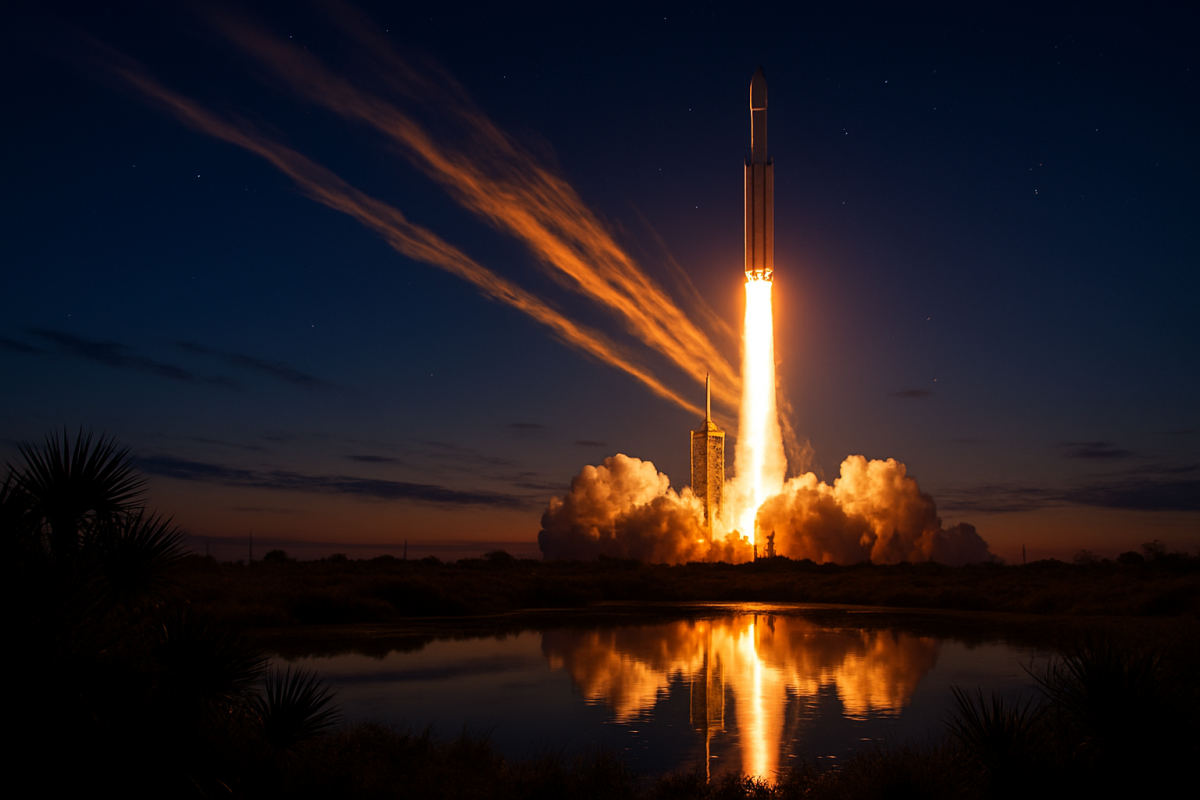
A new era of on-orbit satellite maintenance got underway on July 21 when a SpaceX Falcon 9 rocket lifted off from Cape Canaveral carrying Northrop Grumman's Mission Robotic Vehicle (MRV) — described as the nation's first multi-mission robotic in-space servicer. The spacecraft is now headed to geosynchronous Earth orbit, roughly 22,000 miles above the planet.
At the heart of the mission is the Robotic Servicing of Geosynchronous Satellites (RSGS) payload, which relies on a pair of dexterous robotic arms designed and built by the U.S. Naval Research Laboratory. Those arms will allow the MRV to pull alongside existing satellites, inspect them, and install small propulsion modules called mission extension pods — essentially giving aging spacecraft a new lease on life.
Funding for the RSGS program comes from the Defense Advanced Research Projects Agency (DARPA), which supplied the robotic arm assembly for integration onto the MRV. NASA contributed in-space robotics expertise aligned with the agency's goals of advancing U.S. capabilities in in-space servicing, assembly, and manufacturing for both commercial and exploration purposes.
The mission is a collaboration among multiple government agencies and private industry partners, reflecting a growing national interest in keeping valuable orbital assets operational longer rather than replacing them with costly new launches.
Details on the mission were published by NASA's Goddard Digital Team.