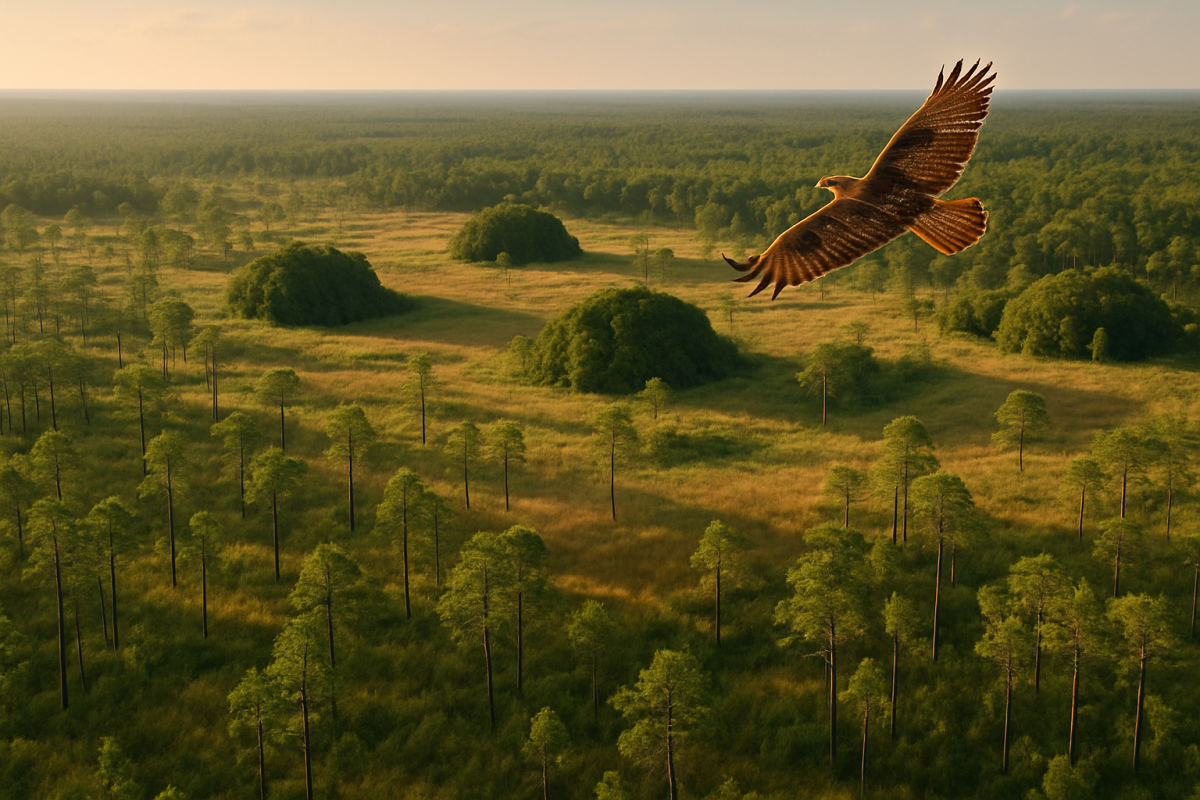
A North Florida farming family in Putnam County has permanently protected 816.46 acres of working land through a conservation easement valued at $2.665 million. The agreement ensures the property — a mix of upland pine forests, hardwood hammocks, seasonal wetlands, and open pastures — can never be subdivided or developed, while still allowing the family to farm, ranch, and manage timber as they always have.
The land sits within a 1.6-million-acre wildlife corridor stretching across North and Central Florida, linking national forests, state parks, and wildlife management areas. That connectivity matters enormously for wide-ranging species like black bears and Florida panthers, which need unbroken stretches of habitat to find food, mates, and new territory. White-tailed deer, wild turkey, bobcats, and numerous bird species also rely on this type of large, intact landscape.
From a water-quality standpoint, the protected acres do double duty. The forests and wetlands slow rainfall runoff, recharge the aquifer, and filter sediments before water reaches nearby streams and the St. Johns River system. Those same mature forests and wetland soils also store carbon, giving the easement ecological value well beyond its fencelines.
Financially, the easement works by capturing the difference between the land's value as developable real estate and its value as restricted, working farmland — a gap appraised at $2.665 million. The landowner retains private ownership and may also benefit from tax advantages tied to the donation or sale of development rights, while the public gains a permanent conservation commitment.
Conservation groups and state agencies have identified this corridor as a regional priority, and each new easement strengthens what officials describe as a growing mosaic of protected and working lands. This story was originally reported by Action News Jax and covered by the Times of India.