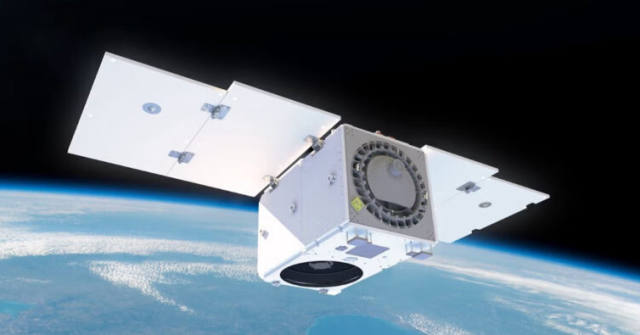
NASA’s effort to raise the orbit of the Neil Gehrels Swift Observatory has concluded without boosting the spacecraft, the agency said. The commercial mission, conducted with industry vendor Katalyst Space, was intended to extend Swift’s time in low Earth orbit.
NASA said Swift was expected to re-enter Earth’s atmosphere by the end of the year without intervention. While the orbit-boost objective was not achieved, the agency said the mission provided experience that can help shape future in-space servicing programs.
“From the beginning, this was a high-risk, high-reward mission,” Shawn Domagal-Goldman, director of NASA’s Astrophysics Division at NASA Headquarters in Washington, said in the agency’s announcement. He said the work advanced spacecraft-servicing technology, tested rapid mission timelines and explored ways satellites could be operated to extend their time in low Earth orbit.
Swift launched in November 2004 to study gamma-ray bursts, which NASA describes as the universe’s most powerful explosions. Over more than two decades, the observatory also studied comets and asteroids in the solar system, cosmic explosions and flares from black holes in distant galaxies.