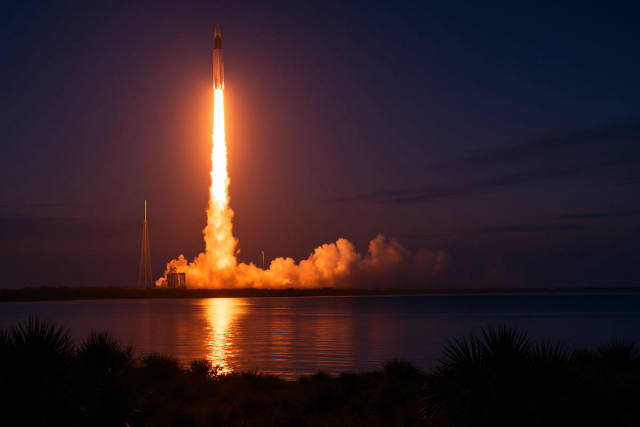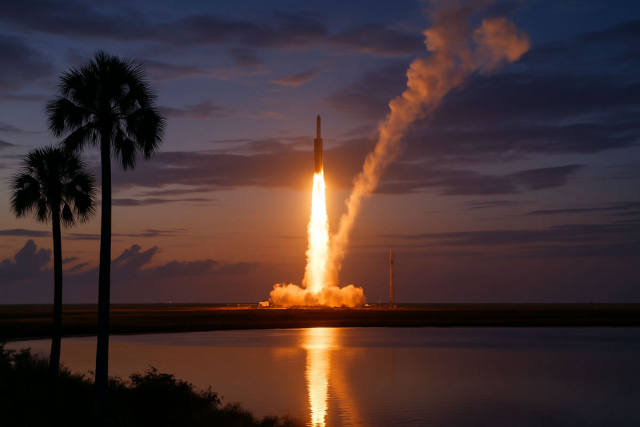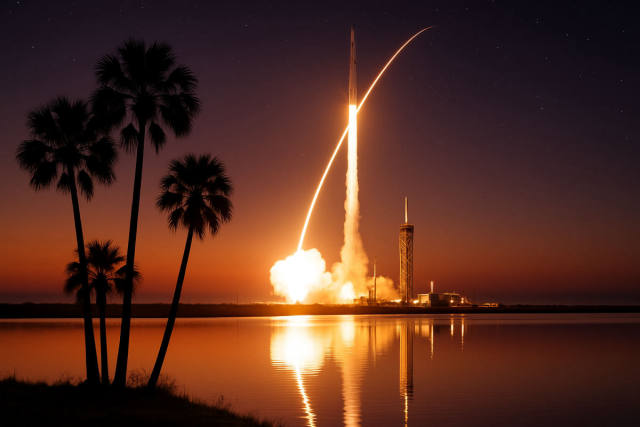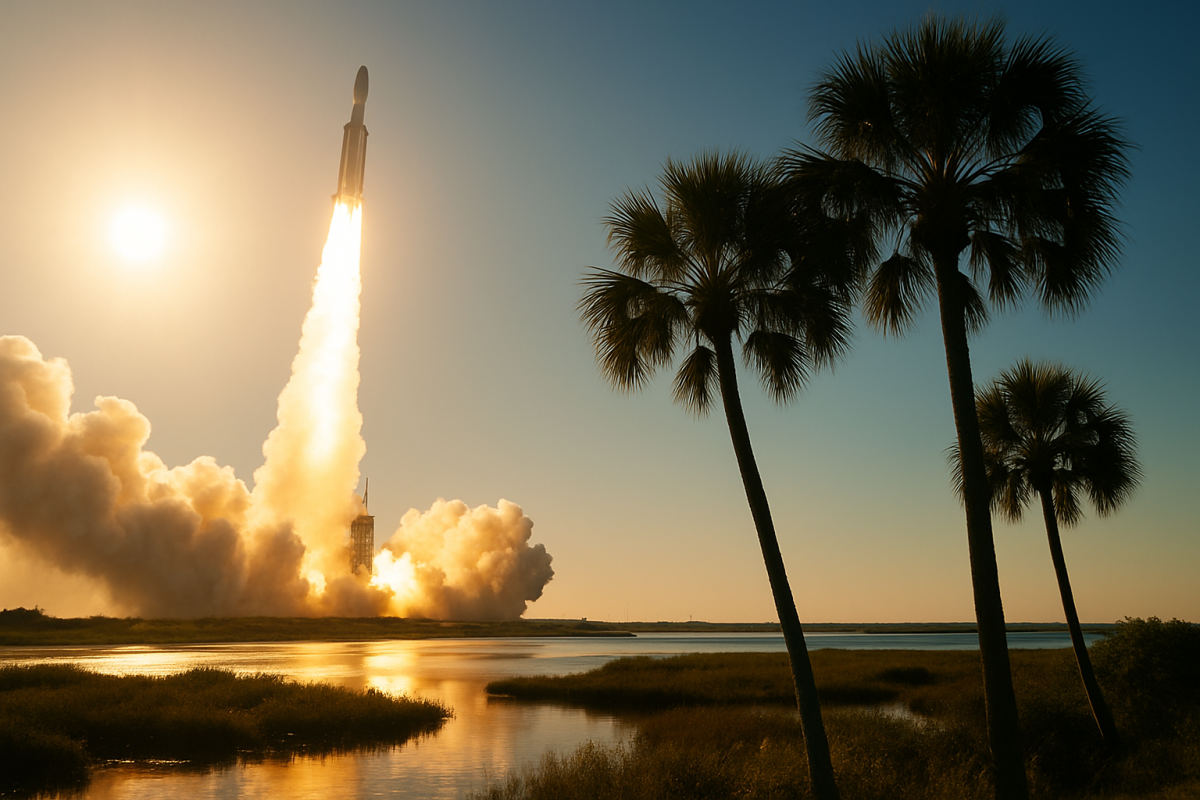
NASA has chosen SpaceX to carry its StarBurst spacecraft into orbit, tapping a Falcon 9 rocket for a mission aimed at unraveling one of the universe's most violent phenomena. The launch is slated for no earlier than 2028 and will lift off from Space Launch Complex 40 at Cape Canaveral Space Force Station in Florida.
StarBurst is a small satellite built to keep watch over as much of the sky as Earth's own bulk will allow, scanning for short gamma-ray bursts — extraordinarily brief but powerful explosions that occur when two neutron stars collide. The spacecraft will capture the initial surge of high-energy radiation from these events, giving scientists a close-up look at the moment of impact.
What makes the mission especially compelling is how it fits into the broader scientific picture. StarBurst's data is meant to be combined with gravitational-wave detections and follow-up readings from other observatories, a multi-signal research strategy known as multimessenger astronomy. Together, those streams of information could offer deeper insight into how the universe's heaviest elements are forged.
The launch contract is a firm-fixed-price task order placed under NASA's VADR program — the Venture-Class Acquisition of Dedicated and Rideshare contract — an indefinite-delivery arrangement with a maximum combined value of $1 billion across all orders over a ten-year period. StarBurst will ride as part of a Falcon 9 Bandwagon rideshare mission.
Full details on the award were published by NASA.