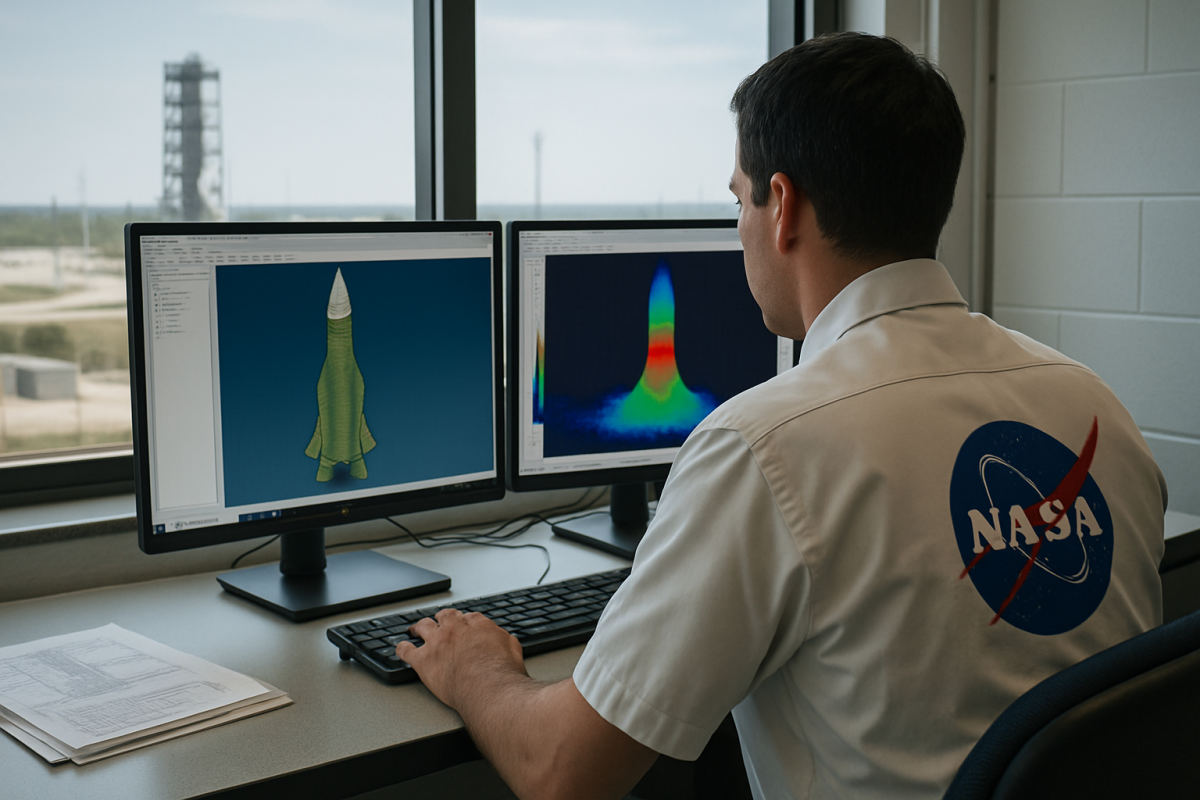
NASA engineers at Kennedy Space Center are using commercial digital software in a new way to better analyze the shock, vibration, stress and other physical forces that rockets and spacecraft experience during launch and ascent.
The work comes from the Dynamic Environments Group in NASA’s Launch Services Program Office. The team developed a standardized workflow for finite element modeling, a computer-based method used to predict how hardware will behave under extreme conditions before it is built.
Rockets vibrate, shake and flex on the way to space, while spacecraft may carry delicate scientific instruments that must withstand those forces. NASA said the updated process is intended to help engineers identify weak points and possible failure risks earlier, supporting mission safety.
“This computer-based method helps predict how rockets and spacecraft behave under extreme conditions before hardware is built and helps identify weak spots and potential failure risks early so the team can address the findings,” Brian Beaver, chief of the Flight Analysis Division with NASA’s Launch Services Program Office at Kennedy, said in the agency’s announcement.
NASA said the team recently used the software for the first time during certification work for a commercial launch provider’s rocket.