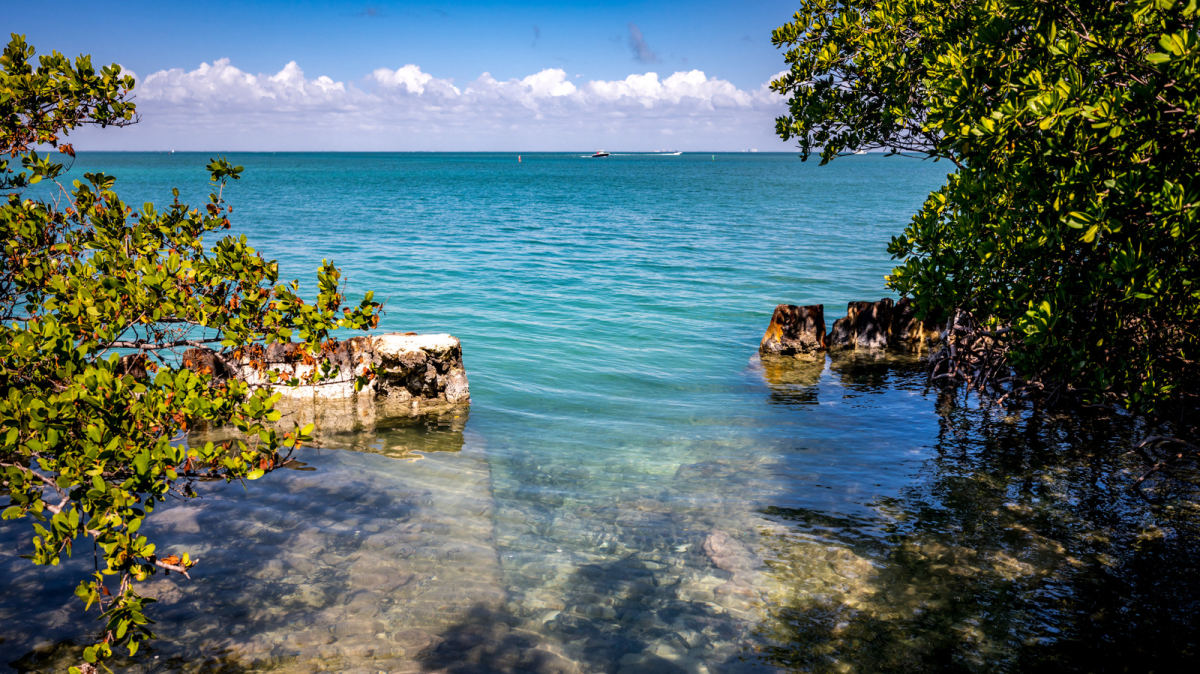
Jones Lagoon, a shallow mangrove-lined waterway in Biscayne National Park, offers a quieter way to explore one of Florida’s three national parks. Located less than an hour from downtown Miami, the lagoon is accessible only by boat, a limitation that helps keep visitor traffic lower than at more easily reached destinations.
Biscayne National Park spans 172,000 acres, about 95% of which is water, and most visitors arrive by boat. The park does not operate boat launches or boat rentals, so visitors use nearby marinas. Motorized vessels must use a mooring buoy outside Jones Lagoon; visitors then continue into the lagoon by kayak or stand-up paddleboard because motorized boats are prohibited in its shallow waters.
Water can be as little as 24 inches deep in parts of the lagoon, making marine life easier to see from above. Visitors may spot rays, turtles, baby nurse sharks, starfish and upside-down jellyfish, along with waterfowl in and around the mangroves.
The area is also habitat for the roseate spoonbill, a pink-and-white bird listed as threatened in Florida by the Florida Fish and Wildlife Conservation Commission. The spoonbill is the only one of the world’s six spoonbill species native to the Western Hemisphere.
Visitors need to account for changing tides and water depths, follow boating speed limits and avoid bird rookeries in the protected ecosystem. Snorkeling and scuba diving are not permitted in Jones Lagoon. The Biscayne National Park Institute offers daily guided outings to the lagoon, while snorkeling and diving are available through the institute in other parts of the park.