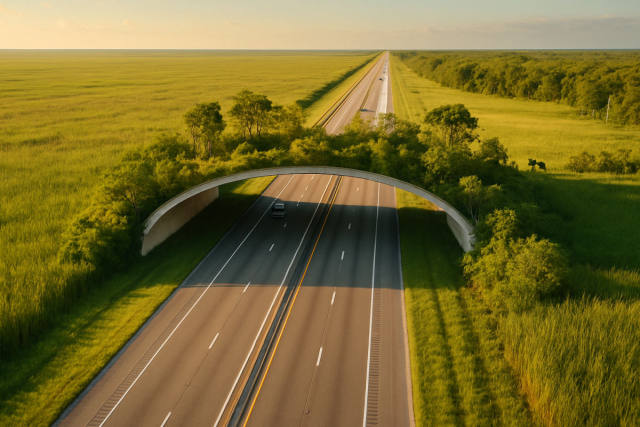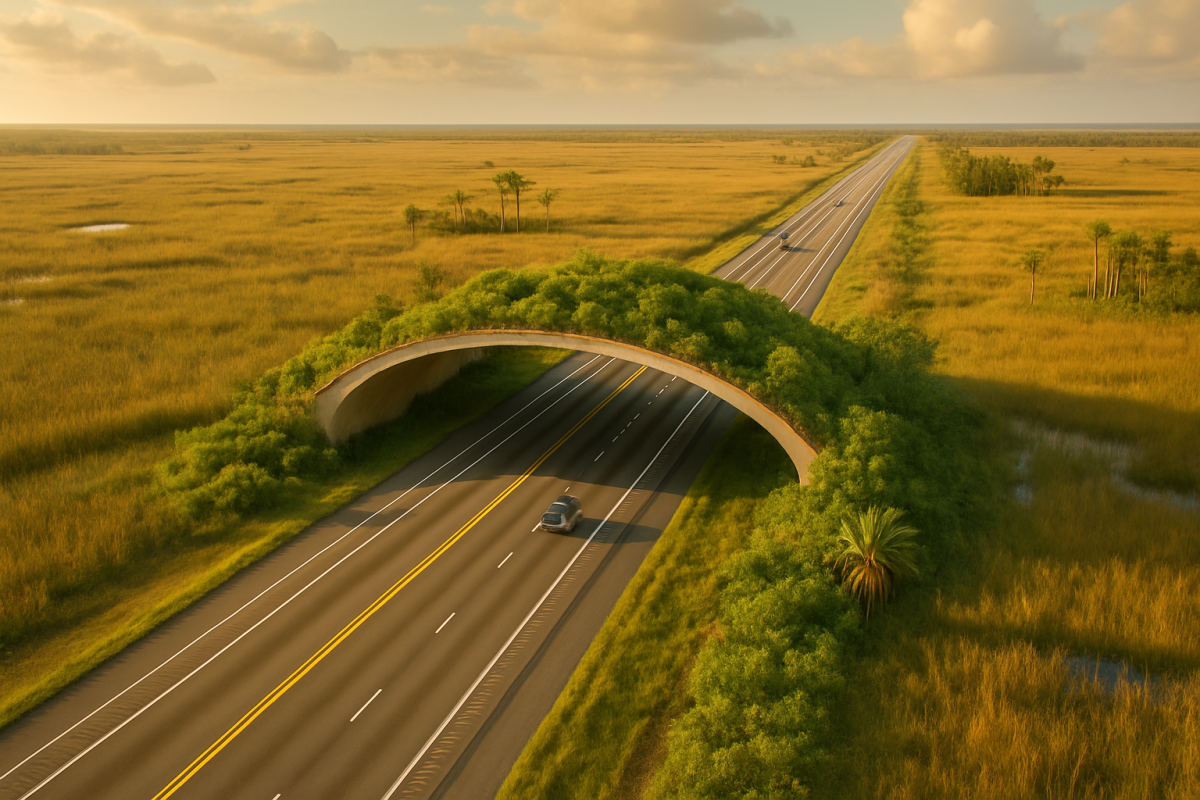
A new study commissioned by the nonprofit Live Wildly and prepared by engineering firm FDA | Prime AE lays out practical, lower-cost strategies for Florida local governments to build wildlife crossings — and makes a strong financial case for doing so. According to the study, communities can expect roughly $10 in social and ecological benefits for every $1 spent on a crossing, meaning a $500,000 investment could generate around $5 million in benefits over a structure's 70-year lifespan.
The need is real and urgent. Between 2014 and 2022, more than 20 Florida panthers per year were struck by vehicles, and an average of about 250 black bears have been killed on Florida roads annually over the past decade. One three-year count along a single stretch of State Road 40 through the Ocala National Forest logged more than 63,000 roadkill observations. Nationally, wildlife-vehicle collisions cause around 200 human deaths, 26,000 injuries, and more than $8 billion in costs each year.
The study finds that wildlife crossings paired with fencing reduce animal-vehicle collisions by 87% or more. A single crossing over its expected life is projected to prevent roughly 1,400 collisions, 1.4 passenger fatalities, 60 injuries, and 1,200 animal deaths — while also delivering $2.1 million in ecological benefits by restoring natural animal movement patterns that support clean water, pollination, carbon sequestration, and agriculture. Costs are estimated to be recouped within about seven years.
To help communities that struggle with upfront expenses, the study outlines several cost-saving approaches: retrofitting existing bridges and culverts, using corrugated metal or modular precast construction materials, bundling crossings into already-planned road projects, and tapping federal funding sources such as the Wildlife Crossings Pilot Program, the Highway Safety Improvement Program, and the Surface Transportation Block Grant Program. The study also stresses the importance of weaving wildlife connectivity into local transportation and land-use plans from the start to avoid costly redesigns later.
The findings are particularly relevant to Florida's Wildlife Corridor, a state-designated 18-million-acre network of connected lands and waters running from the Everglades to the Panhandle. Established by lawmakers in 2021, the Corridor supports nearly 2,000 species and is tied to more than 100,000 jobs and $30 billion in annual economic activity. The full study is available at the Live Wildly Foundation's website. This story is based on a press release from Live Wildly Foundation.