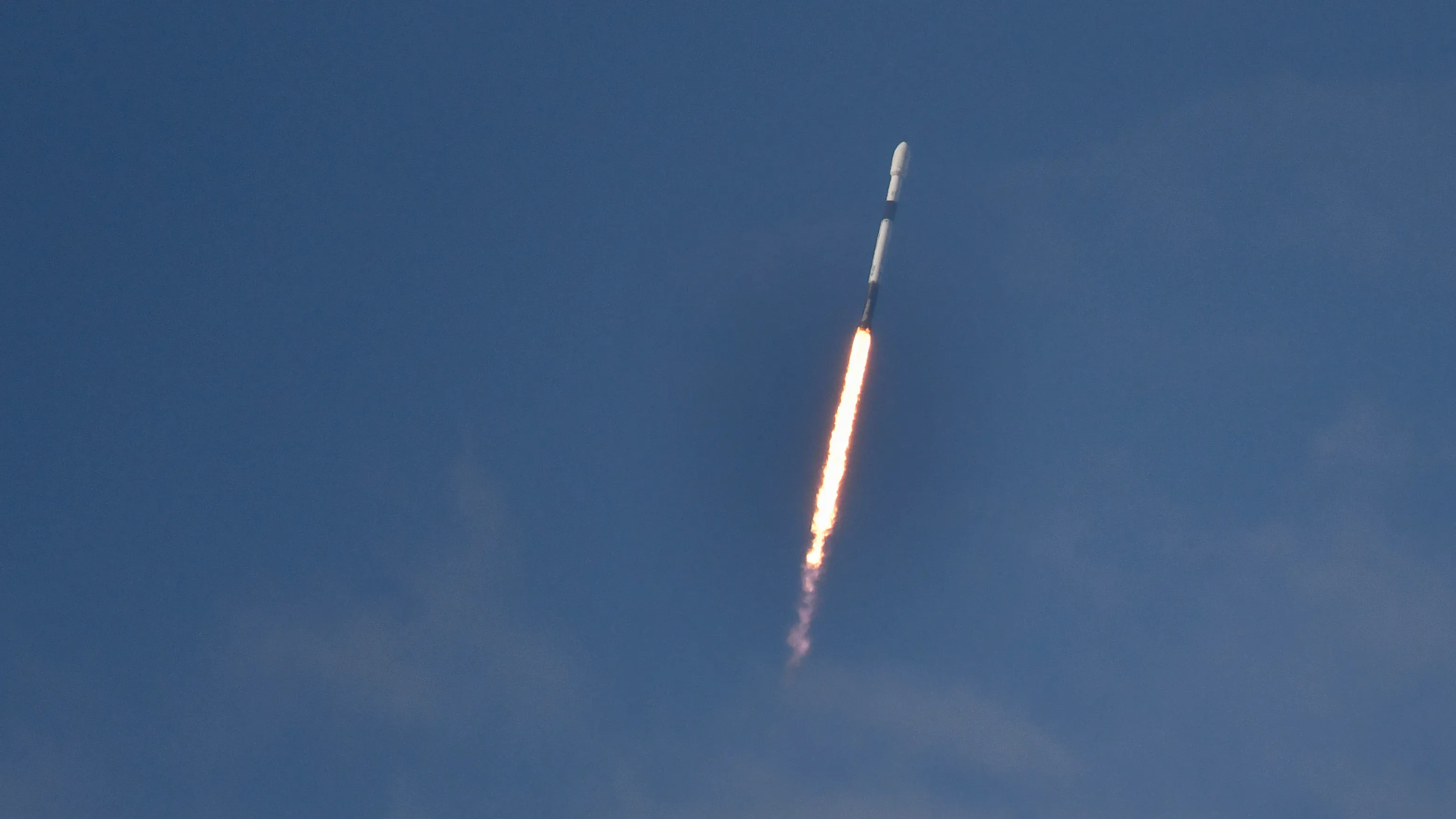
Space Coast skywatchers have a busy week ahead, with two SpaceX Falcon 9 missions on the books before August closes out with one of the year's most anticipated launches. Florida has already seen 50 orbital rockets lift off in 2026 — a pace that, while slower than last year's record-breaking 109, still dwarfs what the state was achieving just a few years ago.
First up is the Starlink 10-19 mission, rescheduled after a Monday scrub: a Falcon 9 carrying 29 Starlink broadband satellites is targeting a launch window of 10:26 a.m. to 2:26 p.m. ET on Tuesday, August 11, from Launch Complex 40 at Cape Canaveral Space Force Station. The rocket will head northeast, so residents from the Space Coast up through Volusia County and even Jacksonville Beach may catch a glimpse if skies cooperate.
On Saturday, August 15, SpaceX returns to Launch Complex 40 for the Globalstar 2-R Launch 1 mission, sending a batch of Globalstar communications satellites into low-Earth orbit. Liftoff is set for 9:12 p.m. ET with a 15-minute window, and sonic booms are expected with this one — a reminder to keep the windows cracked if you're nearby.
Looking further ahead, the highlight of the month is the SpaceX Falcon Heavy carrying NASA's Nancy Grace Roman Space Telescope, scheduled for 7:26 a.m. ET on Sunday, August 30, from Pad 39A at Kennedy Space Center. The Roman telescope will boast a field of view at least 100 times larger than the Hubble Space Telescope, making it one of the most scientifically significant payloads to leave Florida in years. Sonic booms are expected for that launch as well.
As always, launch dates and times are subject to change based on weather and technical factors. Florida Today's Space Team will provide live coverage beginning 90 minutes before each liftoff at floridatoday.com/space. This week's schedule and background detail were reported by Florida Today.