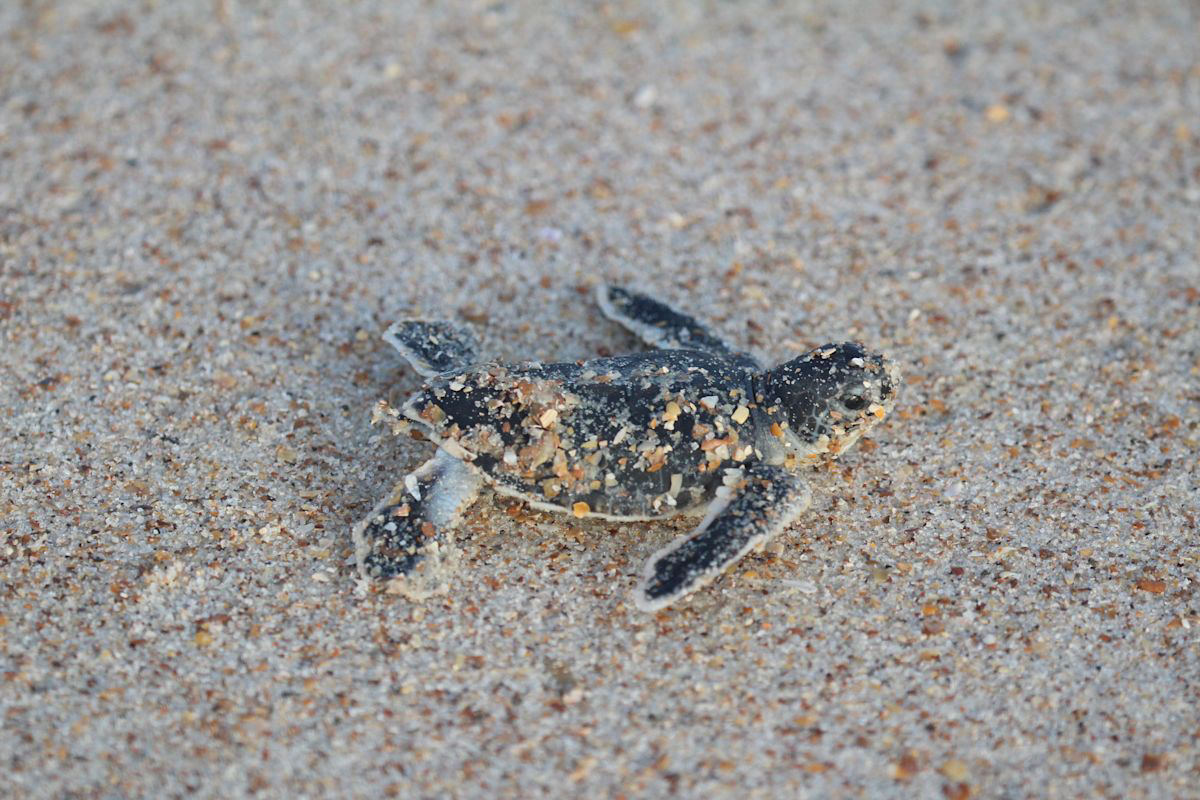
Wind, waves and storm currents can leave sea turtle hatchlings stranded along Florida’s shore, particularly when floating patches of plants are pushed back onto the beach. The Florida Fish and Wildlife Conservation Commission says these young turtles, known as “washback” hatchlings, are protected endangered species.
If you find one, do not handle it or return it to the water, the FWC advises. Instead, call the agency’s 24-hour Wildlife Alert Hotline at 888-404-FWCC (3922) for guidance. Hatchlings that are visibly moving toward the ocean on their own do not need assistance.
Storms and high tides can also uncover sea turtle eggs or sweep them from nests. The FWC says eggs left exposed should not be moved, even if they appear unlikely to have survived.
Female sea turtles lay multiple nests during nesting season, which continues through October, helping give the population a chance even when some nests are affected by storms. The agency also encourages beach visitors to clean up trash, fill in holes in the sand, recycle fishing line and avoid using lights near the beach at night.
Call the Wildlife Alert Hotline if you see a stranded, injured, trapped or dead sea turtle or hatchling.