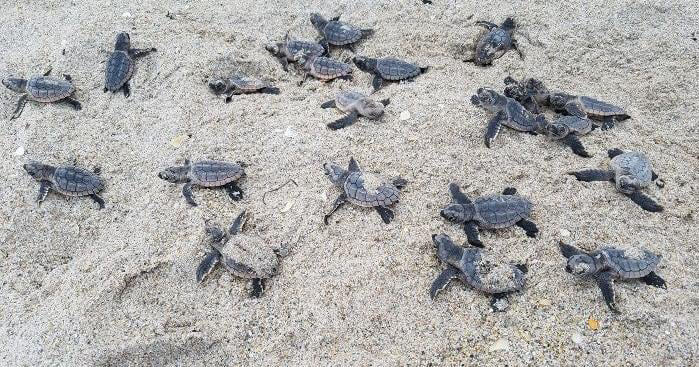
Storm-driven waves and wind can push sea turtle hatchlings ashore in seaweed or leave them in unexpected places such as pools and yards. With Florida’s sea turtle nesting season continuing through October, the Florida Fish and Wildlife Conservation Commission is asking beachgoers to know when to call for help.
Hatchlings can become stranded when floating sargassum, where young turtles find food and shelter after entering the ocean, is carried ashore by storm currents and wind. If you find a small “washback” hatchling, the FWC says not to pick it up or put it back in the ocean. Instead, call the agency’s 24-hour Wildlife Alert Hotline at 888-404-FWCC (3922) for instructions.
Sea turtles and hatchlings actively crawling toward the ocean do not need assistance, according to the agency. All sea turtles are listed as threatened or endangered, and stranded hatchlings can require specialized care.
Storms can also expose eggs that have been swept from nests. The FWC says to leave those eggs in place, noting they rarely survive after being displaced. Female turtles lay several nests during a nesting season, a strategy that can allow some nests to incubate successfully even when tropical storms or hurricanes affect the coast.
Beach visitors can also help nesting turtles by taking gear home, filling in holes in the sand, disposing of trash properly, recycling fishing line and keeping lights off on or near the beach at night. Report stranded, injured, trapped or dead sea turtles and hatchlings to the same Wildlife Alert Hotline: 888-404-FWCC (3922).