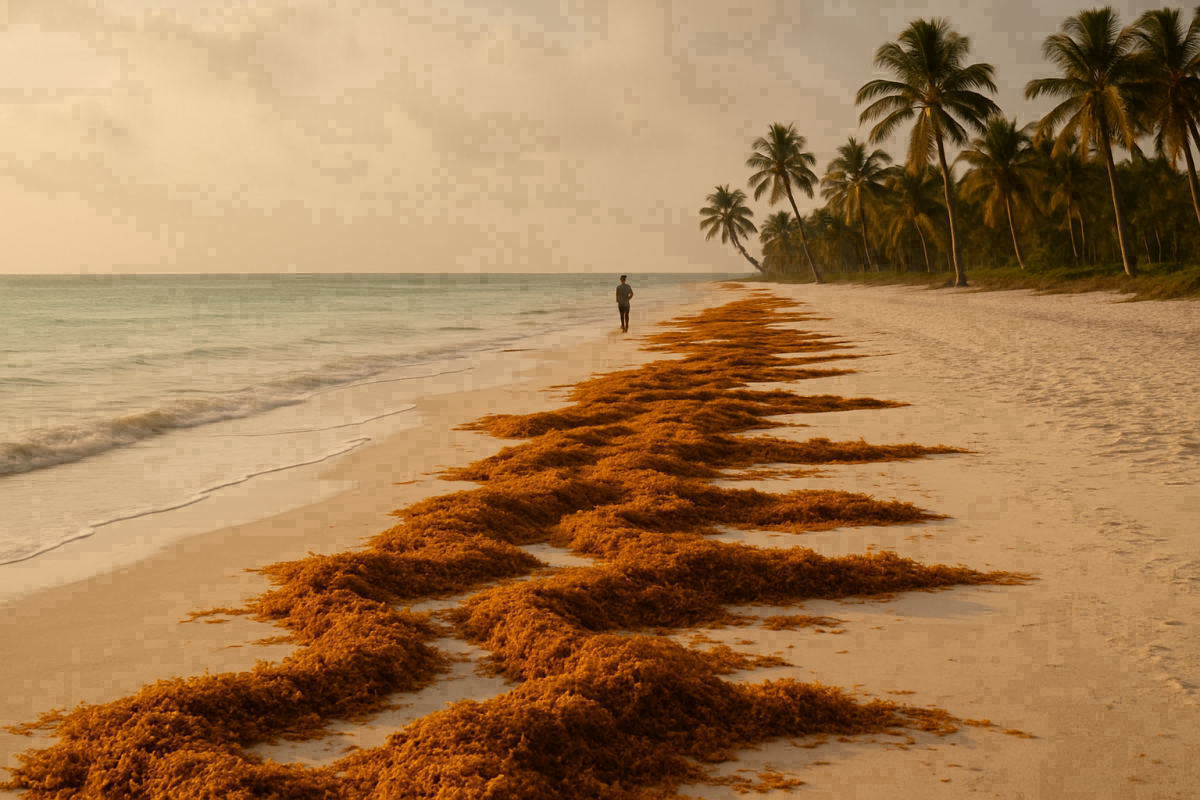
A wide-reaching surge of Sargassum seaweed has been washing ashore along Florida's entire Atlantic coastline since late July 2026, affecting at least 14 popular beach destinations from Jacksonville down through Miami-Dade. What makes this season stand out isn't just the volume of seaweed but the sheer consistency of arrivals across such a broad geographic stretch — a pattern forecasters are still working to better predict.
Northeast Florida has taken a particularly heavy hit. Jacksonville Beach, Neptune Beach, Atlantic Beach, and Ponte Vedra Beach have all seen repeated thick deposits, especially following periods of strong easterly winds. Local cleanup crews have been deployed regularly, and all beaches have remained open, but visitors have reported noticeably altered shoreline conditions compared to previous summers. Hotels and beachfront businesses are staying operational while pushing out daily beach condition updates to help guests plan accordingly.
Palm Beach County and South Florida are dealing with similar challenges. Juno Beach, Palm Beach, Riviera Beach, and Singer Island have all recorded moderate to heavy accumulations, with municipal teams balancing mechanical removal against environmental regulations protecting sea turtle nesting areas. Fort Lauderdale, Hollywood Beach, Miami Beach, Sunny Isles, and Key Biscayne round out the affected destinations further south — South Beach has stayed open throughout, though its appearance has varied day to day based on currents and weather.
It's worth keeping a few things in perspective. Sargassum is a naturally occurring marine plant, not pollution, and it plays a genuine ecological role offshore by sheltering marine life and cycling nutrients. The trouble comes when it piles up onshore in large quantities, producing odors as it decomposes and complicating swimming and sunbathing. Conditions can also shift dramatically within a single day, so a beach that looks rough in the morning may clear considerably by afternoon.
Travelers heading to Florida's Atlantic coast this summer are advised to check local beach condition reports before heading out and to consider mixing in non-beach activities on days when accumulation is heavy. This story was first reported by Nomadlawyer.