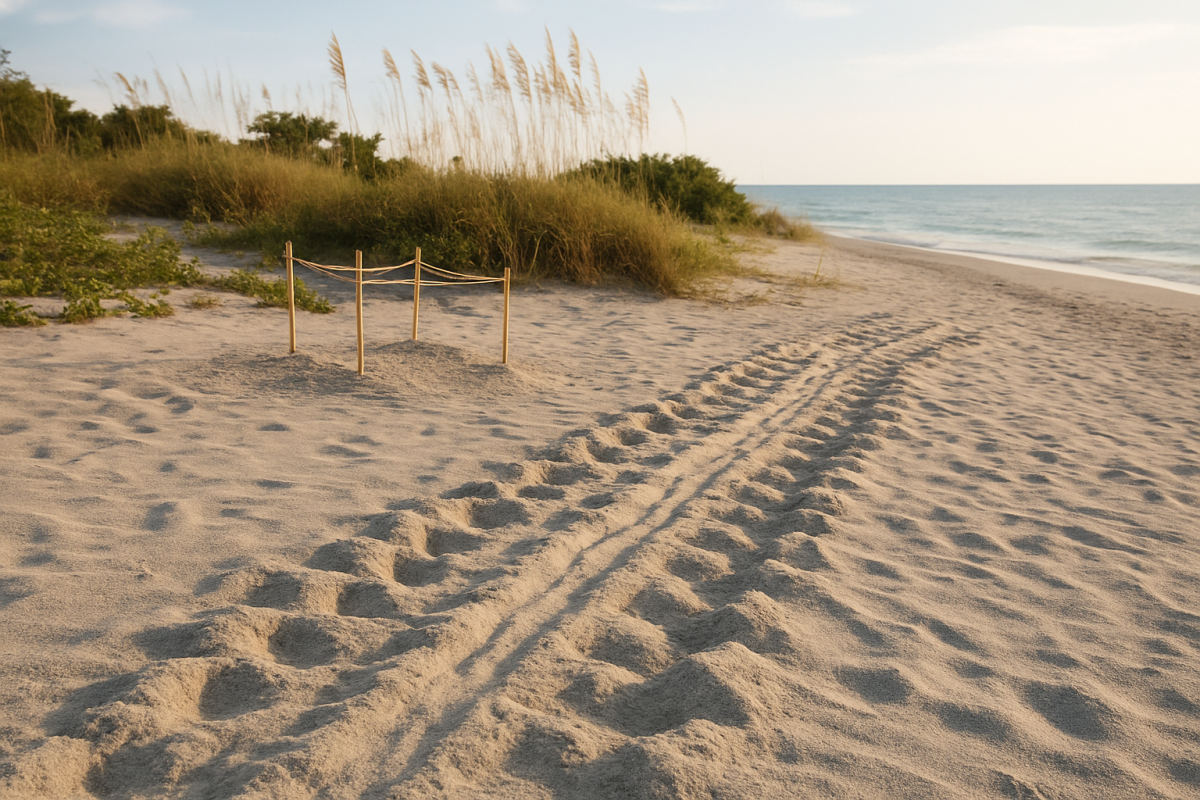
Florida’s loggerhead sea turtle nesting season has reached a preliminary statewide record, according to the Florida Fish and Wildlife Conservation Commission.
Data reported Aug. 31 counted 136,972 loggerhead nests across the state in 2026. That is 1.51% higher than the 134,930 nests reported in 2023, the previous high cited in the commission’s preliminary figures.
The FWC Fish and Wildlife Research Institute coordinates the Statewide Nesting Beach Survey and Index Nesting Beach Survey. Loggerheads are protected under the Endangered Species Act; five distinct populations are considered endangered and four are considered threatened, according to the source report.
In Southwest Florida, the Coastal Wildlife Club reported 5,534 preliminary loggerhead nests as of Monday along the beaches it monitors. The nonprofit is permitted by the FWC to monitor turtle activity on Manasota Key, Knight Island and Don Pedro Islands. Carol McCoy, a principal permit holder on the group’s board, said early unnamed storms and high tides caused some nest losses, though loggerheads lay multiple clutches.
More than half of the sea turtle nests monitored by the Coastal Wildlife Club had emergence success, meaning hatchlings made it safely to the ocean. The group and FWC also monitor green, leatherback and Kemp’s ridley turtle nests, while the FWC tracks olive ridley and hawksbill turtles as well.
Florida’s turtle nesting season runs through Oct. 31, so final totals will be calculated after it ends. Green turtle nests can still appear in November and December.
McCoy urged beachgoers to keep beaches clean and dark, fill in holes and avoid the beach at night to give nesting turtles and birds space. NOAA lists direct harvest of turtles and eggs, habitat loss and vessel strikes among the main threats to loggerheads.