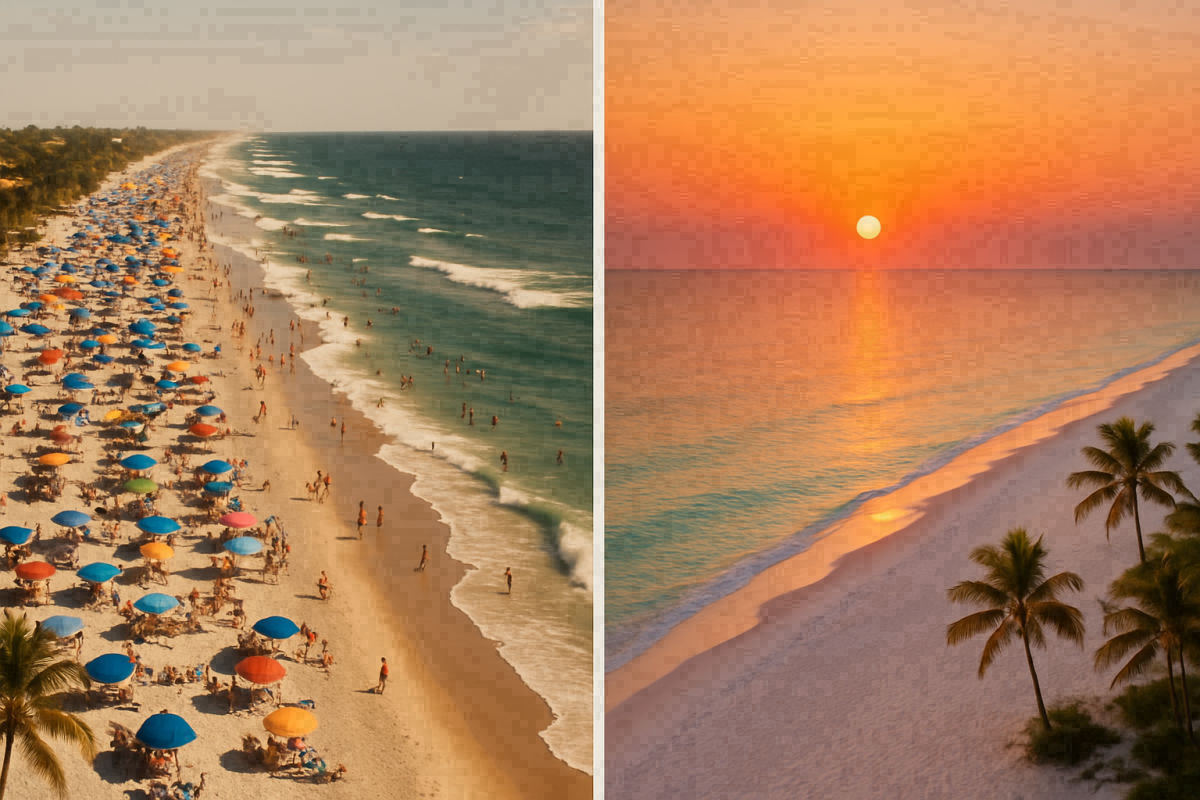
Florida's 1,300 miles of coastline split into two pretty distinct personalities, and knowing which side matches your beach style can make or break a trip. The short version: head east if you want to surf, head west if you want to swim.
The Atlantic-facing East Coast benefits from wind swells, jetties, and piers that shape more defined, consistent waves. Standout surf spots include Sebastian Inlet State Park in Brevard County, New Smyrna Beach and Ponce Inlet in Volusia County, and the Mayport Poles in Duval County. Fall is the prime season, when tropical systems and early cold fronts push the best swells ashore — summer tends to run flat. As a fun Florida footnote, 11-time World Surf League champion Kelly Slater honed his craft on these same East Coast breaks.
On the Gulf side, the water is generally calmer, shallower, warmer, and clearer — qualities that make it far friendlier for casual swimming and floating. Visit Florida notes that Gulf water temperatures average around 82°F in Destin in June and near 87°F in Tampa by August. Top picks for Gulf swimming include Clearwater Beach in Pinellas County, Siesta Key in Sarasota County, Navarre Beach on Santa Rosa Island, and Anna Maria Island in Manatee County, among others.
Of course, neither coast has a monopoly on a good day at the beach. Conditions vary by location, season, and weather — and plenty of Gulf spots see rideable surf during storm season, while East Coast beaches can turn glassy and inviting on calm summer mornings. The key is matching expectations to the coast.
This guide was reported by Lianna Norman for Florida Today and the USA TODAY Network – Florida.