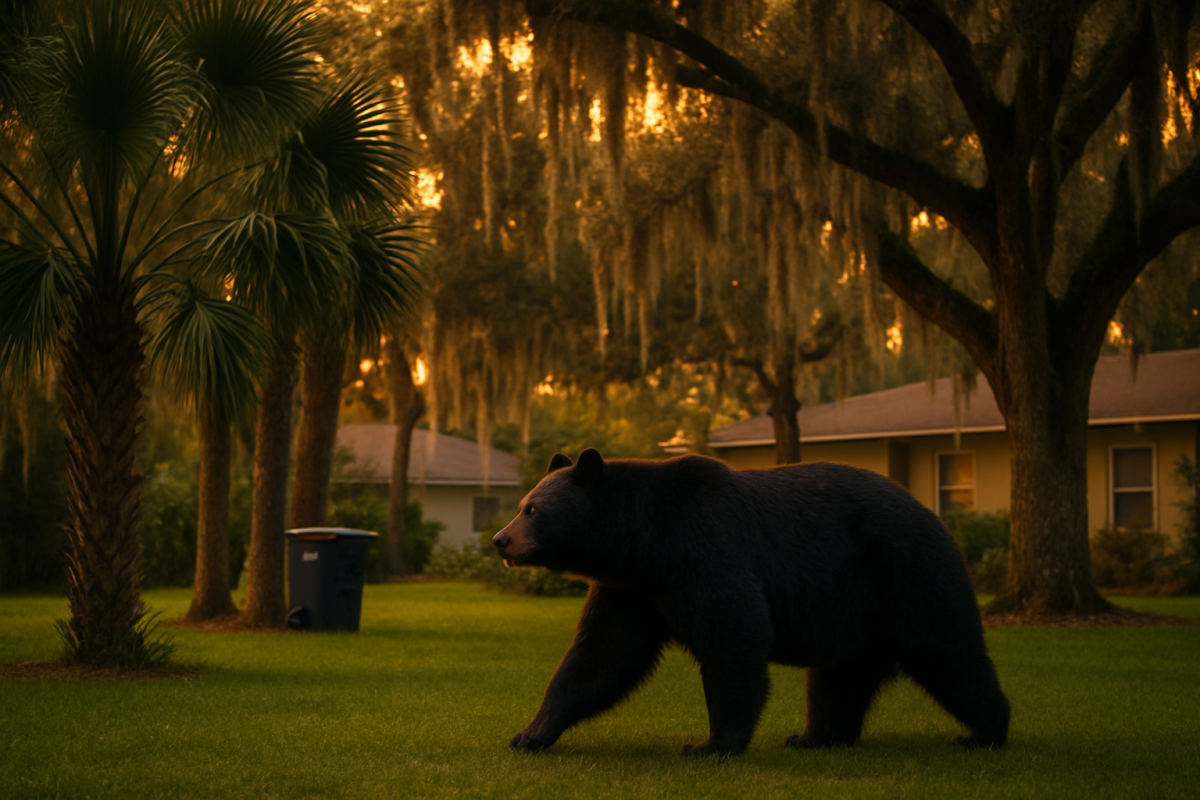
As fall settles in across Florida, black bears are in full calorie-loading mode — and that means neighborhoods near bear habitat need to be on alert. The Florida Fish and Wildlife Conservation Commission (FWC) notes that bears can spend as many as 20 hours a day searching for food this time of year, and an easy meal in a suburban backyard is far more tempting than foraging deep in the woods.
The single most effective thing residents can do is manage garbage carefully. That means keeping household trash locked in a sturdy shed, garage, or wildlife-resistant container, and waiting until the morning of pickup — not the night before — to roll bins to the curb. Commercial properties should use bear-resistant dumpsters. When there's nothing to find, wildlife officials say bears typically move on without incident.
Beyond the trash can, the FWC recommends a broader look at what else might be drawing bears in. Birdfeeders, pet food left outdoors, unsecured compost piles, ripe or fallen fruit, and dirty grills can all act as attractants. Electric fencing is suggested for gardens, bee yards, and livestock enclosures. Dog walkers are also advised to use a non-retractable leash and stay aware of their surroundings, particularly at dusk and dawn.
Florida law makes it illegal to intentionally feed bears or to leave food and garbage in a way that causes human-bear conflicts. Anyone who witnesses or suspects someone is attracting bears can report it to the FWC's Wildlife Alert Hotline at 1-888-404-FWCC (3922). Drivers, especially those traveling roads that cut through forested areas or are marked with bear crossing signs, are reminded to use extra caution — vehicle collisions with bears are a documented concern in those corridors.
Additional guidance, including how-to videos on securing food attractants and a resource on vehicle collisions with bears, is available at MyFWC.com/Bear and BearWise.com. This story is based on information from Fox 49.