Florida accounts for 44% of all shark bites recorded in the United States, and no county comes close to Volusia when it comes to frequency of incidents. According to the International Shark Attack File (ISAF) — the only scientifically verified global shark attack database, maintained by the Florida Museum of Natural History in Gainesville — Volusia County has logged 303 shark bites since 1882, a full 156 more than second-place Brevard County. In 2025 alone, six of Florida's 11 recorded shark bites happened there.
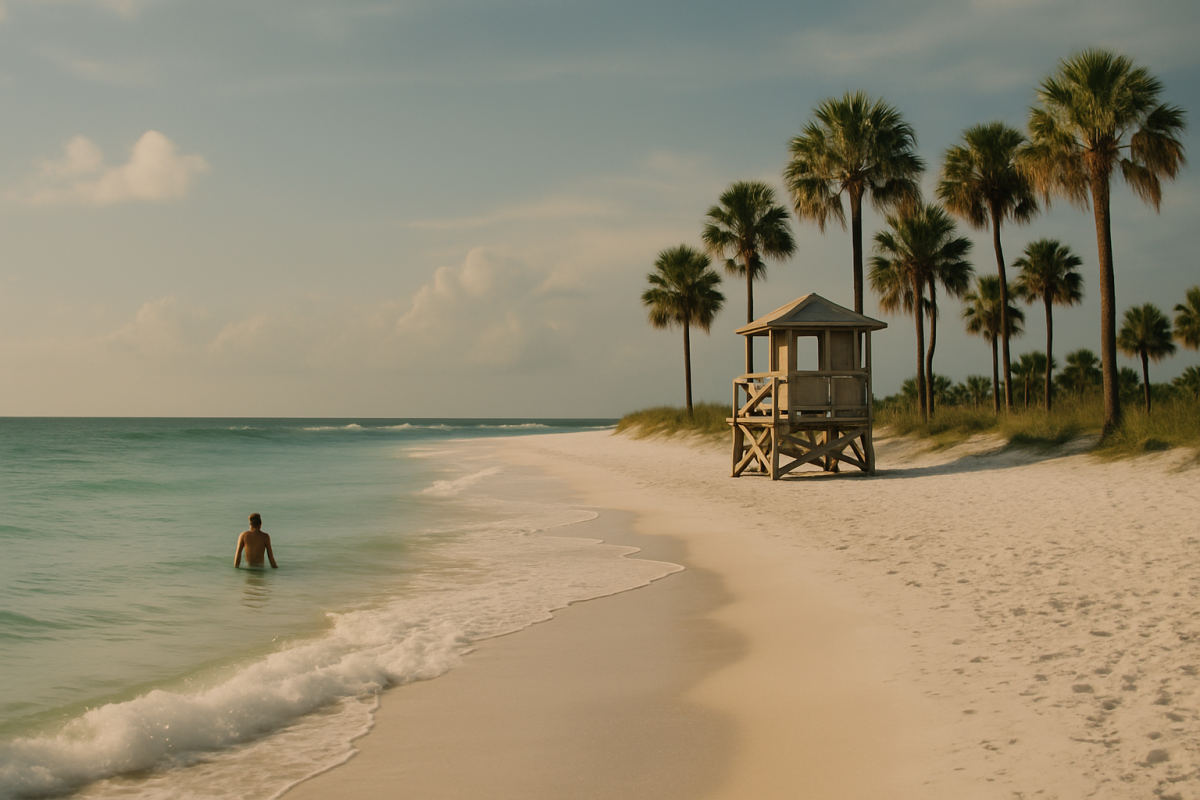
Shark activity along Florida's coast typically peaks between April and October, which happens to overlap with peak beach season. The Florida Fish and Wildlife Conservation Commission notes that many shark species migrate inshore and northward during spring and summer, then head offshore and south again in fall and winter. More than 13 species use Florida's nearshore waters and bays as nursery grounds for their young.
If you're looking for beaches with historically lower bite counts, Florida's Panhandle and Gulf Coast offer some reassurance. Santa Rosa, Charlotte, and Walton counties have each recorded just one shark bite since 1882, according to ISAF data. Franklin, Gulf, Manatee, Okaloosa, Nassau, Escambia, Flagler, Sarasota, Lee, Collier, and Bay counties have all logged fewer than 10 incidents over that same period. That said, the FWC is clear: anywhere you swim in Florida's ocean waters, sharks are likely present.
To reduce your risk, the FWC recommends staying in groups, avoiding the water at dawn, dusk, or night when sharks are most active, not entering the water with open wounds, and skipping the shiny jewelry — the glint can resemble fish scales to a hungry shark.
Shark Week 2026 runs July 26 through August 1 on the Discovery Channel, with shows also streaming on Discovery+ and HBO Max. This story originally appeared in the News-Journal Online, part of the USA TODAY Network – Florida.