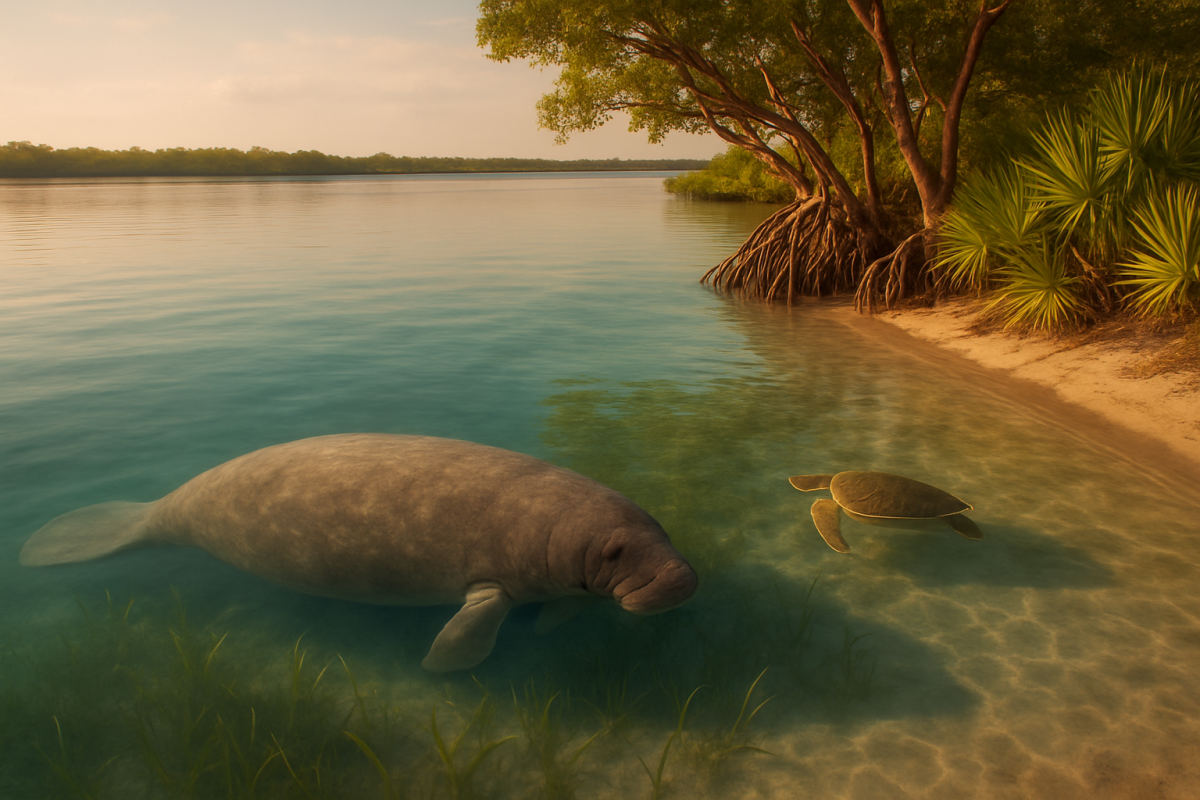
Green sea turtles and manatees have long been symbols of Florida's coastal identity — but new federal changes to the Endangered Species Act are raising alarms among marine scientists and conservation groups who say these species could lose the habitat protections they depend on to survive.
The Trump administration is removing the definition of "harm" from the ESA — a shift that effectively strips protection for the habitats of listed species, not just the animals themselves. Marine scientist Nora Ives of Oceana put it plainly: before green sea turtles were listed under the ESA in 1978, there were essentially no green turtle nests on Florida beaches. Today, there are more than 200,000. The law, she argues, demonstrably works — and has protected over 99% of listed species from extinction across its 50-plus-year history.
For manatees, the stakes feel especially immediate. A seagrass die-off driven by water pollution killed more than 1,200 manatees just five years ago, and scientists say the ecosystem remains fragile. Beth Brady, director of science and conservation at Save the Manatee Club, noted that threats to seagrass — including potential oil spills — could push manatees toward another crisis. FIU biology professor Dr. Jeremy Kiszka added that current fluctuations in both seagrass coverage and manatee populations suggest the balance is precarious.
The administration has also convened the so-called "God Squad" — a powerful federal panel that hadn't met in over 30 years — to exempt oil-and-gas exploration from key ESA protections, and the U.S. Fish and Wildlife Service has eased rules around critical habitat designation. Conservation organizations including Earthjustice and Oceana have responded with federal lawsuits, and a bipartisan House bill introduced last month aims to restore the "harm" definition. Closer to home, Oceana, Surfrider, and the Endangered Species Coalition are planning rallies in the Florida Keys at the end of August to build public support.
This story was originally reported by Louis Aguirre for Local 10 (WPLG).