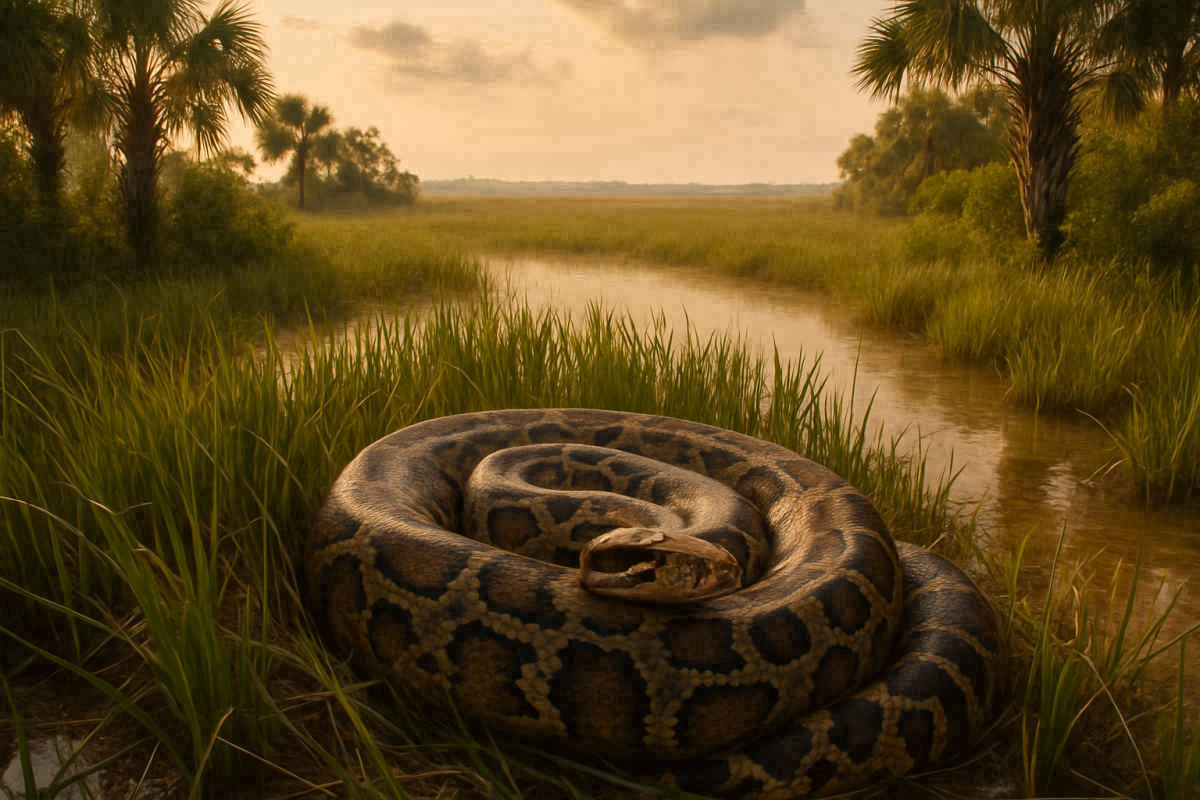
Florida wildlife officials have confirmed that Burmese pythons are now an established breeding population in western Charlotte County, an area north of Naples and Fort Myers that sits well outside the species' long-recognized stronghold in South Florida. The Florida Fish and Wildlife Conservation Commission (FWC) made the determination after a sustained rise in sightings around communities including Rotonda West, Placida, Englewood East and South Gulf Cove, eventually concluding that reproducing animals were present.
Unlike the Everglades population, which has spread gradually across a broad swath of South Florida from Lake Okeechobee to Key Largo, the Charlotte County colony is not believed to be the result of natural northward migration. Wildlife specialists say the evidence points instead to escaped or deliberately released pet snakes — a pattern consistent with how the species first gained its foothold in Florida decades ago, largely through the exotic pet trade.
The concern among conservationists centers on what these snakes do to the ecosystems they enter. Burmese pythons are capable of eating raccoons, opossums, birds, bobcats and even alligators, making them highly adaptable hunters. Ian Bartoszek, a wildlife biologist and science coordinator at the Conservancy of Southwest Florida, described the species as a "generalist apex predator" and emphasized the importance of removing them from local ecosystems. In areas of South Florida where pythons have been established for years, researchers have documented sharp declines in native mammal populations and a broader simplification of the ecosystem.
Detecting the snakes remains one of the biggest obstacles to managing them. Studies suggest survey teams may find only one to three pythons for every hundred believed to be present in a given area, meaning confirmed sightings likely represent a small fraction of the actual population. Wildlife managers are now closely monitoring Charlotte and neighboring Lee County in hopes that early intervention can prevent the kind of entrenched infestation seen further south.
This story was originally reported by the Times of India.