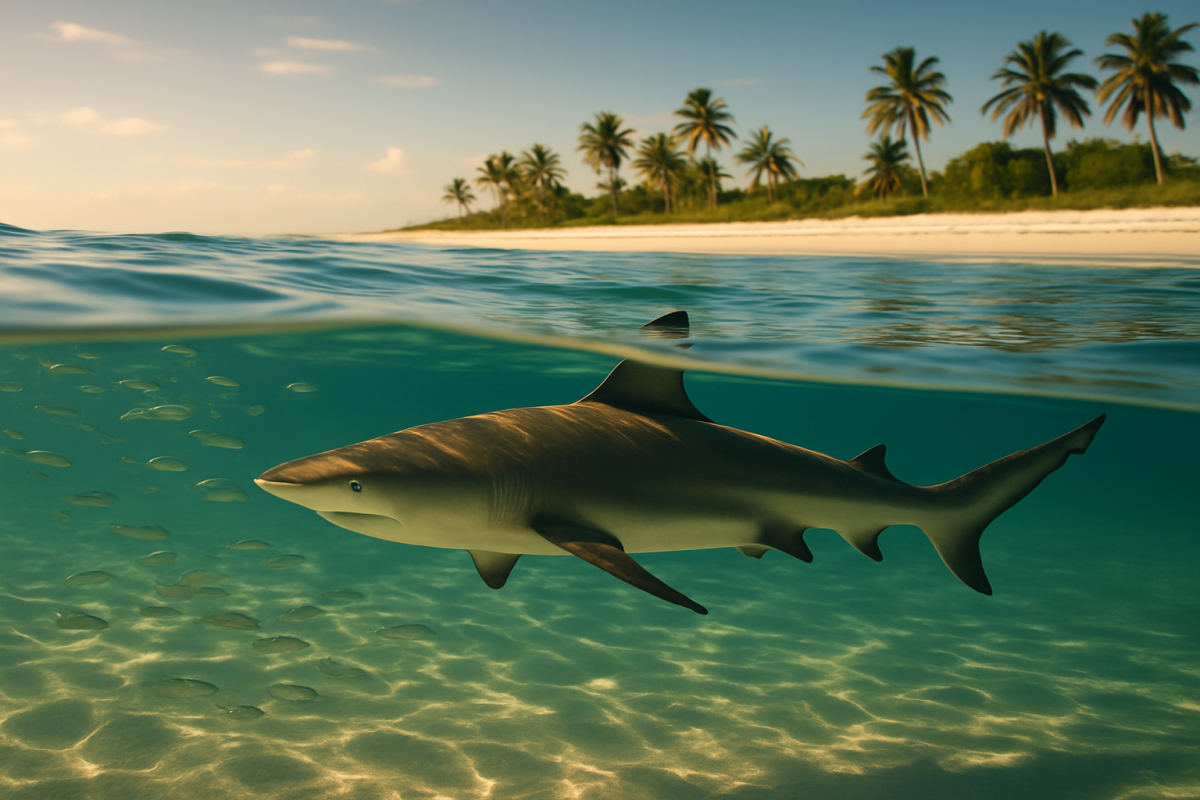
Blacktip sharks have long been Florida's version of snowbirds — heading south when northern waters cool each winter. But new research from Florida Atlantic University suggests the pattern is shifting, with warming ocean temperatures keeping the sharks in place longer and nudging their range further north than ever before.
Dr. Stephen Kajiura, an FAU professor who has tracked blacktip sharks for 15 years, leads a team using drones, airplanes, and satellite transmitters to map where the sharks go and when. His data shows the sharks prefer water around 72 degrees — roughly room temperature — and are now regularly appearing off beaches in places like Long Island, New York, where they were rarely seen a decade ago.
The proximity to swimmers is part of what makes the species worth watching. Dr. Kajiura notes that the highest concentrations of blacktips tend to cluster within about 50 meters of the shoreline — well within sight of beachgoers in their chairs. The goal of the research is to turn that tracking data into a practical early-warning system for lifeguards, alerting them when sharks are near a particular stretch of beach and when they've moved on.
Despite the sharks' consistent presence along Florida's east coast, Dr. Kajiura is quick to put risk in perspective. In 2025, Florida recorded 11 unprovoked shark bites — below the five-year average of 18, according to the Florida Museum of Natural History's long-running database. Volusia County accounted for more than half of those incidents, as it historically has. Dr. Kajiura's message: be aware, be cautious, but don't let the presence of sharks keep you out of Florida's beautiful water.
This story was reported by FOX 35 Orlando's Laurel Blanchard, with additional data from the Florida Museum of Natural History's 2025 shark bite summary and its confirmed unprovoked shark attack database.