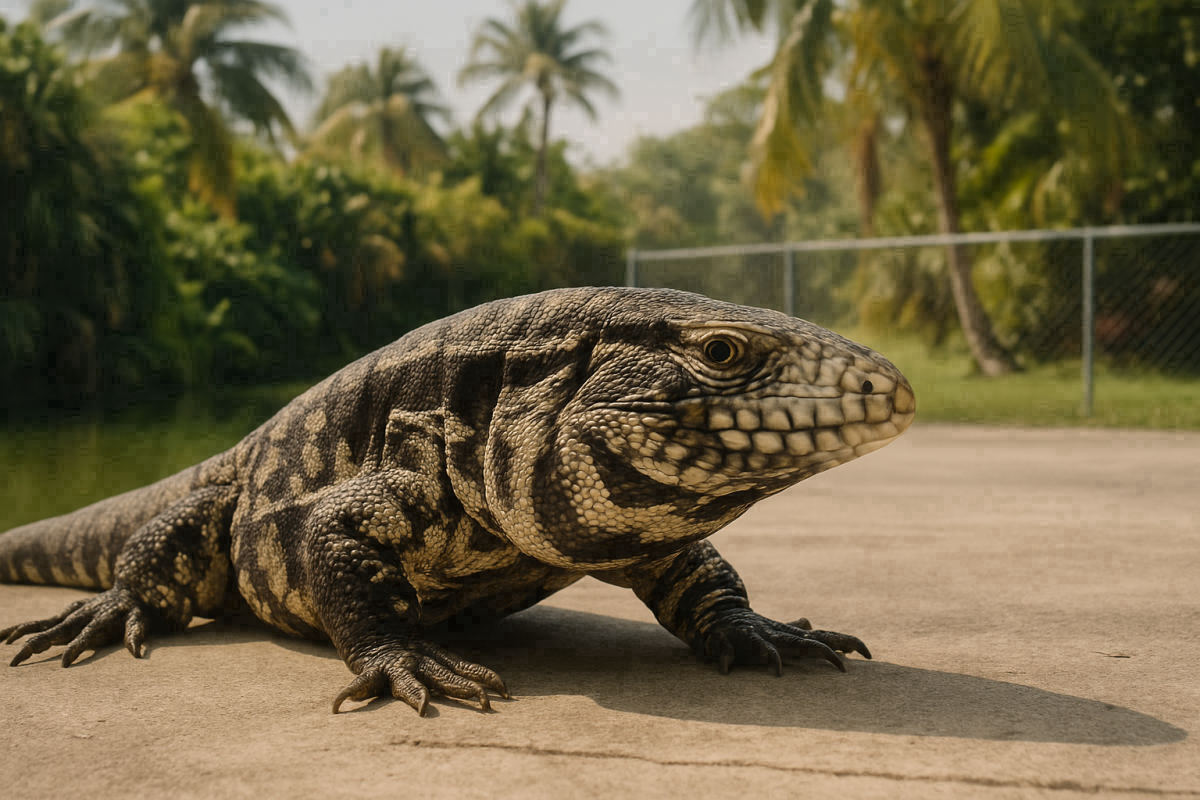
South Florida has a second famous Argentine to talk about, and this one isn't scoring goals. The Argentine black and white tegu — a lizard that can stretch nearly five feet and tip the scales at 15 pounds — has become one of Florida's most troublesome invasive reptiles, with Miami-Dade County sitting squarely at the epicenter of the problem.
As of July 2026, Miami-Dade has recorded 8,342 tegu sightings in the Early Detection & Distribution Mapping System, a total more than four times greater than second-place St. Lucie County's 1,981 reports. Broward County has logged 98 sightings, Palm Beach County 49, and the Florida Keys 25. Researchers attribute Miami-Dade's staggering numbers to a breeding population that has been established there for well over a decade.
The species arrived through the exotic pet trade as early as 2002, and escaped or released pets found Florida's warm climate very much to their liking. These omnivores will eat nearly anything: bird eggs, alligator and crocodile eggs, sea turtle eggs, gopher tortoises, small mammals, insects, fruit, and even pet food left on a porch. Adult tegus have virtually no natural predators here, which lets populations expand quickly once they take hold. Florida currently has four known breeding populations, in Miami-Dade, Hillsborough, Charlotte, and St. Lucie counties.
Florida Fish and Wildlife Conservation Commission (FWC) classifies tegus as an unprotected invasive species. Residents who spot one are encouraged to photograph it, note the location, and report it through the IveGot1 app or website, or by calling the Exotic Species Hotline at 888-Ive-Got1. Tegus may also be humanely captured or killed year-round on many commission-managed lands in South Florida without a permit. Pet owners who can no longer care for a tegu are urged to surrender it through Florida's Exotic Pet Amnesty Program rather than releasing it outdoors.
This report is based on coverage from CBS News Miami.