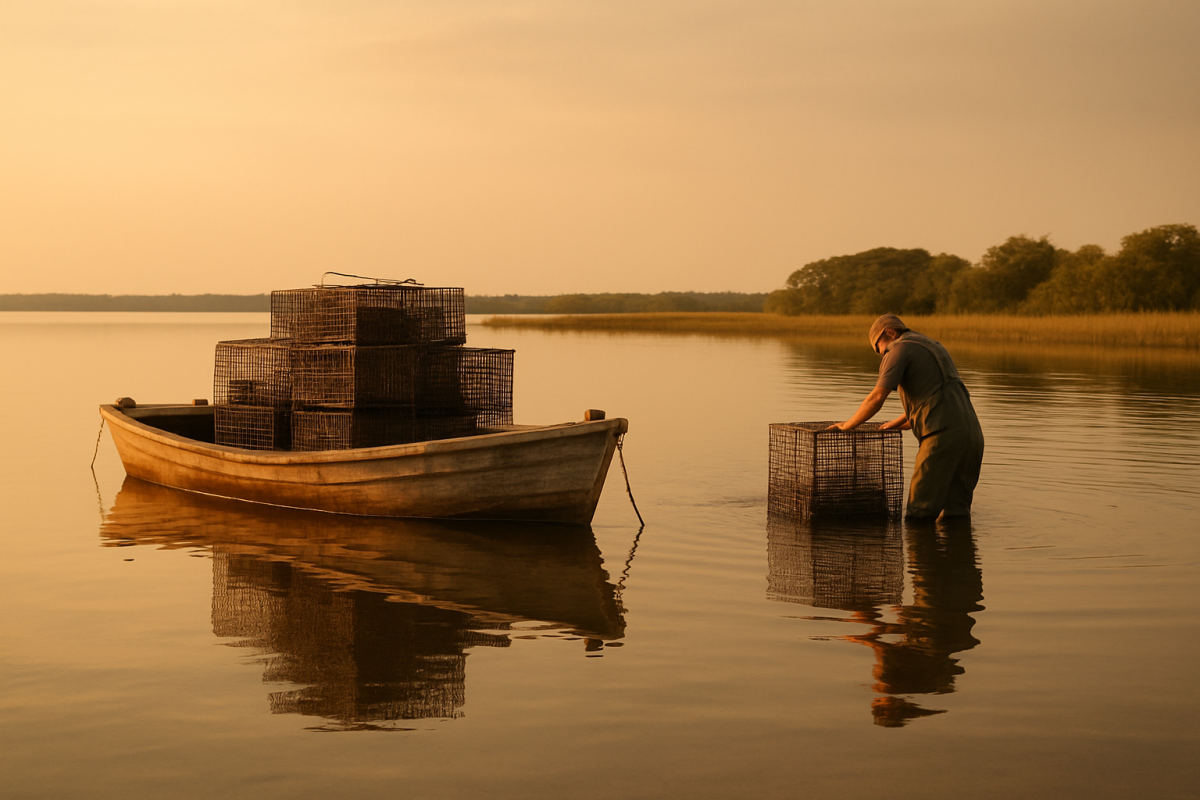
Apalachicola Bay's oyster comeback story took another step forward this week, as Florida Fish and Wildlife Conservation Commission officials voiced strong support for ongoing restoration efforts — even as the upcoming harvest season will be scaled back. The bay, once responsible for more than 90 percent of Florida's oyster supply and 10 percent of national sales, saw its reef system collapse in 2013 and was closed to harvesting entirely in 2020.
After a two-month season opened across four reefs beginning January 1 of this year, one of those areas — known as the East Hole — failed to meet its anticipated harvest threshold and will remain closed for the next season. As a result, the number of bags available for oyster collection will drop from 4,726 to 2,560 for the October 1 through February 28, 2027 season, split between commercial and recreational harvesters.
Despite the reduction, commission members were upbeat about the bay's trajectory. Commissioner Joshua Kellam described the past year's work as "a huge success," noting that the bay had been effectively closed for six years before limited harvesting resumed in a restorative framework. Chairman Rodney Barreto told staff their current approach was working and encouraged them to stay the course.
The state's 2026-2027 budget includes $11 million specifically for Apalachicola Bay oyster reef restoration, part of a broader $15 million statewide oyster reef investment. Charter fishing captain TJ Saunders, speaking at the commission meeting in Panama City Beach, praised the progress and urged officials to extend restoration efforts to areas west of the St. George Island Bridge, which have not yet been included in the program.
The oyster fishery's long decline stems from decades of compounding pressures — reef material removed for road construction, hurricanes, disease, poor water quality, and an upstream water-use dispute with Georgia that the U.S. Supreme Court declined to resolve in Florida's favor in 2021. Reef acreage fell from 2,000 acres to under 100 acres before restoration began. This report is based on coverage from WFSU Public Media and the News Service of Florida.