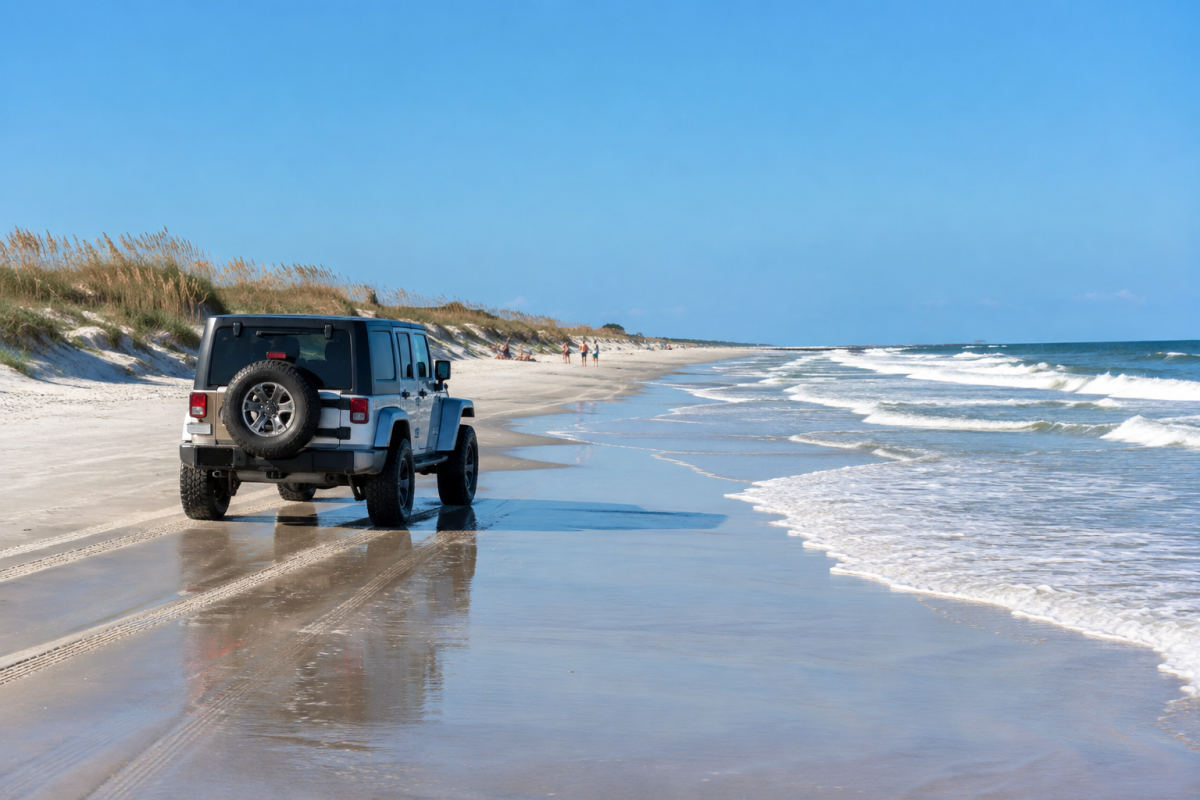
Amelia Island State Park offers one of Northeast Florida’s most distinctive beach days: visitors with a true four-wheel-drive vehicle can drive onto the sand, park near the water and spend the day fishing, shelling or simply settling in with a wide-open coastal view. It is also a sensitive wildlife area with a tightly managed entrance, so this is not the place to arrive late, assume any SUV will do or count on squeezing in during a busy weekend.
The basic entry rules
The beach-driving access is at Amelia Island State Park, 9550 First Coast Highway, at the island’s south end. The park is open daily from 8 a.m. until sunset, including for 4x4 beach driving. There is no after-hours access, so make a plan to be completely off the beach before sunset rather than treating the closing time as the moment to start packing up.
Admission is $2 per person, paid at the honor box; bring correct change. Unlike some other Nassau County drive-on beach access points, this state-park entrance is not a residents-only setup. Still, the park’s own rules control here, so do not rely on rules you may have read for county-run beach entrances farther north.
What vehicle do you need?
The park specifies 4x4 beach-driving access. In practical terms, bring a vehicle with genuine four-wheel drive, not a low-clearance passenger car or a vehicle you merely hope can handle sand. If you have an all-wheel-drive crossover and are uncertain whether it is suitable, call the park at 904-251-2320 before making the drive; the published park guidance uses “4x4,” and conditions can change quickly.
Before you leave pavement, remove or secure anything that can blow away, keep your load low and stable, and make sure you have a working spare tire. A compact digital tire gauge is useful for checking your tires before and after a sandy outing. If you are new to driving on sand, consider this a destination for an experienced driver rather than a first experiment with a heavily loaded vehicle.
Once on the beach, stay on the established driving and parking area. Never drive on dunes, vegetation, marked nesting habitat or any section closed by signs, cones or staff. ATVs, dirt bikes, scooters and motorcycles are not appropriate substitutes for a street vehicle here. Wildlife protections can require seasonal or temporary changes to the accessible beach, and those closures are not optional.
Plan around the tide, not just the forecast
There is no single daily “best” tide posted for every visit, because beach width and firmness vary with wind, recent surf and shifting sand. But low tide is generally the smart planning window: it usually provides the broadest stretch of firmer, more compact sand and gives you more room to position your vehicle well away from the waterline.
Check the day’s tide chart, wind and surf forecast before leaving, then build in a generous buffer around low tide rather than arriving as water is rising. At higher water, the usable travel lane can narrow dramatically. Do not drive through standing saltwater, and do not park where incoming water could reach your tires. Conditions that look easy on the way in can look very different after an hour at the beach.
A waterproof phone pouch is a simple extra for tide checks, photos and keeping your phone protected from spray and sand. More importantly, carry drinking water, keep an eye on the sky, and turn around early if the sand becomes soft or the route ahead looks questionable.
Capacity closures: arrive early and have a backup plan
Amelia Island State Park limits beach parking to 300 people at one time, with a 600-person maximum per day. When 300 people are in the park, new arrivals are turned away. The park generally reopens entry after about 150 people have left, but there is no guarantee how quickly that will happen.
For a summer Saturday, holiday weekend or a bright fishing morning, arrive close to the 8 a.m. opening if driving on is the point of the trip. Do not assume that a later arrival will mean a short wait; if the daily total has already reached 600, the park is done admitting visitors for the day. It is wise to keep a walk-on beach alternative in mind, especially when your group is meeting others.
A few final beach-driving habits
- Pay the per-person fee with exact change at the honor box.
- Keep well clear of shorebirds, turtle nests and signed protected areas.
- Pack out every item you bring, including food scraps and broken beach gear.
- Use a slow, steady pace and give walkers, anglers and wildlife plenty of room.
- Check current park details before you go, particularly after storms or during nesting season.
Practical takeaway: Bring a real 4x4, aim for the lower-tide part of the day, arrive early enough to beat capacity, and treat every posted closure as part of what keeps this unusually wild stretch of Amelia Island open to enjoy.