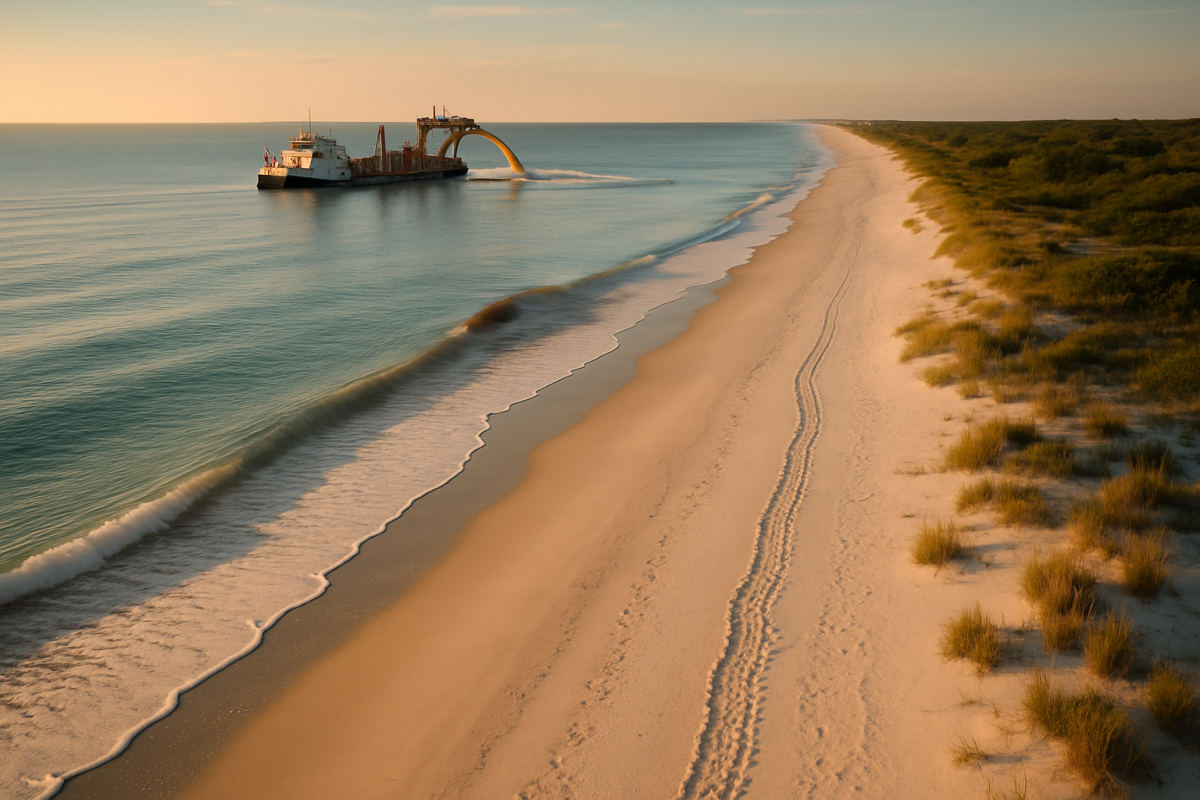
A newly built dredge bearing a very Florida name has joined the effort to keep the state's shorelines intact. The Amelia Island — a 346-foot trailing suction hopper dredge constructed at Conrad Shipyard in Morgan City, Louisiana — was delivered to Great Lakes Dredge and Dock, the largest dredging company in the United States, in August 2025. By late that same year, the vessel was already working the shallows off the Southeast coast.
The ship does its job by lowering a long pipe to the seafloor and drawing up loose sand, which fills a large internal tank called a hopper. That hopper holds roughly 6,330 cubic yards of material at a time — enough to bury a football field several feet deep. Once loaded, the vessel moves close to shore and pumps the sand directly onto the beach. The Amelia Island is one of several vessels Great Lakes Dredge and Dock has added to its fleet since 2023.
The work matters well beyond tourism and real estate. Florida's beaches are the nesting ground for loggerheads, green sea turtles, and leatherbacks each summer, and the state hosts roughly 90 percent of Atlantic loggerhead nesting activity. Both hatchlings and nesting adults depend on wide, open sand — exactly what beach erosion quietly takes away.
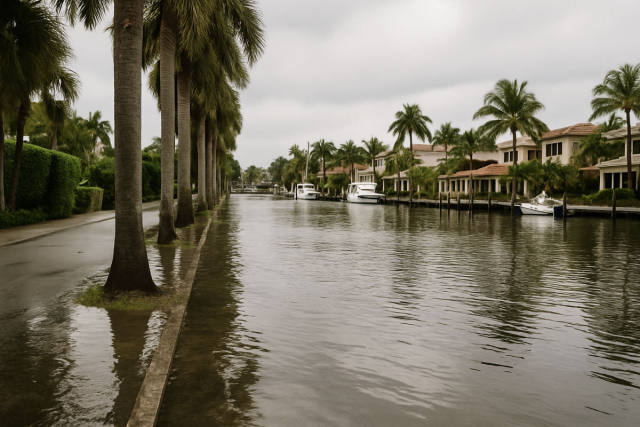
That erosion is a structural problem, not just a weather problem. Natural sand movement along a shoreline is disrupted by seawalls, jetties, and inlets, and rising seas and stronger storms carry displaced sand offshore where waves can't return it. Dredging-based beach renourishment is the primary tool coastal communities use to replace that lost material, even though it's a recurring rather than permanent solution.
This story was first reported by DredgeWire.