Yulee Sugar Mill Ruins Historic State Park in Homosassa offers a short, free stop with a direct view into 19th-century Florida. The site, on County Road 490 in Citrus County, preserves the remains of a steam-powered sugar mill that operated from 1851 to 1864.
The mill was the working center of a roughly 5,100-acre sugar plantation owned by David Levy Yulee, Florida’s first U.S. senator. It processed sugarcane grown on the plantation and supplied sugar products to Southern troops during the Civil War. The plantation’s operations also depended on enslaved people, an essential part of the history interpreted at the site.
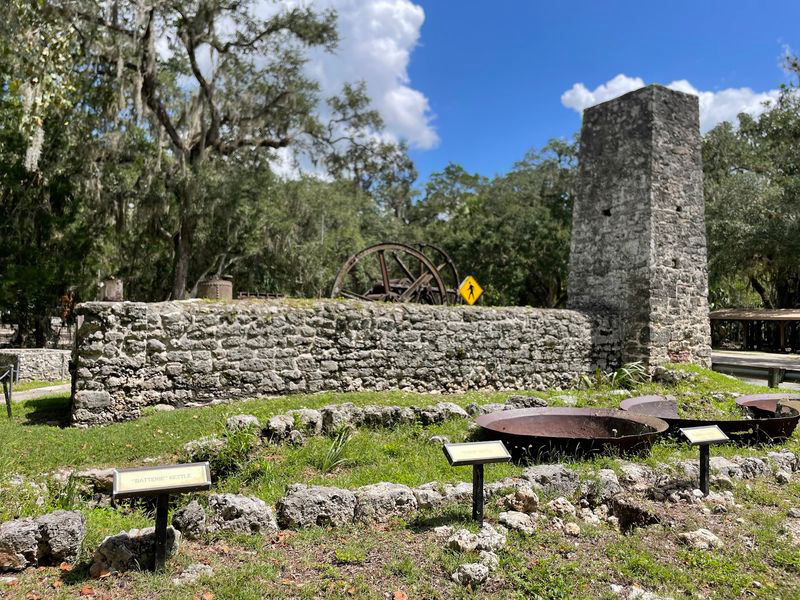
Visitors can see iron gears, a cane press, large kettles and limestone masonry that remain from the sugar-making operation. Interpretive signs explain the plantation, the production process and the site’s place in Florida history. A shelter now covers the ruins, while the site’s former 40-foot limestone chimney is no longer standing after hurricane damage and subsequent repair work.
The paved path around the ruins is about 500 feet long, making the visit manageable in roughly 10 to 15 minutes. Leashed pets are permitted. Across the road, a small park includes a picnic pavilion, tables, grills and a comfort station, though restroom availability has varied.
Parking is across County Road 490 from the ruins and is shared with the neighboring Old Mill Tavern. Visitors need to cross the busy road to reach the mill, so families and people walking dogs should use particular care. The park is listed as open daily around the clock, with no admission fee; daylight is the best time to read the signs and view the machinery.
The compact site is best suited to a brief stop as part of a wider Homosassa outing rather than a full-day destination. Florida State Parks advises checking its current information before a visit, as repairs and site conditions can change.